If you have ever priced an electric car, you have probably heard one main story. Batteries are expensive. But what if the weak link is a magnet that hates heat?
A study published on October 24, 2025, describes how researchers at the University of New Hampshire, with support from the U.S. Department of Energy, used an advanced AI system to build the Northeast Materials Database with 67,573 magnetic materials entries.
The team also trained models that sifted through the catalog and highlighted 25 candidates predicted to stay magnetic above about 440 degrees Fahrenheit, a temperature range that can matter inside electric motors.
Lead author Suman Itani said the aim is to “reduce dependence on rare-earth elements,” while co-author Jiadong Zang said he is “optimistic” better data and AI can make new magnet options achievable, working alongside Yibo Zhang.
Why heat-stable magnets matter
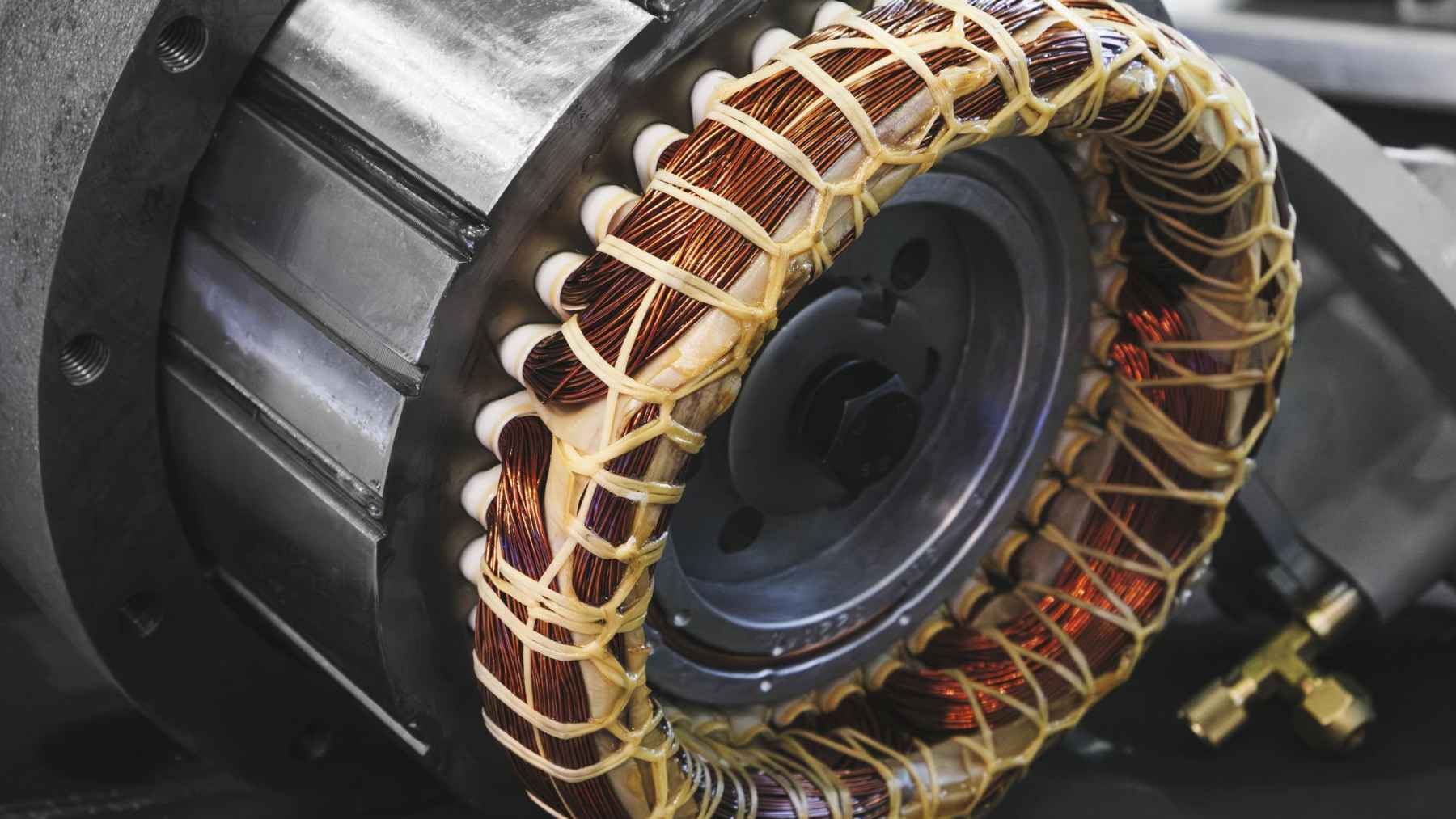
Most electric motors work by pushing and pulling magnetic fields to spin a rotor. Many designs use permanent magnets, which keep their strength without needing extra power. That helps squeeze more miles out of the same battery, especially when you are stuck in stop-and-go traffic.
Heat is the enemy because a magnet can weaken when it gets too hot. Scientists call the tipping point the “Curie temperature,” which is when a material stops behaving like a strong magnet. If the magnet loses strength, the motor can lose efficiency, and that can chip away at range.
This is not only a car issue. Similar magnets show up in wind turbines, factory motors, and plenty of everyday electronics. When magnets can handle higher temperatures, engineers get more room to design systems that are smaller, tougher, and more efficient.
The rare-earth squeeze
The strongest permanent magnets today often depend on rare-earth elements like neodymium and dysprosium. The supply chain is concentrated, which can turn into price swings and delays for manufacturers. On the other hand, many devices still rely on these magnets because they perform well under stress.
The International Energy Agency says China accounted for around 60% of global mining output for key magnet rare earths in 2024 and about 91% of separation and refining, and it also dominates permanent magnet manufacturing. The agency warns that this kind of concentration leaves industries exposed when trade rules or shipping lanes change.
The same analysis points to export controls announced in April 2025 and expanded in October 2025 as a reminder that bottlenecks can arrive fast. It also estimates China exported roughly 64,000 tons of rare-earth magnets in 2024.
Turning decades of papers into data
Materials science has a funny problem. Researchers publish mountains of results, but key details are often buried in text and tables. So even when the knowledge exists, it can be hard to search and compare.
Earlier efforts tried to solve this with text mining, and they helped. A 2018 Scientific Data study built an auto-generated database with 39,822 records of magnetic transition temperatures by scanning tens of thousands of papers.
The new work goes further by using large language models, the same general kind of AI behind modern chatbots, to read papers and pull out structured details. The researchers also compare their approach with smaller, manually curated resources such as MAGNDATA, which collects published magnetic structures.
25 candidates, and what that really means
The big promise is speed. Instead of starting from scratch in a lab, researchers can use the database and the predictions to decide what is worth testing first. That can cut down the time it takes in a field where experiments can be slow and expensive.
The candidates were flagged from the Materials Project, a widely used online resource for computed materials data that researchers use for early leads. In practical terms, that means the AI is helping connect what is known in theory with what might work in the real world.
It is worth slowing down here. A predicted high Curie temperature does not automatically make a great motor magnet, and it does not mean your next car will be cheaper. But it can shrink the haystack, so lab teams can focus their time and money on the most promising needles.
From a database to a motor that lasts
A motor magnet has to do more than stay magnetic. It also needs “coercivity,” which is how well it resists being demagnetized by heat or by other magnetic fields nearby. In everyday terms, that is the difference between steady performance and slow fade.
That is why follow-up work matters. The 25 candidates still need to be made, measured, and compared against today’s magnets, including how they behave after repeated heating and cooling. Engineers also care about cost, ease of manufacturing, and whether the material can be produced at scale.
There is also a design angle. If researchers can find magnets that work well without heavy rare-earth additives, motor makers could consider more options in cooling and layout. The payoff is not just performance, but also fewer unwelcome surprises in the supply chain.
Bigger ripple effects
High-performance magnets are a hidden backbone of modern life. They show up in phones, medical devices, generators, and the motors that keep homes and factories running. When magnet materials get cheaper and more reliable, it can feed into things people notice, like the price of an EV or the cost of charging it.
Still, this is not a magic wand. The study is best read as a map, not the destination, and it points researchers toward places worth digging. If those leads turn into real materials that pass real tests, the next generation of motors could rely less on fragile supply chains.
The main study has been published in Nature Communications.