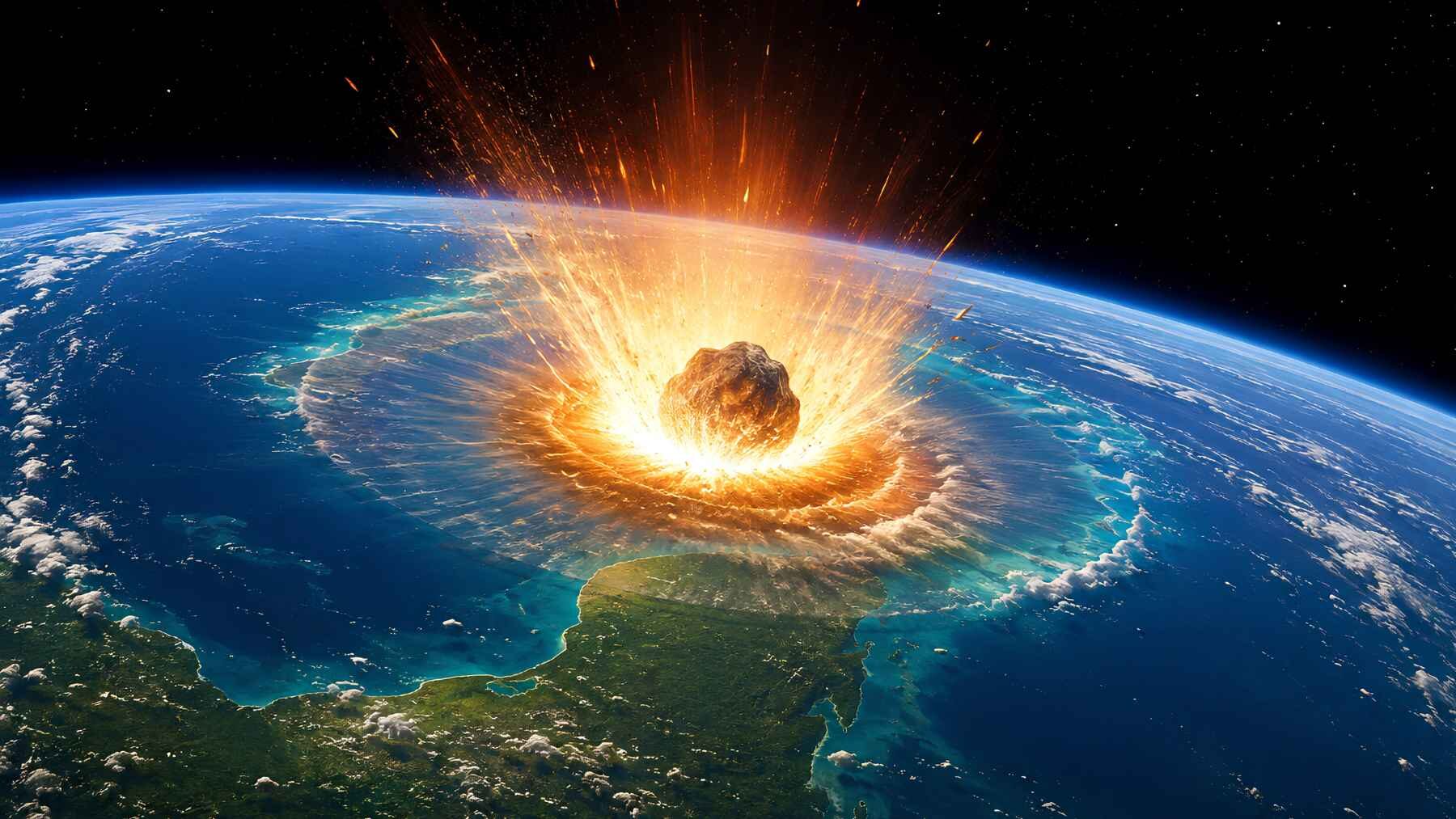
Sixty-six million years ago, a 6- to 9-mile asteroid slammed into what is now Mexico’s Yucatán Peninsula at 40,000 mph—and scientists now know it carried a cosmic return address. Isotope analysis reveals the dinosaur-killing impactor was a rare, primitive rock born in the freezing depths beyond Jupiter, triggering environmental shocks that wiped out 75% of Earth’s species.
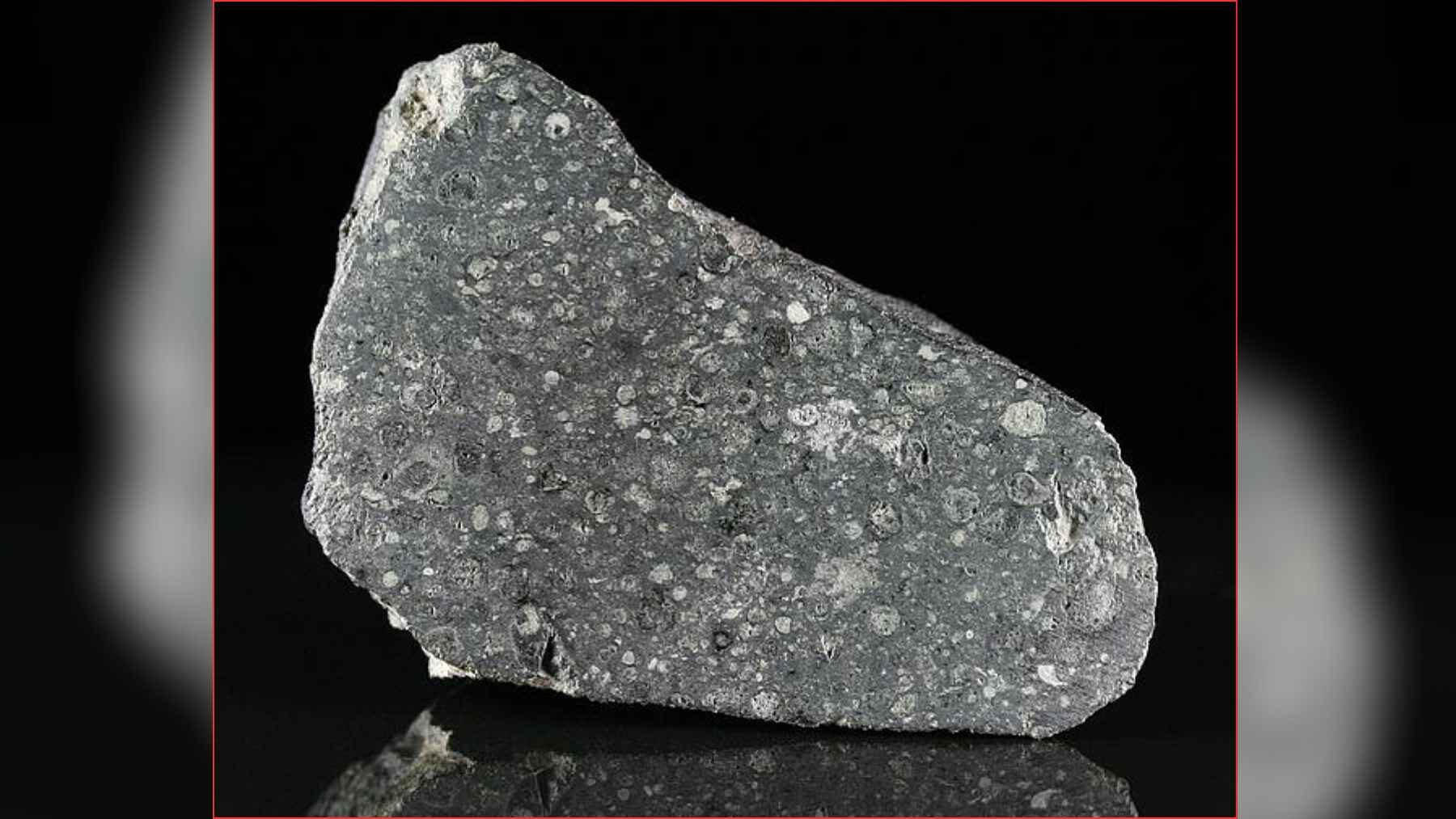
Scientists now have a much sharper answer to the question that lingered after the crater was identified. Ruthenium isotopes reported in 2024 pointed to a carbonaceous asteroid formed beyond Jupiter, while a July 2026 nickel-isotope study narrowed the closest match to a rare CO-type carbonaceous chondrite.
The isotope trail points outward
The 2024 team, led by Mario Fischer-Gödde at the University of Cologne, analyzed ruthenium isotopes in K-Pg boundary deposits from Denmark, Italy, and Spain. The chemical signature matched carbonaceous chondrites, primitive asteroid material associated with the cold outer solar system beyond Jupiter.
That result also separated Chicxulub from several other impact structures examined by the researchers. Most of those smaller impacts carried the signatures of S-type asteroids from the inner solar system, making the dinosaur-killing object an unusually distant visitor.
Nickel narrows the suspect
The 2026 study examined nickel isotopes in marine boundary clays from Denmark, Spain, and Italy, then compared them with a broad collection of meteorites. The samples were most consistent with terrestrial material mixed with CO-type carbonaceous chondrite debris, although the paper also leaves room for certain ungrouped carbonaceous chondrites.
“Nickel isotopes provide a particularly powerful tool for identifying the nature of extraterrestrial materials,” lead author Georgy Makhatadze said. These subtle metallic variations act as a cosmic return address stamped into a global layer of ancient clay.
Why a drier asteroid matters
CO chondrites contain less water, sulfur, carbon, and other volatile elements than several carbonaceous meteorite groups previously considered possible matches. That does not weaken the evidence that Chicxulub caused the extinction, but it suggests the asteroid itself may have delivered less sulfur than some older scenarios assumed.
So where did the climate-changing material come from? The 2026 researchers say a larger share may have been vaporized from Earth’s own rocks at the impact site, while fine silicate dust and debris blasted into the atmosphere likely helped shut down sunlight and photosynthesis.
The clue that started it all
Back in 1980, Luis Alvarez, Walter Alvarez, Frank Asaro, and Helen Michel reported unusually high iridium levels in the thin geological layer marking the end of the Cretaceous. Iridium is scarce in Earth’s crust but more common in asteroids, so the team proposed that a giant impact had spread the metal around the world.
The idea faced years of debate, but evidence kept piling up. Shocked minerals, glassy impact material, the buried Chicxulub crater, and a globally distributed ejecta layer eventually connected the extinction to one catastrophic collision.
A planet plunged into darkness
The immediate blast devastated the region around the Yucatán, but darkness was the more far-reaching danger. Dust, soot, and sulfur-bearing aerosols reduced incoming sunlight, cooled the surface, and disrupted photosynthesis, pulling the foundation out from under food webs on land and in the oceans.
A 2023 climate study estimated that fine silicate dust could have remained in the atmosphere for about 15 years, lowered average surface temperatures by as much as 27ºF, and nearly halted photosynthesis for almost two years. A separate 2025 study estimated that the impact released 67 ± 39 gigatons of sulfur, about five times less than earlier numerical estimates, adding more weight to the idea that dust deserves a central place in the story.
A rare rock on the worst possible day
Carbonaceous chondrites make up only about 5 percent of meteorites found on Earth, and CO chondrites are a small fraction of that group. They preserve some of the solar system’s most primitive material, which makes Chicxulub both a mass-extinction trigger and a sample of deep planetary history.
There is a strange contrast here. Material formed in the outer solar system eventually reached a location on Earth rich in substances capable of amplifying the impact’s effects.
Could another one hit Earth
NASA estimates that an asteroid about 10 kilometers wide strikes Earth on average roughly once every 100 million years. The agency also says an asteroid large enough to cause widespread damage is highly unlikely to hit during the next century, although observatories continue searching for and tracking near-Earth objects.
That is why this research is more than a backward-looking mystery. Knowing an impactor’s composition, origin, and environmental effects helps scientists interpret ancient craters and sharpen the models used to understand future hazards.
What remains uncertain
The isotope evidence is increasingly specific, but it does not provide a complete travel diary. Researchers can identify the asteroid’s broad chemical family and likely formation region, yet the exact path that moved it from beyond Jupiter toward Earth remains unresolved.
The latest finding refines rather than closes the debate over the extinction mechanism. Dust, soot, sulfur, darkness, cooling, wildfire, and ocean changes interacted in a planetary chain reaction, and scientists are still working out how much each link contributed.
The latest study was published in Science Advances.