What would happen if your phone’s maps suddenly stopped working for a day? Most people hear “asteroid impact” and picture a once-in-a-lifetime catastrophe, but the rocks most likely to matter in our lifetime are smaller. Their biggest target may not be a city, but the satellites above it.
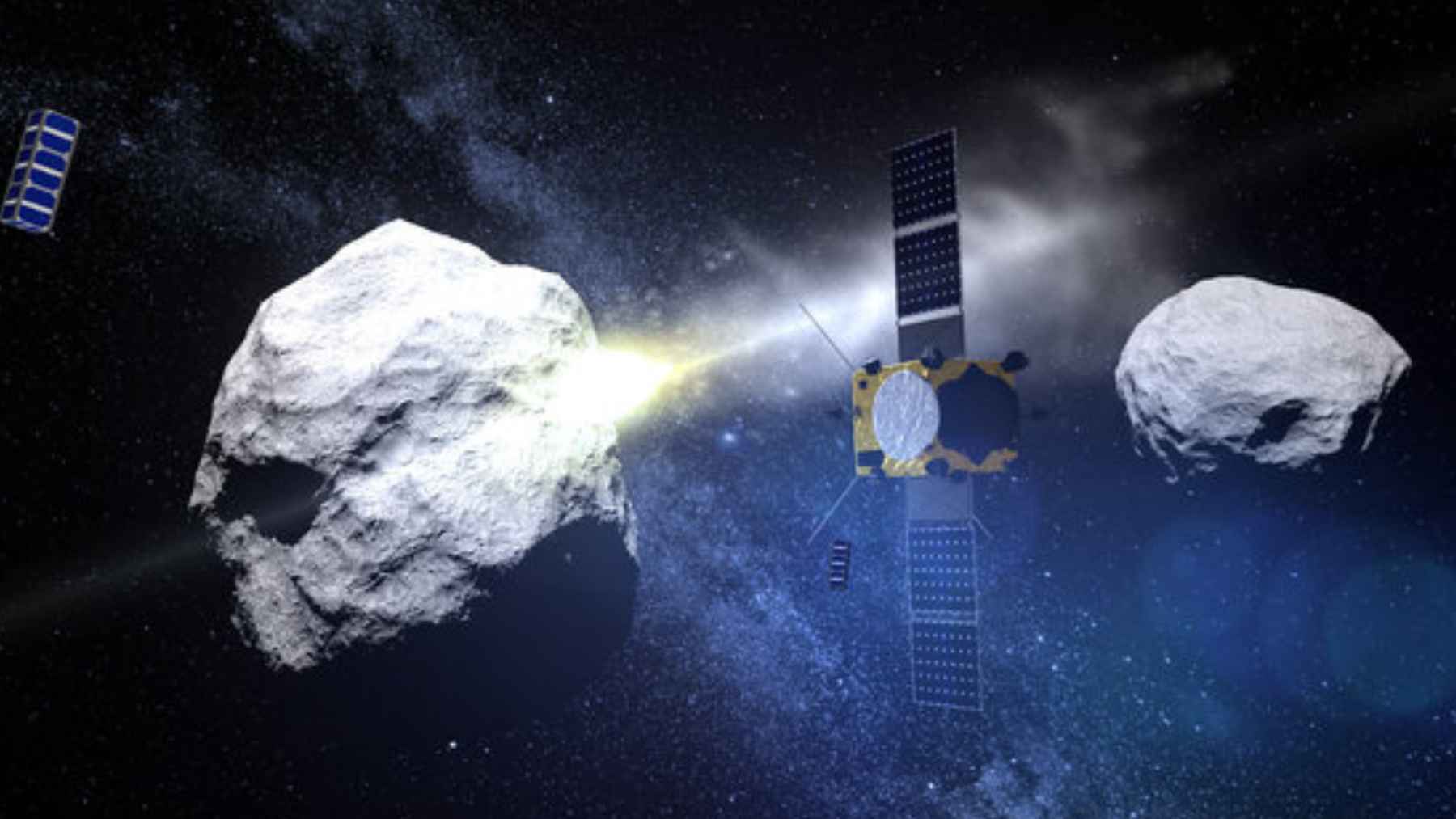
In a recent interview written by Abby Abazorius, a group of astronomers said new observations make it likely that “within the next decade” scientists will identify a handful of building-size asteroids headed for the Earth-Moon system sometime this century.
Associate professor Julien de Wit said these smaller objects would “probably lead to zero direct human casualties,” but could still disrupt space infrastructure. His colleagues Artem Burdanov, Richard Teague, and Saverio Cambioni describe a push toward a faster response pipeline and what Cambioni calls “an asteroid revolution.”
Not a dinosaur killer
Movies like “Armageddon” focus on mile-wide rocks. Those big, civilization-ending asteroids are real, but they are rare, hitting Earth only every tens of millions of years.
The more common threat is a “decameter-scale” asteroid, meaning something on the order of a few dozen to a few hundred feet across. That is about the size of a midrise building, and the researchers say impacts from this size range can happen roughly every couple decades.
These objects often explode in the atmosphere instead of carving a crater into the ground. Even so, an airburst can create a powerful shockwave that breaks windows and damages buildings if it happens over a populated area.
Why satellites are vulnerable
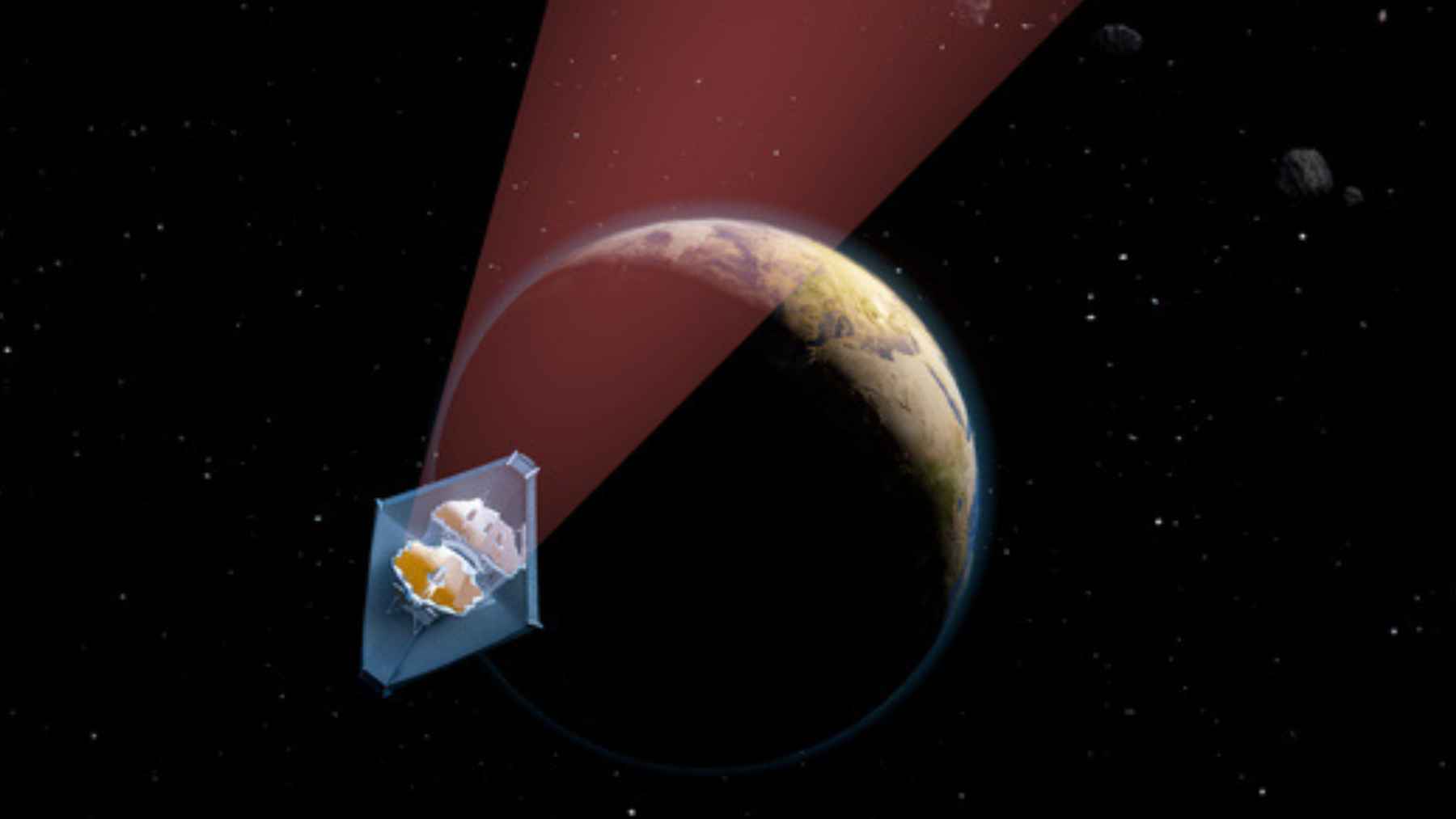
A direct hit on Earth is not the only scenario that worries scientists. A strike near the Moon, or debris pushed into orbit, could threaten the satellites that keep GPS, weather forecasts, and global communications running.
Some experts also point to the “Kessler Effect,” a chain reaction where debris collisions create more debris, which then causes even more collisions. The European Space Agency describes it as a runaway clutter problem, like a pileup in orbit, that can make busy paths around Earth harder and riskier to use.
That may sound far away from daily life. But when maps, banking systems, and emergency alerts lean on space infrastructure, even a short outage can ripple across the ground fast.
A loud reminder over Ohio
Small rocks hit Earth all the time, usually unnoticed. On March 17, 2026, a bright daytime fireball over northern Ohio startled residents with a boom that shook some homes.
In a blog post, NASA said the space rock was nearly 6 feet across and weighed about 7 tons before it fragmented. It was tiny compared with a building-size asteroid, yet it still produced a shockwave heard across a wide region.
The point is not panic – it is scale. Bigger objects carry far more energy and are also harder to spot in advance, especially when they approach from a sunlit direction.
Webb’s close look at 2024 YR4
One recent case shows both the promise and the limits of today’s tools. In early 2026, the space agency reported that observations with the James Webb Space Telescope removed the chance that asteroid 2024 YR4 will strike the Moon in 2032.
The update said the asteroid is expected to pass about 13,200 miles above the lunar surface on December 22, 2032. Its estimated size is roughly 175 to 220 feet across, which is why it drew attention even when the odds of impact were low.
The orbit refinement came from two Webb observations in February 2026, during a narrow window when the asteroid was otherwise too faint for most telescopes. The observing campaign was led by the Johns Hopkins Applied Physics Laboratory, and it included planetary astronomer Andrew Rivkin. Webb is powerful, but 2024 YR4 still required carefully timed observations.
Rubin will spot more, fast
Next up is the Vera C. Rubin Observatory in Chile, built to scan the sky again and again. Its alert system is designed to flag changes quickly, sending out millions of notices on a typical night, according to the observatory’s “first alerts” update.
So who follows up when an alert comes in? More detections sound like an automatic win, but follow-up is where things get tricky, and a faint asteroid can be “lost” if telescopes do not pin down its path soon enough.
That gap between seeing something and understanding it is what the researchers are trying to close. In practical terms, the next decade will be about turning discoveries into reliable trajectories that can be shared quickly.
A pipeline and a global playbook
The team is building what it calls a pipeline, one that starts with detection and ends with a decision. It also builds on earlier work to spot unusually small objects in the main asteroid belt between Mars and Jupiter.
On the observation side, they plan to use facilities like Haystack Observatory and the Wallace Observatories for rapid follow-up once an object is flagged. Space telescopes then add another layer by measuring infrared light, which is basically heat, to help estimate size and surface properties.
International coordination is still a work in progress, especially for smaller asteroids that mainly threaten satellites rather than cities. The International Asteroid Warning Network and the Space Mission Planning Advisory Group, backed by the United Nations, are meant to share data and discuss response options across borders.
The main press release has been published on the Massachusetts Institute of Technology.