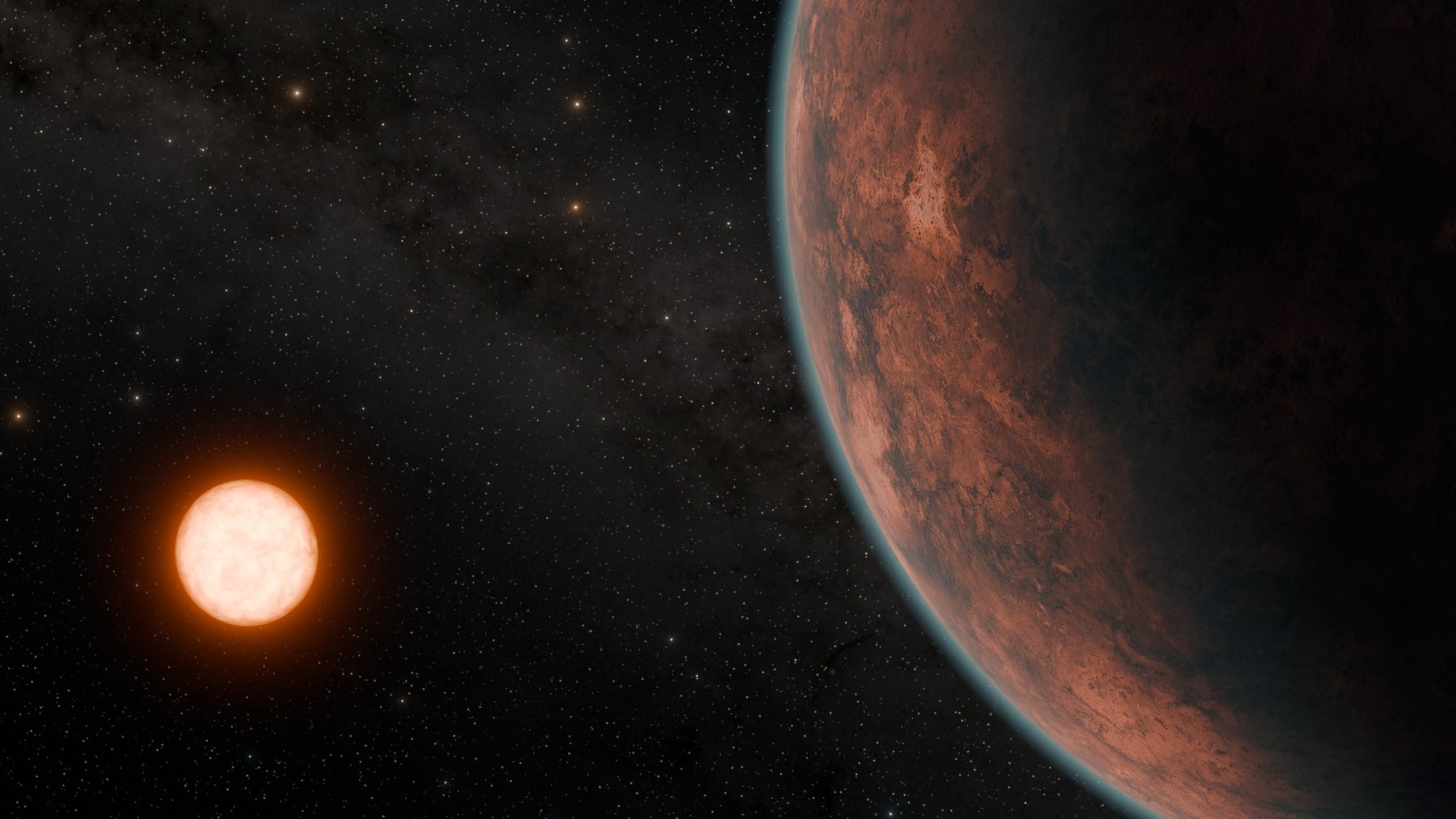
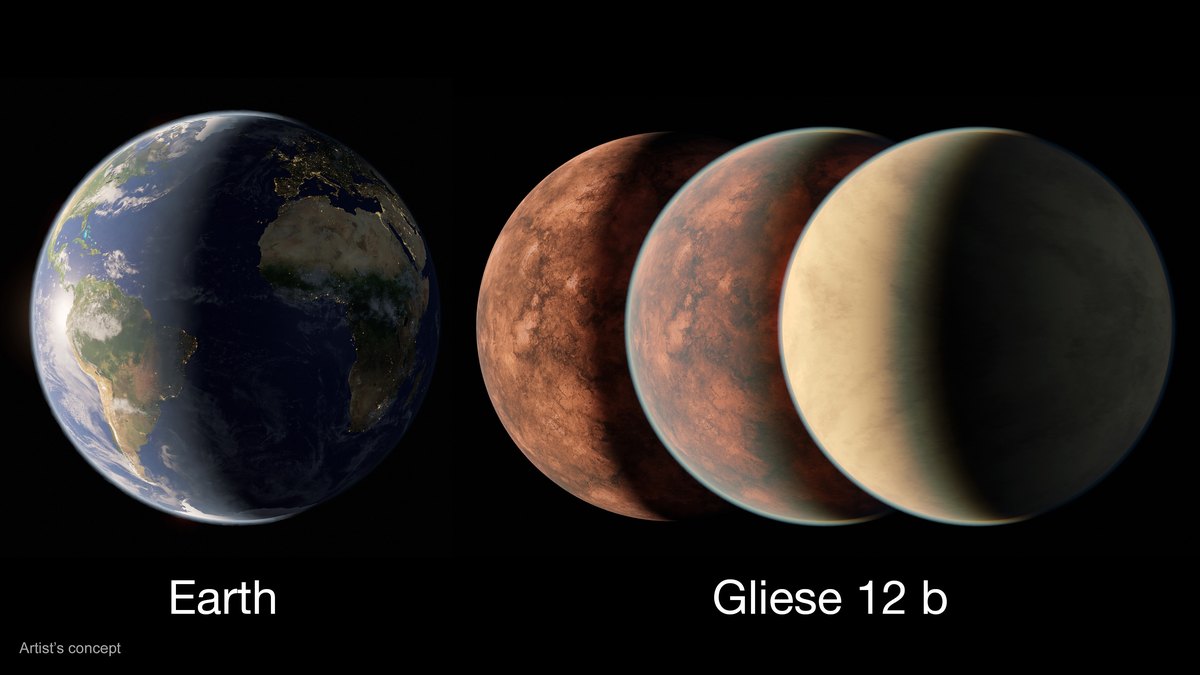
Gliese 12 b, a rocky planet about 40 light-years away in Pisces, was announced in May 2024 as a temperate world. Its estimated temperature was 107°F (42°C). A new study released in August 2026 argues that it may instead have turned into a hot, Venus-like planet.
Stephen Kane and Emma Miles of the University of California, Riverside, ran 3D climate simulations to test what makes a world habitable on this one. An Earth-like sky kept heating until the model broke down. A carbon dioxide atmosphere settled at about 314°F (157°C).
Behind the 107°F figure
Nobody measured that 2024 number with an instrument pointed at the planet. According to NASA’s discovery announcement, the estimate assumed the planet has no atmosphere at all. The discovery paper also assumed it reflects none of the light it receives.
“Atmospheres trap heat and – depending on the type – can change the actual surface temperature substantially,” discovery co-leader Shishir Dholakia said in the Royal Astronomical Society release. Change the assumptions about air and clouds, and the figure moves too.
Earth’s average surface temperature, for comparison, is about 59°F (15°C). Our figure includes the warming from Earth’s air, while the 107°F figure for Gliese 12 b does not. So the 107°F says little about whether liquid water could last on Gliese 12 b.
Two simulated skies
Kane and Miles used the Generic Planetary Climate Model, a 3D tool that tracks how heat and air move around a planet. They assumed a circular orbit. They also assumed the planet always shows the same face to its star, a condition called tidal locking.
Their first run gave Gliese 12 b an Earth-like sky of nitrogen with pre-industrial carbon dioxide levels. Temperatures climbed so fast that the model failed before reaching radiative balance, when incoming and outgoing energy match.
The second run used an atmosphere that was 99.96 percent carbon dioxide, topped with sulfuric acid clouds. Its surface pressure was about 92 times Earth’s. This version reached a stable climate averaging 430 kelvin, or roughly 314°F (157°C).
The authors write that the two models “add credence to the notion that GJ 12 b may indeed be in a stable post-runaway greenhouse state.” They add a caveat about the starting conditions. Both runs began from chosen atmospheres, not measured ones.
Starlight past the runaway threshold
Gliese 12 b circles a cool red dwarf every 12.8 days. It sits at only 7 percent of the Earth-sun distance. NASA says the planet gets about 1.6 times the energy Earth receives, or 85 percent of what Venus gets.
The new paper puts that flux at about 1.68 times Earth’s. That is above the level where a runaway greenhouse can begin on a cloud-free planet. In that process, warming evaporates water, the vapor traps more heat, and oceans boil away.
Bright clouds or ice could hold the planet back. The study says it would need to reflect about half of its starlight to stay below the threshold. Venus manages that only because acid clouds already cover it.
Tides and a younger, brighter star
Follow-up work led by Daisy Turner, published online in October 2025, put the planet at about 93 percent of Earth’s radius. Its mass came out near 95 percent of Earth’s, pointing to a mostly rocky interior.
Those data also hint at a slightly oval orbit, though a circular one is not ruled out. An oval path squeezes a planet as its distance from the star changes, and the flexing heats its rock from inside.
Kane and Miles estimate a tidal heat flow of 5.4 watts per square meter, comparable to Jupiter’s volcanic moon Io. They tie anything above 2 watts to extreme volcanism. Eruptions on that scale could pump out carbon dioxide faster than rocks can absorb it.
Red dwarfs like Gliese 12 spend roughly their first 1 to 3 billion years contracting, and they shine several times brighter during that phase.
The paper argues that this early glare, plus tidal heating, could have boiled off the planet’s water long ago. In that case, the authors write, today’s planet would be “the fossil record of a tidal and irradiative catastrophe.”
A test case for Venus
Venus is close to Earth’s size. Yet its carbon dioxide air presses down with about 93 times Earth’s sea-level pressure, according to NASA’s Venus facts page. Its surface stays near 872°F (467°C), the kind of extreme heat Soviet landers barely survived.
“The Earth is habitable, but Venus is not due to its complete loss of water,” discovery co-leader Larissa Palethorpe said in 2024. Gliese 12 b gets more energy than Earth and less than Venus, so its air could show which path a rocky world of that size takes.
Kane and Miles link their results to NASA’s planned VERITAS and DAVINCI missions and to ESA’s EnVision. Those spacecraft aim to learn when Venus lost its water. The answer would help researchers judge which Earth-sized exoplanets share its fate.
No telescope has sampled its air
None of these results comes from observing the planet’s atmosphere. The authors call its reflectivity, clouds and gas supply unconstrained. The tidal estimate also leans on an eccentricity whose error bars reach close to zero.
There is a hopeful detail, too. Both discovery teams found no sign of the strong X-ray flares common among red dwarfs. A calm star raises the odds that the planet retained an atmosphere, whether thin or thick.
The James Webb Space Telescope could settle part of the question. Each time the planet crosses in front of its star, starlight filters through any air it has. The gases leave chemical fingerprints that Webb can read.
The study has been accepted for publication in The Astrophysical Journal and is available on arXiv.
Image: NASA/JPL-Caltech/R. Hurt (Caltech-IPAC)