Rats given the cosmic radiation dose of a three-year Mars mission developed twice as much scar tissue around their heart vessels as unexposed rats. The damage became clear only when the hearts were examined 360 days later. The study appeared in PLOS ONE on September 30, 2026, led by John Baker, a professor of surgery at the Medical College of Wisconsin (MCW).
According to the MCW announcement, the team worked with Lawrence Berkeley National Laboratory and Wake Forest School of Medicine. The results come from rats. Even so, they matter to NASA as it plans the first crewed landing on Mars.
Five of six hearts scarred
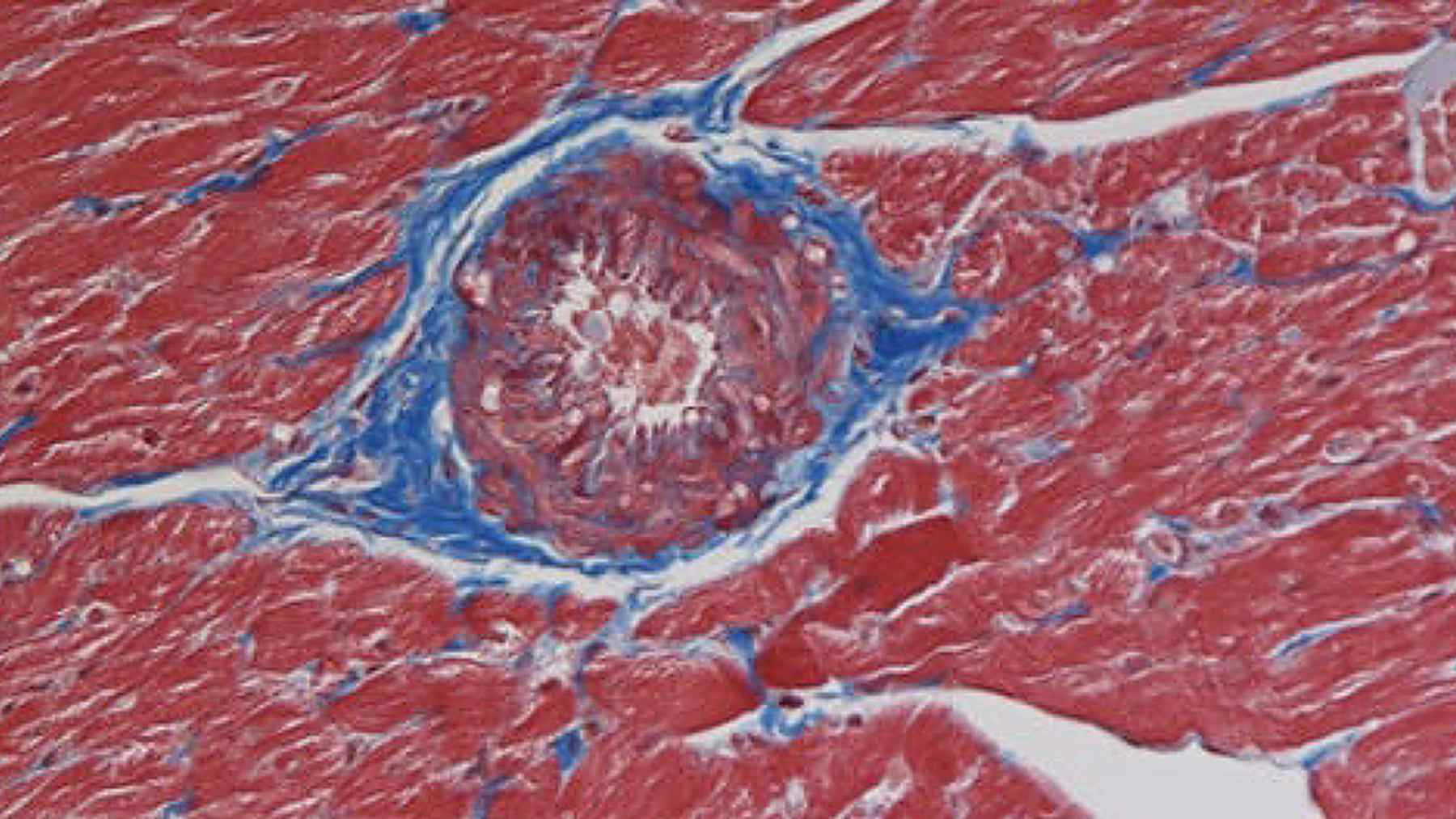
In a follow-up test, six male rats received 0.75 gray (75 rads) of simulated galactic cosmic rays. The authors call that dose relevant to human missions to Mars. After 360 days, five of the six showed perivascular fibrosis.
That term means extra collagen, the protein that makes scar tissue stiff, packed around blood vessels. Under the microscope, the irradiated hearts carried about double the collagen of three unexposed controls.
“What surprised us most was how strongly time influenced what we saw,” Baker said in the MCW release. He wants radiation risk seen “as a biological process that can continue unfolding long after the exposure occurs.”
MCW calls cardiac fibrosis an early sign of heart disease. Still, the team did not test whether the scarred hearts pumped less blood.
Six beams at Brookhaven
Galactic cosmic rays are fast, heavy particles from beyond the solar system. Earth’s atmosphere and magnetic field block most of them. In space, NASA explains, they can hit a hull and release secondary radiation, which complicates shielding astronauts in deep space.
On May 7 and 8, 2019, the rats were irradiated at the NASA Space Radiation Laboratory in New York. The lab sits at Brookhaven National Laboratory. Its simulator, simGCRsim, fires five types of ions in six quick beams, built to match the radiation inside a shielded spacecraft.
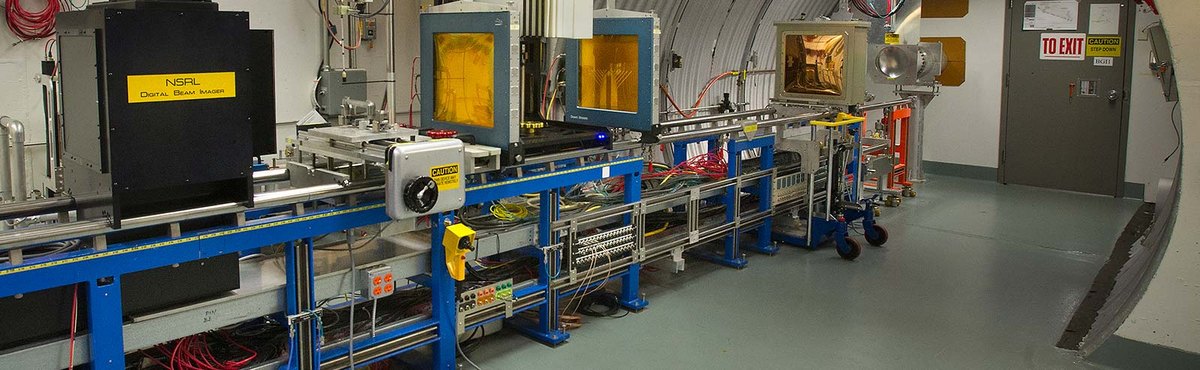
Each rat was 8 to 9 months old, an age chosen to match the astronaut corps. The study used 72 males from a strain prone to heart damage after radiation. That damage is one of the health risks scientists hope to shield astronauts from.
A Mars dose in minutes
The researchers picked 0.75 gray because it approximates three years in deep space. But the rats took the whole dose within minutes. Astronauts would build it up over months and years.
According to the paper, fast delivery leaves no time for DNA repair and cell recovery. The authors add that the simulator only partly copies deep space radiation. A 33-ion version is now available for future work.
Most of the experiment used a higher dose, 1.5 gray. At that level, all irradiated rats developed fibrosis, again with doubled collagen, after 270 days. That matches a 2023 study by the same group with three ion beams.
That earlier study also tried 0.75 gray, but its collagen rise at 270 days was not statistically significant. Baker’s team credits the longer wait this time. The radiation mix also changed, though.
Tail suspension and the spleen
To imitate the effects of microgravity on the body, some rats spent 30 days with their hind legs off the floor. Tape and a swivel on the tail held them up, a method NASA accepts as a rodent model.
On its own, simulated weightlessness did not scar the heart. Paired with 1.5 gray, it added no extra fibrosis. To Baker, that hints that each spaceflight stressor hits its own target in the body.
Immune signals told another story. Suspended rats had lower levels of 20 of 27 cytokines, the small proteins immune cells use to talk, for 270 days. Adding radiation cancelled that drop.
In the spleen, natural killer cells fell by about two-thirds in suspended rats. These cells destroy virus-infected and some cancer cells. Radiation alone caused no significant change in them. The paper’s discussion credits radiation for the drop, but its results and figure tie it to the suspension.
Variants in seven blood genes
The team sequenced the full genomes of blood cells from three rats given 1.5 gray and three controls. Out of a panel of 74 genes tied to clonal hematopoiesis, seven carried variants seen only in the irradiated trio: Smc3, Suz12, Brcc3, Ep300, Cblb, Idh2 and Usaf2.
In that condition, blood cells with acquired mutations multiply and take over a growing share of the blood. Doctors link it to heart disease in older adults. The authors call their sequencing preliminary, since nobody drew blood from the rats before the beam.
“What we saw was evidence for abnormal repair of DNA,” Baker said. He compared it with the unrepaired mutations that pile up as people age: “I think what we may be seeing here is that radiation is accelerating this aging.”
Female rats were never tested
Every rat in the study was male, from a strain picked for its sensitivity. The authors want female rats in future work, because NASA’s 2022 limits apply one standard to all sexes and ages.
At the Mars dose, the test rested on six irradiated rats and three controls. Hearts were only checked at the end, so nobody knows when the scarring started. The paper calls for dose fractionation studies, where radiation arrives in small doses over time.
Baker is already moving on to bacteria that live on plant roots, since crews on long flights would need to grow food. The full study was published in PLOS ONE.
Image: Lenarczyk et al. / PLOS ONE, CC BY 4.0