Space travel comes with a host of obvious dangers to astronauts, but the sun’s radiation probably does not immediately occur to most people as one of the most serious threats. Once a craft thrusts beyond Earth’s protective magnetic field, charged particles must be thwarted off to protect crews. Could a panel of magnets do the job while reducing the weight of aluminum, water, or plastic currently required?
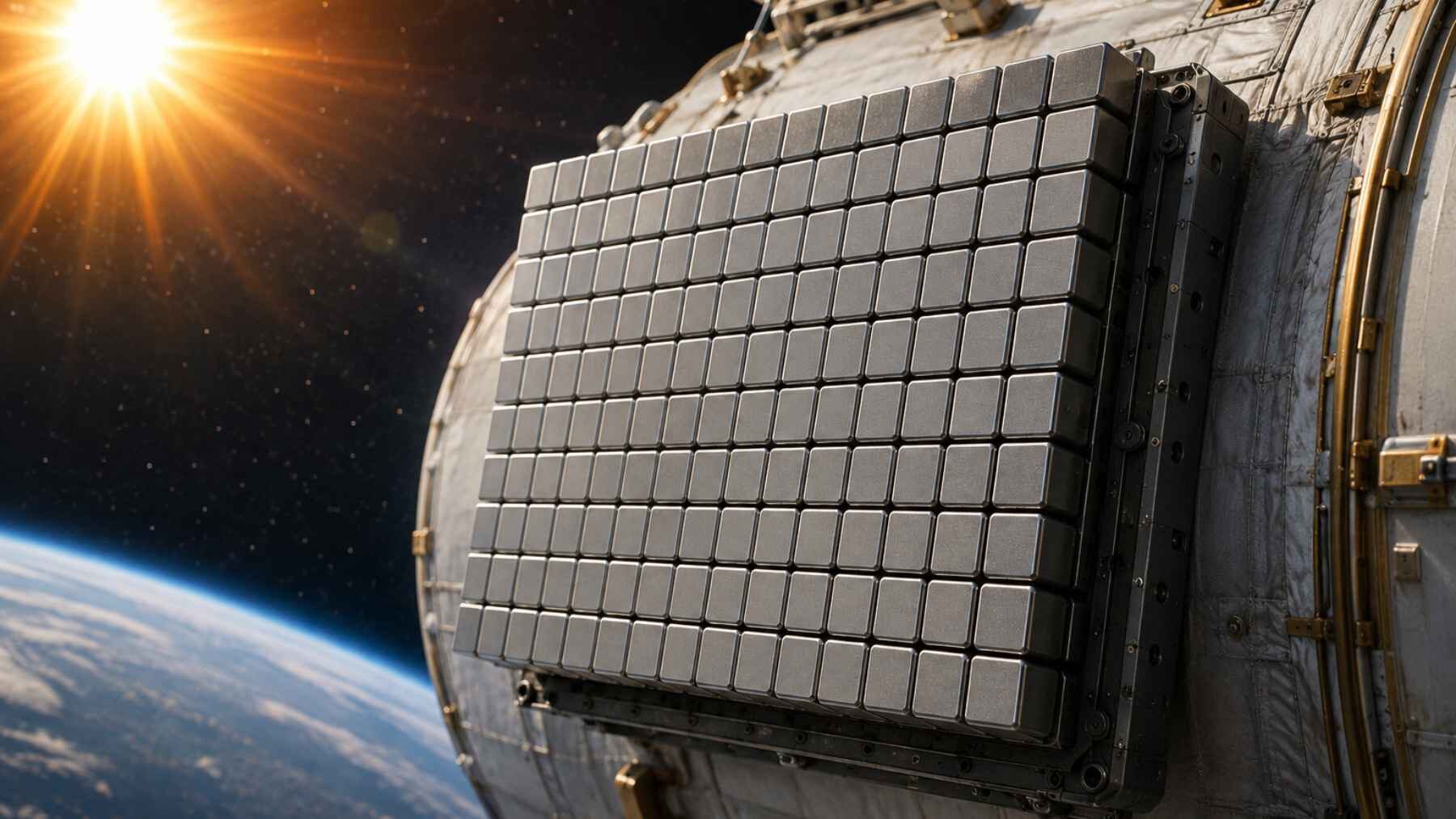
Engineers are exploring a fairly simple solution that uses a compact panel of about 1,500 neodymium magnets that would repel about 20% of solar protons, requiring no electricity, cryogenic cooling, or any moving parts.
What the magnet wall would look like
In association with Sapienza University of Rome and GSI Helmholtz Centre for Heavy Ion Research (Germany), researchers Valerio Parisi, Roberto Capuzzo Dolcetta, Fabrizio Frezza, and Luca Lunati have proposed a panel comprised of a durable, permanent magnet material organized into cubes, weighing around 200 kilograms. The cubes measure just over one inch in width, spread across a grid of almost 4 ft.²
The installed model would continuously produce a magnetic field without drawing power from the craft, unlike conventional designs. Cost comparisons are still needed for the proposal, but preliminary estimates put the magnet cost at about $35,000.
How magnets protect
A magnetic field can steer electrically charged solar protons aside, a bit like a police officer directing traffic around a stalled vehicle in an intersection. Conventional shields absorb or slow particles that impact the surface, whereas magnetic shields redirect some of them.
The model has its limitations, however. Faster-traveling solar protons are still able to break through the magnetic barrier, giving it the name “high-pass filter,” meaning it works best on slower-moving particles.
Why deep-space radiation is so difficult
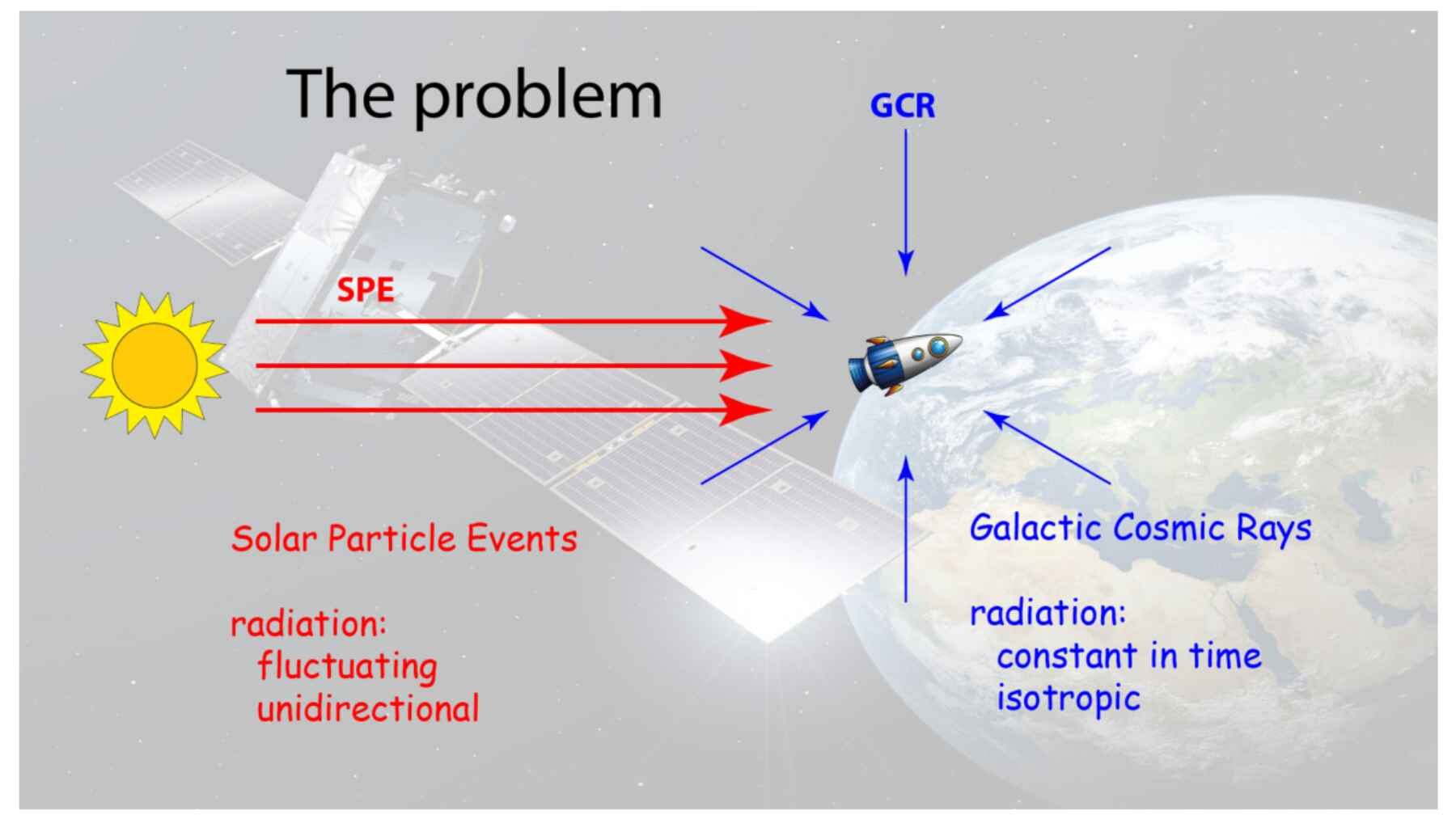
Solar particles reach spacecraft in one of two ways. Sudden bursts, usually from solar eruptions, fire floods of protons all at once in unpredictable patterns. The second source comes in the form of galactic cosmic rays from outside the Solar System with much higher energy and persistence.
According to NASA, space radiation is no minor concern. From cancer and central nervous system damage to cardiovascular injury, the Sun during the Artemis II mission was constantly monitored to protect the crew using advanced forecasting, measurement, and shielding processes. This protection goes beyond just the ship’s engineered defenses.
The magnet shield has a hard ceiling
The proposed design is a long way from providing full protection from radiation. Faster moving particles from the Sun still pass through, and most cosmic rays coming from all directions would not get blocked.
In addition, protons that land on the magnets could produce gamma rays and secondary neutrons, possibly increasing radiation behind the panel, which would sit about 10 ft. from the craft. Over time, magnets could be weakened by constant bombardment.
Extensive testing is still needed before any magnet panels are installed on the next capsule or space station.
A layered defense makes more sense
Clearly, this is not a fix-all solution, rather one piece of a hybrid system. The proposed technology could handle the lower-energy particles, while conventional systems using water, polyethylene, aluminum, etc., can manage those that reach the craft surface. In any case, crews still need a place to hide from major solar events that overwhelm these measures.
Kevlar worked well as a fill-in for polyethylene in a 2017 test aboard the International Space Station, reducing the measured dose rate by 32% and the dose-equivalent by 55%.
Different materials and methods address different types of radiation danger, so combining them may be the way forward instead of looking for one magic solution.
What must happen before launch
Through Monte Carlo simulations in computer testing, researchers can realistically recreate particle bombardment paths, where radiation arrives from all angles. The tests should analyze secondary particles, various spacecraft structures, and the gradual weakening of the magnets.
Scale is also a factor. A 200-kg panel could offer some protection for a smaller craft, but shielding an entire cabin would add serious weight while its ability to protect as well as material shields is still in question. At the same time, it still has the advantage of no energy required.
As for now, the conclusions are lightly promising, but permanent magnets will not likely replace solar storm shelters, careful monitoring, or conventional material protection.
The official study has been published in Aerospace.