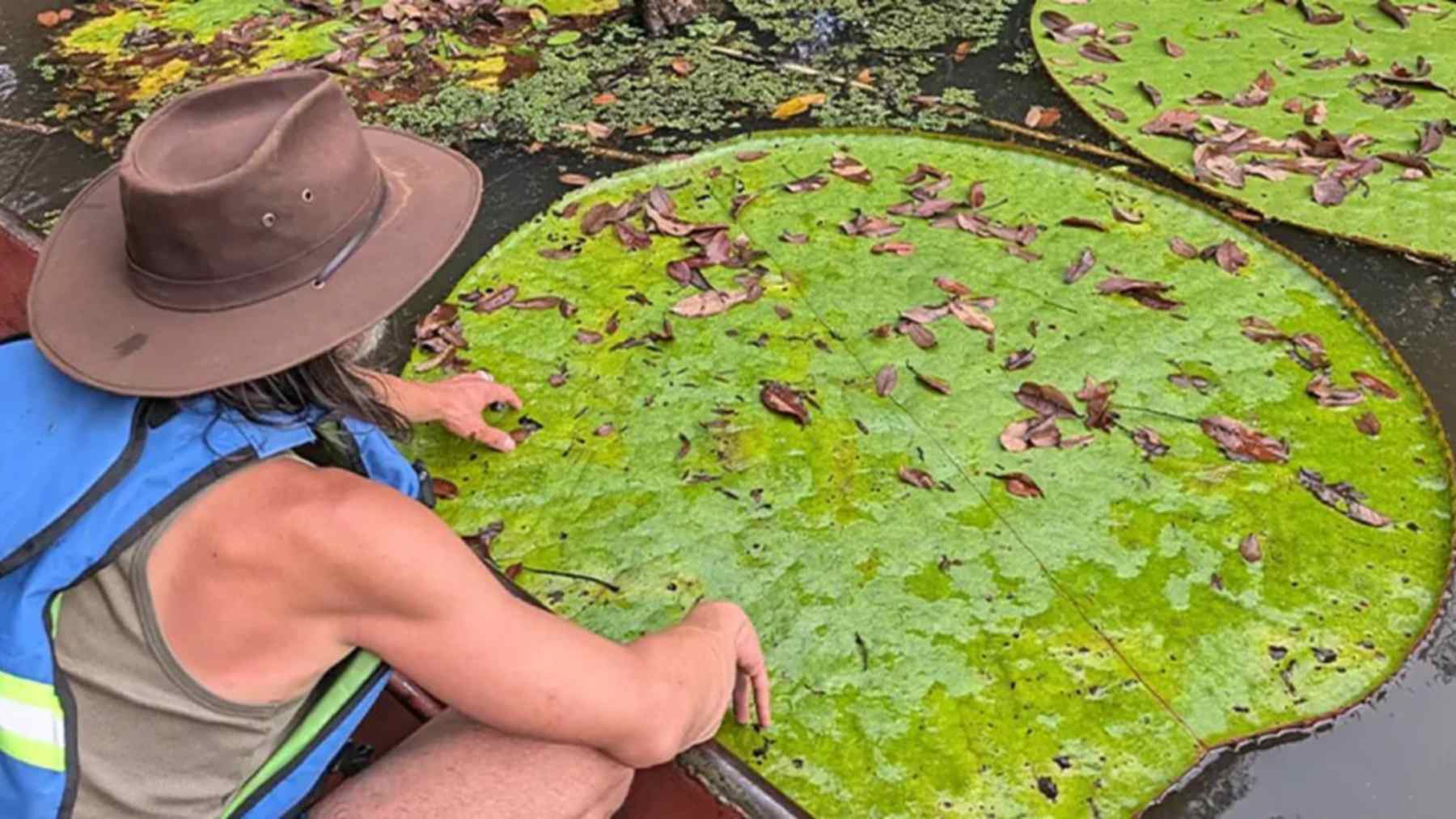
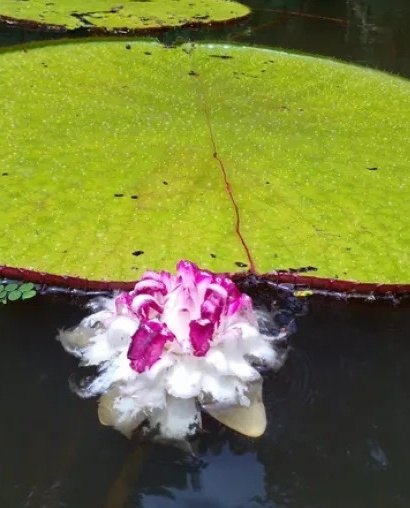
A giant water lily that Indigenous residents of eastern Colombia already knew now has a scientific name, Victoria colombiana. Its pads grow up to 2 meters wide, roughly 6.6 feet, and the botanists behind the description think just 30 to 50 plants are left in the wild.
Scientists only noticed it thanks to someone’s Instagram post. The paper describing it appeared in Phytotaxa on October 7, 2026, and two days later London’s Royal Botanic Gardens, Kew, put out a press release about it.
An Instagram post from Inírida
Carlos Magdalena, a research horticulturist at Kew, first saw the plant about five years ago. He is one of the world’s best-known waterlily specialists.
The photos came from Colombia’s Inírida region. Jeremiah Harris, who runs a carnivorous plant nursery in the United States, had taken them and labeled the lily as the familiar Victoria amazonica.
Magdalena suspected a mistake as soon as he saw the location. The Inírida River, in the department of Guainía, drains into the upper Orinoco, South America’s third-longest river. The known giant lilies were not supposed to grow there.
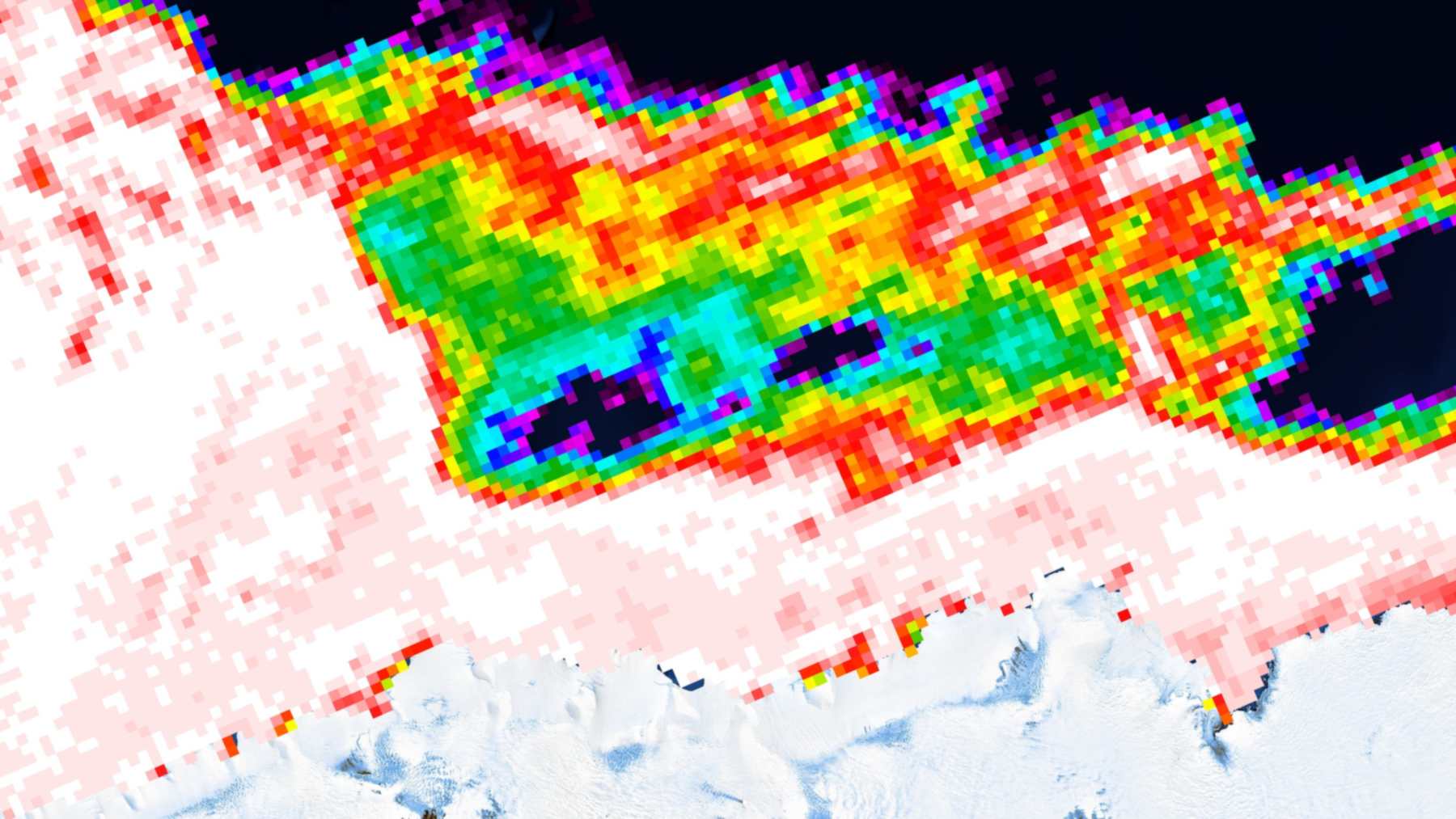
He scanned the river and its lakes on satellite imagery until the pads of a single plant showed up clearly. Harris then confirmed that local guides had shown him those same plants. Researchers often use satellite images to track vegetation, but rarely to find one plant.
No flower after a five-day search
Next, Magdalena called Mauricio Bernal-Rodriguez, who grows Victoria lilies in the tropical displays of Bogotá’s José Celestino Mutis botanical garden. For Bernal, the story shows how “what is ordinary and commonplace to one person can be a hidden treasure to another.”
They planned the trip with Nilo Rodríguez, Jaime Hernández and Gustavo Melo, members of three Indigenous reserves in the area. Rodríguez had known about the lilies since childhood. Even so, he did not remember seeing many of them.
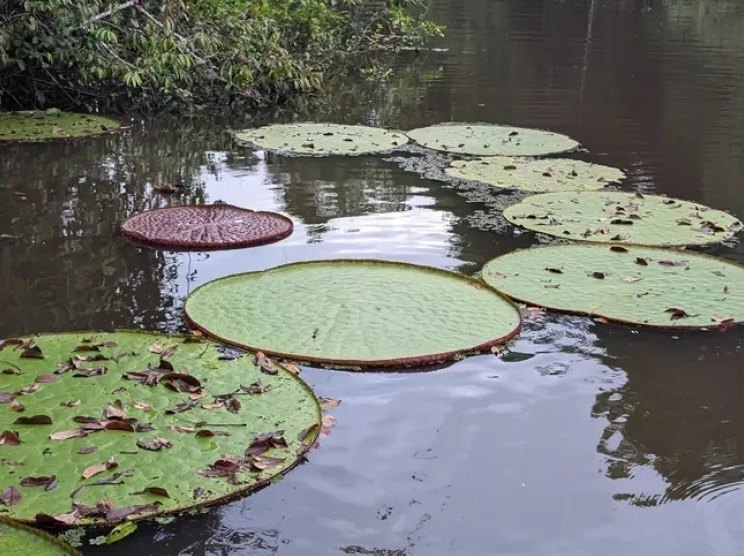
After nearly two years of preparation, the group spent five days in the Inírida rainforest. It found only two plants, and neither was in flower. Both looked stressed by high water after a late, intense rainy season.
For botanists, a flower was essential. A fertile herbarium voucher is a pressed, dried specimen that includes one, and it lets experts compare a candidate species with its relatives. Kew’s herbarium alone holds about 6.4 million vouchers.
Gustavo Melo’s night route
Searches along the Inírida and Guaviare rivers turned up nothing more. At 11 p.m. on the eve of their 9 a.m. flight to Bogotá, Magdalena explained the problem to Melo. The boatman, from the Tucano community, said he knew exactly where more lilies grew.
With about 10 hours left, the team set off at 1 a.m. in total darkness. They headed away from the airport and deeper into the flooded forest. Just before sunrise, they reached a small lake with five more plants, one of them in flower.
That made seven plants in two lakes, and the team still caught its flight. Magdalena said that “nature is still full of surprises and wonder.”
Rivers split the Victoria lilies
The specimens went to the herbarium of the Bogotá botanical garden. Maarten Christenhusz, a plant taxonomist with the Botanical Society of Britain and Ireland, supervised the formal description. “We can only conserve what we know exists,” he said.
According to the study’s abstract, the authors mapped Victoria populations on a river drainage map of South America. They also compared the plants’ physical features and noted that the Colombian lily “can be seen from space.”
Their conclusion is that two more species deserve recognition. One is Victoria colombiana in the upper Orinoco, and the other is Victoria mattogrossensis in the Pantanal. That brings the genus to five accepted species.
The seeds have no known animal dispersers and are sensitive to drying out. Rivers and floodwaters therefore seem to be their main way of spreading. Isolated basins and shifting river courses “putatively resulted in diversification of the genus,” the authors write.
The new paper builds on a 2022 revision of the genus that confirmed Victoria boliviana as a separate species. Other Amazon research, such as a genetic study of 461 trees, has also turned up unexpected findings in the region’s plants.
Thirty to 50 plants, for now
Later mapping by Carlos Pedraza-Peñaloza of DreamGIS Colombia found a third lake with the lily. Comparisons of satellite images also hinted that extra plants might show up once the water falls in the dry season.
The catch is access. In the wet months a boat can move through the flooded forest, while in the dry months the same ground has to be crossed on foot, so the 30 to 50 figure is only a first count.
The team is working toward a Critically Endangered listing on the IUCN Red List. No formal evaluation exists yet, and the team wants a broader satellite sweep to track down populations nobody has seen.
Seeds for a garden in Bogotá
Kew mentions one idea in particular: starting a naturalized population in an easier-to-reach lake inside Indigenous territory, which could also support local ecotourism. Researchers also hope to collect seeds and grow the plants in Bogotá.
Like the giant fungus nicknamed D-Rex in China, this lily went unnamed for a long time despite its size. If cultivation works, Kew says, it could one day grow at Kew Gardens next to Victoria amazonica, Victoria cruziana and Victoria boliviana.
The full study was published in Phytotaxa.
Photo: RBG Kew