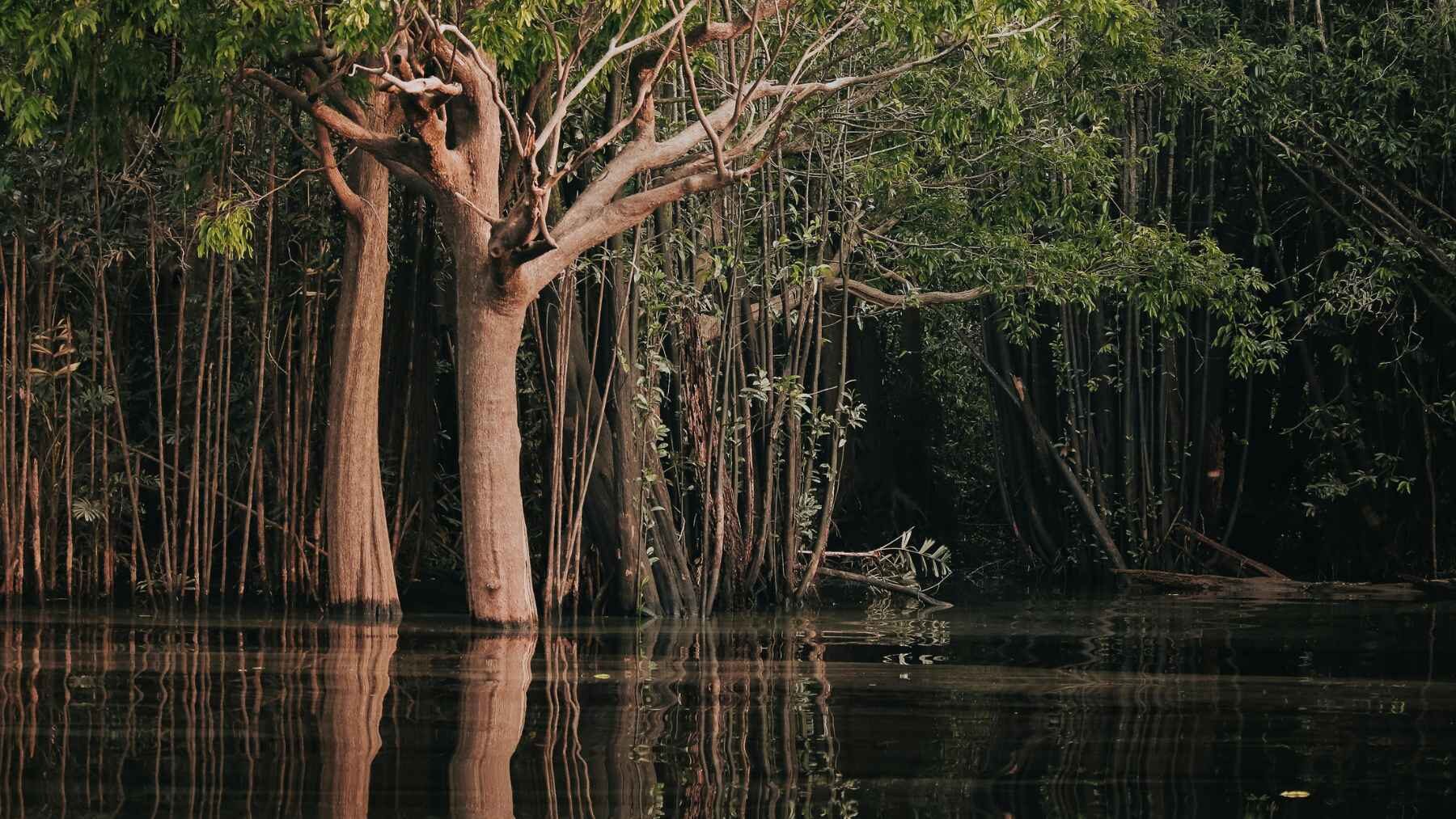
The Amazon is famous for having more kinds of trees than anywhere else, but one basic question still bothers scientists. How did so many related trees learn to live side by side without being wiped out by the same hungry insects?
A new preprint points to a surprisingly social answer. In the tree genus Inga, related rainforest trees may sometimes hybridize, meaning they interbreed, and that rare contact may let them pass along clusters of genes that help build chemical defenses against leaf-eating insects. The work was posted to bioRxiv on June 20, 2026, by Rowan J. Schley, Alex D. Twyford, and a large international team tied to research groups including the University of Exeter and Royal Botanic Garden Edinburgh.
A forest under attack
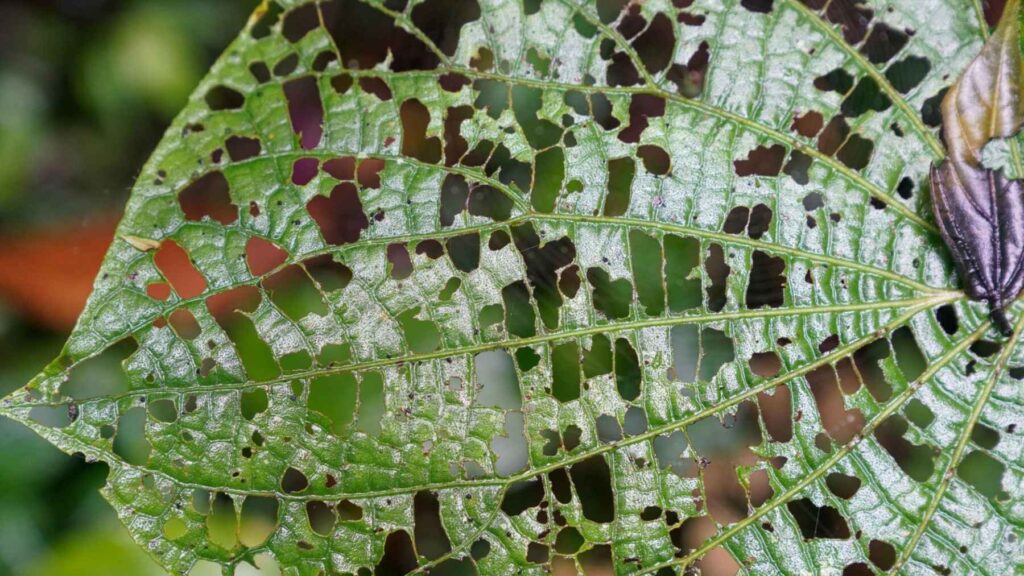
Herbivory is the process of animals eating plants. In the Amazon, that often means insects chewing leaves, drilling into tissues, or tracking the newest, softest growth before a tree can harden it.
For a young leaf, this is a rough world. Plants cannot run away, so they fight with chemistry, timing, tough tissue, hairs, and sometimes help from ants. Inga has long been a favorite group for this question because it includes more than three hundred species and many can live in the same local forest.
A shortcut for slow trees
Trees live for years, sometimes centuries. Insects can pass through many generations while one tree is still growing. So how can a long-lived plant keep pace with enemies that evolve much faster?
The new work suggests that hybridization may act like a shortcut. Instead of waiting for every useful defense to evolve from scratch, one Inga species may gain already tested defense genes from a close relative. It is a little like a neighborhood swapping recipes when pests start raiding the garden.
What the team studied
The researchers sequenced genomes from 461 Inga individuals, a large sample for a rainforest tree group. They then compared those genomes with data on herbivore abundance from the same tropical American communities, looking for patterns between insect pressure and gene flow.
The study argues that regional tree communities form “syngameons.” The word sounds technical, but the idea is simple enough. It means a network of closely related species that mostly stay distinct, while still exchanging genes from time to time.
Chemical shields move around
The most important genes in the story are tied to chemical defense. These chemicals do not work like armor you can see, but they can make leaves harder to digest, unpleasant, or dangerous for insects that try to feed on them.
According to the study, changes in herbivore communities line up with repeated local transfers of defense gene clusters between species. A gene cluster is a group of genes that works together, like a small team inside the genome. When the insect crowd changes, different defensive teams may become useful.
Why so many species can share space
This matters because tropical forests are crowded in a way most people never see at home. A small patch of Amazonian forest can hold a dizzying number of tree species, and earlier work found that Inga species growing as neighbors tend to differ more in anti-herbivore defenses than expected by chance.
That difference may help explain the crowded forest. If two neighboring species taste different to insects, they are less likely to be hammered by exactly the same enemies. For the most part, rare defense chemistry can buy a tree some breathing room.
Not just a family tree
Evolution is often drawn as a neat tree, with branches splitting and never touching again. Inga makes that picture messier. A related 2025 paper in Systematic Biology found widespread introgression, meaning DNA moving between species after hybridization, across a large sample of Inga species.
That does not mean the species all melt into one. The more interesting picture is a web overlaid on a tree. Species keep their identities, but some useful pieces of DNA may cross the boundary when the ecological pressure is strong enough.
A preprint, not the final word
There is one important caution. bioRxiv says manuscripts posted there have not yet been certified by scientific peer review, edited, or typeset, so the findings should be read as promising evidence rather than a final verdict.
Still, the idea fits a wider pattern. Previous research on Inga found extraordinary chemical diversity, including thousands of unique compounds across sampled species, and suggested that chemical differences can help related trees coexist. The authors also reported no conflicts of interest, with funding listed from the Natural Environment Research Council, the National Science Foundation, and other research programs.
Amazon diversity with a hidden engine
At the end of the day, the study turns a familiar rainforest image into something more dynamic. The Amazon is not just a green wall of trees. It may be a living exchange network where insects, genes, and chemistry keep pushing one another forward.
If that is right, protecting Amazonian diversity means protecting more than individual species. It also means protecting the messy, local communities where evolution keeps experimenting.
The main study has been posted on bioRxiv.