Long before Stonehenge’s famous stones caught the midsummer sun, people on a nearby hillside may have been watching the same sunrise through two wooden posts.
A newly announced discovery at Bulford, Wiltshire, suggests that a simpler timber monument about 3.1 miles from Stonehenge aligned with the summer and winter solstices roughly 5,000 years ago.
That matters because the Bulford structure appears to predate Stonehenge’s great sarsen stone alignment by about 500 years. It does not solve the mystery of Stonehenge overnight. Instead, it adds a quieter but fascinating chapter, showing that the solar ideas later made famous in stone may have begun with wood, chalk, and a community watching the horizon.
A wooden line to the sun
The structure itself was simple, at least compared with the stone circle that later became one of the world’s most famous monuments.
Wessex Archaeology says it would have consisted of two wooden poles set nearly 394 feet apart, positioned to point toward the rising sun on the summer solstice and the setting sun on the winter solstice.
Today, the posts are gone. What remains are the pits where they once stood, along with clues in the soil that allowed researchers to reconstruct their position.
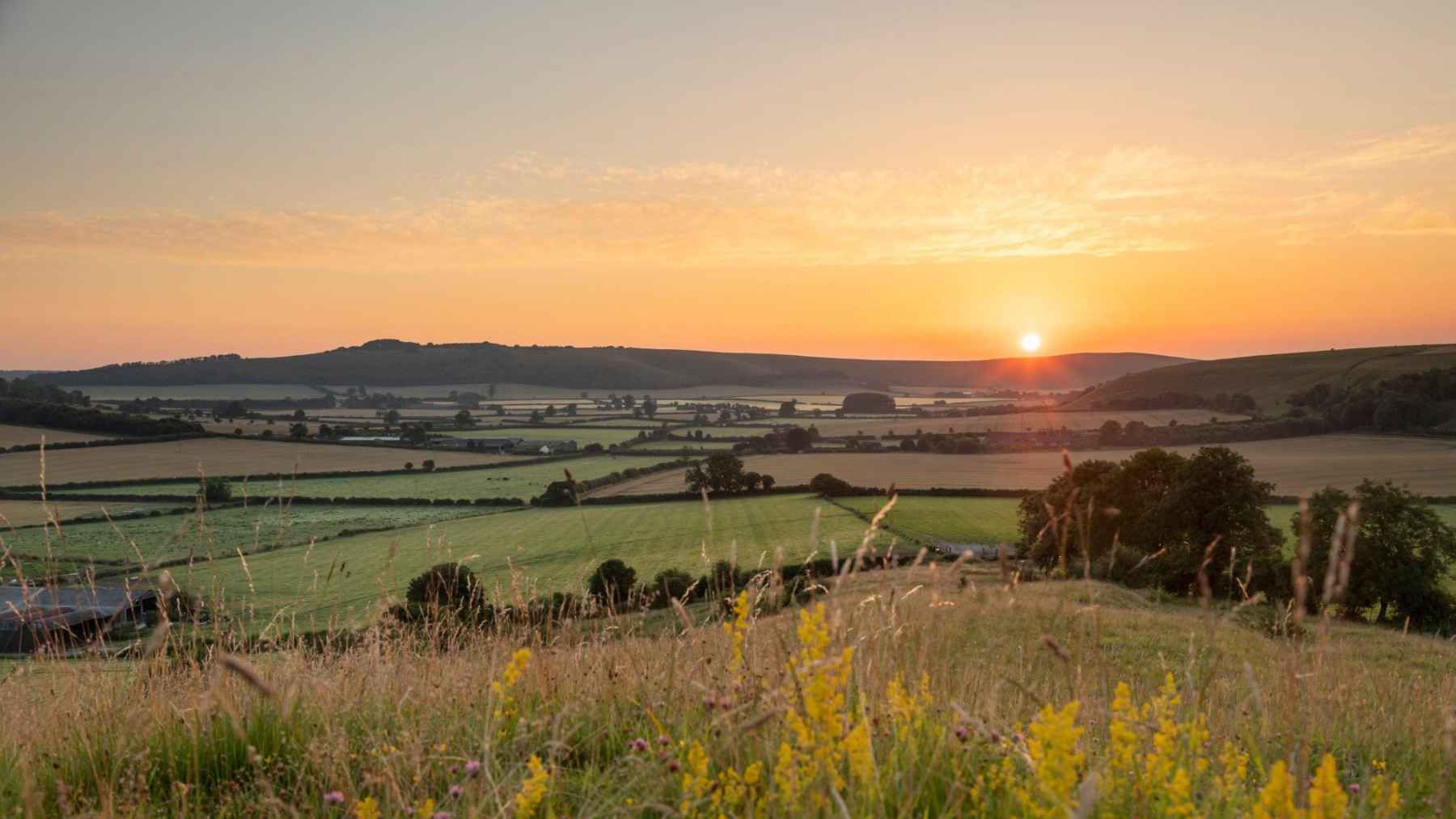
Skyscape archaeologist Dr. Fabio Silva analyzed the ancient sky, the landscape, and the horizon, concluding that the alignment worked to within about one degree.
One degree may sound imperfect, but prehistoric builders were not using a phone compass or a laser level. Thick posts, possibly up to about 20 inches wide, could easily account for a small difference. In practical terms, the people who built this were lining up a human-made marker with one of the year’s most dramatic sunrises.
What the pits revealed
The site was found during excavations carried out between 2015 and 2017 ahead of a U.K. Ministry of Defence development project. Across a roughly 30-acre area overlooking Bulford, archaeologists uncovered 48 pits containing pottery, animal bone, worked flint, charcoal, and other material. Radiocarbon dating points to activity around 2950 B.C.
That narrow date range is important. It suggests the material may have been deposited over a fairly short span, perhaps as people gathered repeatedly for seasonal events. Think of it as an ancient meeting place, not a permanent town, where food, tools, ritual, and astronomy may have overlapped.
One pit also contained an extremely rare disc-shaped knife. Wessex Archaeology says it may have been placed there as a symbolic reference to the sun. That interpretation is cautious, as it should be, but the object adds another bright clue to a site already centered on solar movement.
Why this matters for Stonehenge
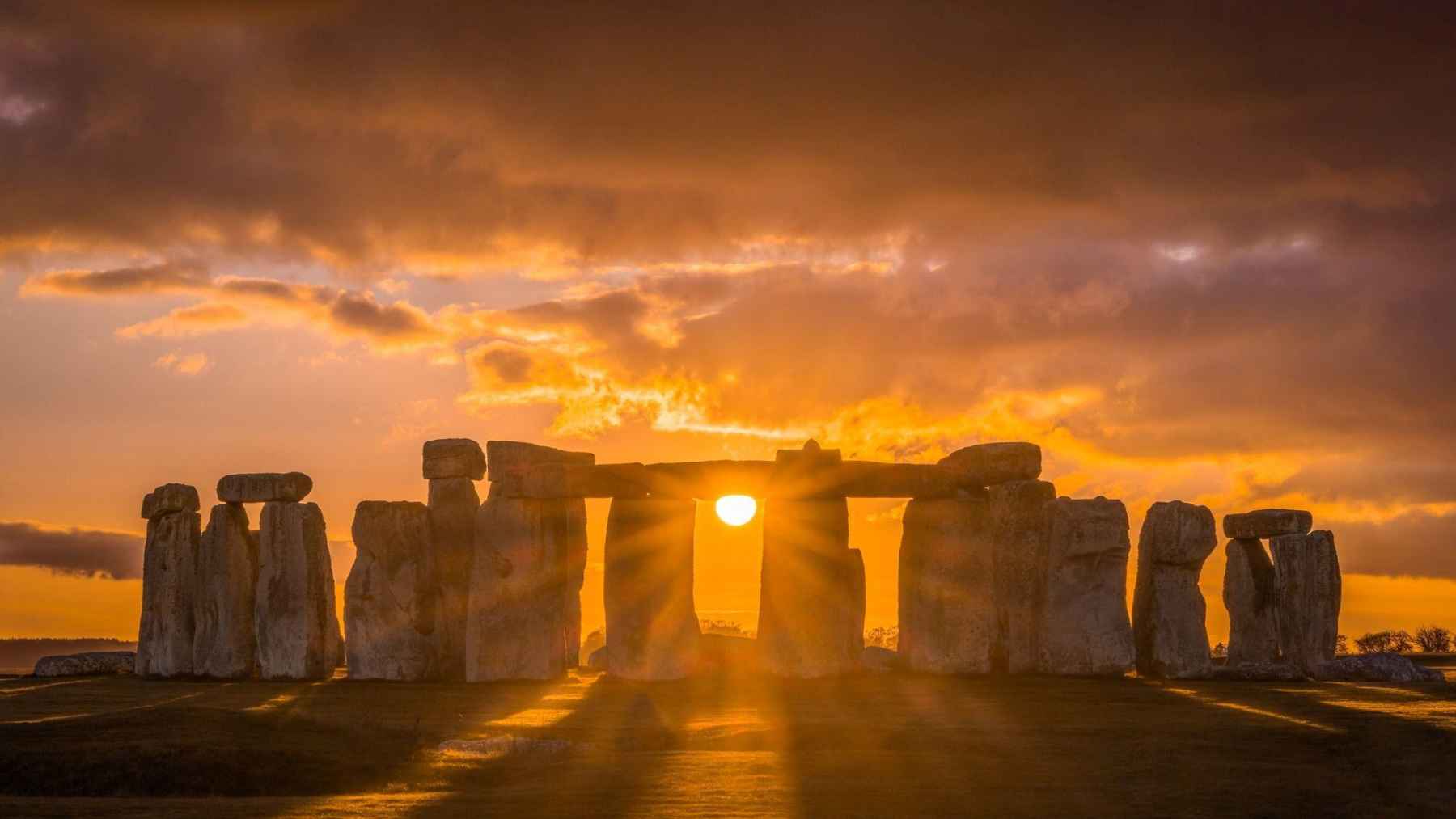
Stonehenge was built in stages, with its larger sarsen stones raised around 2500 B.C. English Heritage notes that the monument was carefully designed in relation to the solstices, including the summer sunrise near the Heel Stone and the winter sunset toward the southwest.
The Bulford discovery pushes that interest in the sun deeper into the local past. Wessex Archaeology describes it as the earliest known solstice alignment in the Stonehenge landscape, which means the famous stone circle may not have been the beginning of the story. It may have been a later, grander expression of an older tradition.
Could the same people have been involved? Possibly. Phil Harding, the archaeologist who led the excavation, has suggested the site may even have been connected to workers involved in early Stonehenge construction.
That does not mean we should picture a neat blueprint passed from one project to the next, but it does suggest these communities were likely aware of one another.
A careful claim, not a solved mystery
This is where the story gets more interesting. Not every expert is ready to call two postholes a confirmed solar monument. Jim Leary of the University of York told National Geographic that “two postholes” do not make a fully convincing alignment, while also noting that such an idea would fit the period.
That skepticism is healthy. Archaeology often works with fragments, stains in soil, broken tools, and the empty spaces where wood once stood. The challenge is to weigh patterns carefully without turning every coincidence into a ceremony.
Still, the Bulford evidence is hard to ignore. The dating, the post placement, the solstice sightline, the nearby Stonehenge landscape, and the gathered artifacts all point in the same general direction. Maybe not proof beyond debate. But certainly enough to make researchers look again.
A landscape built around seasons
For people living 5,000 years ago, the sun was not just scenery. It shaped cold and warmth, planting and harvest, travel and gathering, the rhythm of everyday survival. Today, a calendar notification tells us summer has arrived. Back then, the horizon may have done that work.
That is why solstice alignments can matter so much. They are not only about astronomy in the modern scientific sense. They are about how people understood time, nature, and their place in a world where the return of light could feel like reassurance.
Dr. Matt Leivers of Wessex Archaeology put it in religious terms, saying the site reflects how prehistoric people understood the cosmos and the passage of time. We cannot know exactly what the sun meant to them. But we can see that they spent real effort marking its movements.
Stonehenge’s story just got deeper
The new find does not make Stonehenge any less extraordinary. If anything, it makes the monument feel more rooted in the landscape around it. Before the giant stones, there may have been timber posts. Before the tourist crowds and livestreams, there may have been small groups waiting for the same sunrise.
That image is powerful because it connects two worlds. On June 21, modern visitors gather at Stonehenge with cameras, jackets, and water bottles. Around 2950 B.C., people may have gathered nearby with no written calendar at all, watching the sun climb over a familiar horizon.
The press release was published on Wessex Archaeology.