Seawater is about 3.5 percent salt by weight. That works out to an average salinity of about 35 parts per thousand, according to the NOAA Ocean Service.
If the salt in the sea were removed and spread evenly over Earth’s land surface, it would form a layer more than 500 feet (150 m) thick. That is roughly the height of a 40-story office building, the US Geological Survey writes, citing NOAA.
Rain that dissolves rock
“Salt in the ocean comes from rocks on land,” the USGS states on its Water Science School page. Rain picks up carbon dioxide from the air, which makes it slightly acidic. Over time, that weak acid wears rocks down and frees their minerals.
Streams and rivers carry those dissolved ions to the sea. Living things take many of them out of the water. Others stay behind and build up over long periods, NOAA explains.
Early seas were probably only slightly salty, the agency says. Rain falling on land for millions of years kept breaking down rock and washing its minerals into the ocean.
4 billion tons a year
US rivers carry about 225 million tons of dissolved solids to the ocean every year, NOAA reports. Worldwide, rivers bring about 4 billion tons of dissolved salts a year.
Rivers stay fresh because rain keeps refilling them with fresh water, while the sea collects the salts of every river that flows into it. Some of the largest rivers show how much fresh water that is, like the Congo pouring into the Atlantic.
About the same amount of salt leaves the water as sediment on the seafloor, so the ocean is probably no longer getting saltier, according to NOAA’s page on rivers.
Salt from the seafloor
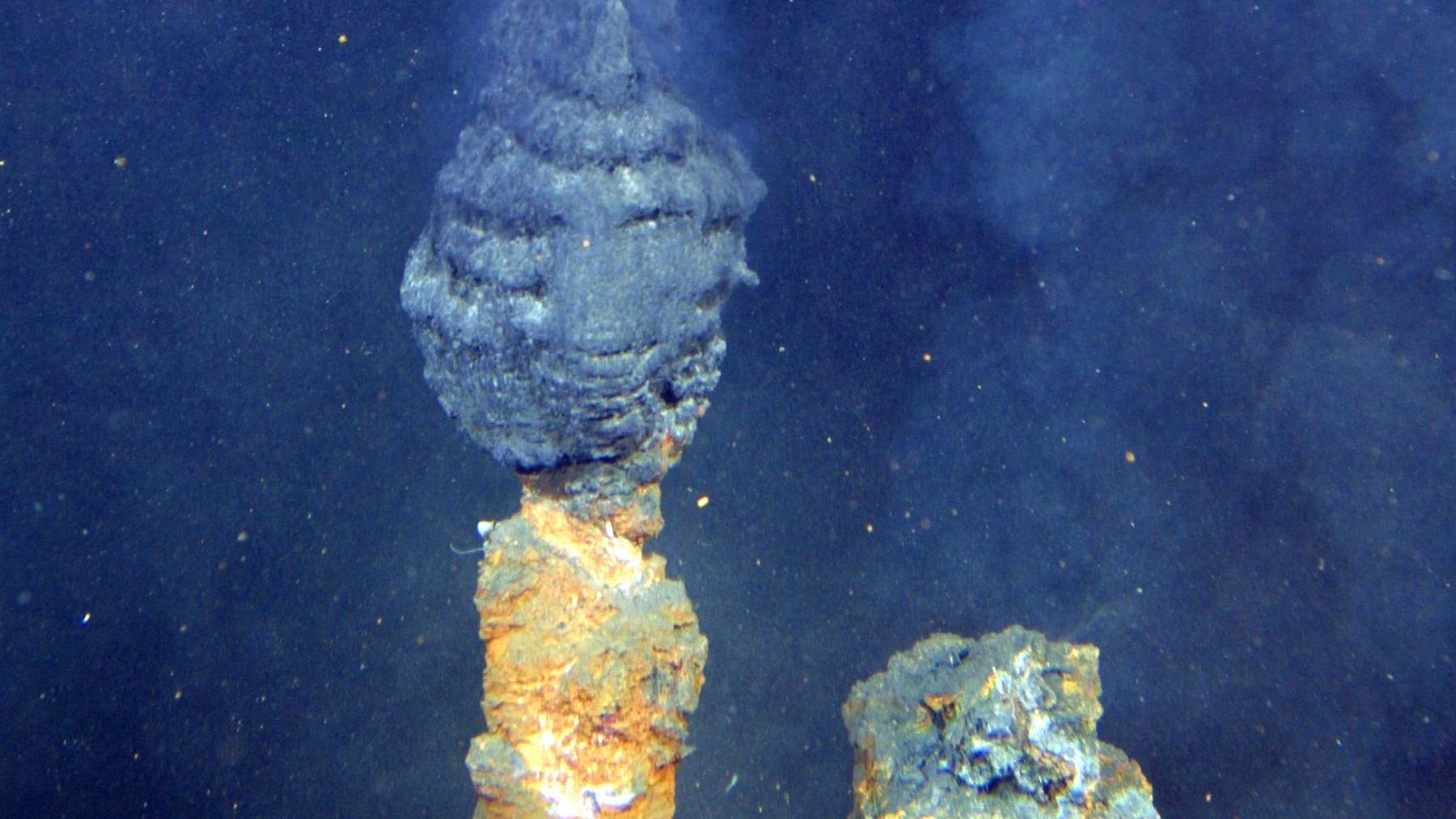
Some of the salt comes from below, as seawater seeps into cracks in the ocean floor, where magma heats it. The water then loses oxygen, magnesium and sulfates and picks up metals from the surrounding rock, NOAA says.
The whole volume of the ocean is estimated to cycle through these hydrothermal systems every 10 to 20 million years, the USGS adds. Underwater volcanic eruptions also release minerals straight into the sea.
Salt domes, deposits buried under land and seafloor, add a little more. NOAA notes they are common on the continental shelf of the northwestern Gulf, off the US coast.
Mostly sodium and chloride
Two ions make up most of what is dissolved. Chloride and sodium account for about 85 percent of the ions in seawater, NOAA says, and magnesium and sulfate for about 10 percent. The USGS puts chloride and sodium at more than 90 percent, so the exact share depends on the source.
One cubic mile of seawater holds about 120 million tons of sodium chloride, according to the USGS. The same water holds traces of almost everything else, including gold that no one can mine and lithium and magnesium.
About 97 percent of the water on Earth is saline, and the oceans cover about 70 percent of the planet’s surface, the USGS notes.
Saltier in the subtropics
Salinity across the ocean changes with temperature, evaporation and rainfall, NOAA explains. It tends to be lower near the equator and the poles and higher at mid-latitudes, where evaporation is strong.
The first global salinity map from NASA’s Aquarius instrument, released in September 2011, showed that pattern in detail. The Atlantic came out saltier than the Pacific and Indian oceans. The Arabian Sea was clearly saltier than the Bay of Bengal, which receives the Ganges and the monsoon rains.
“Salinity is the variable we can use to measure that coupling,” Gary Lagerloef, the mission’s principal investigator at Earth & Space Research in Seattle, told NASA’s Earth Observatory in 2012. He meant the link between Earth’s water cycle and its climate.
What the numbers leave out
The figures in this article are averages, and local salinity can move above or below 35 parts per thousand, and agencies give slightly different shares for the main ions. Some popular totals for all the salt in the ocean appear only in secondary sources, so this article does not use them.
The 500-foot comparison comes from the USGS, which credits NOAA for it. NOAA’s current version of the page no longer includes it.
The data come from the NOAA Ocean Service, the US Geological Survey and NASA, consulted on November 3, 2026.
Photo: NOAA Ocean Explorer / Wikimedia Commons (public domain)