Could part of a building help keep you cool simply by staying wet? Researchers at Graz University of Technology in Austria have developed porous ceramic cubes that use evaporating water to remove heat, recording a temperature drop of almost 12.6 degrees Fahrenheit immediately around one cube during an attic test.
The cubes can be assembled into cooling walls, offering a possible way to ease heat indoors and in outdoor gathering spaces. But the finding comes with an important distinction. That temperature drop was measured close to the ceramic, and it does not establish that a wall could cool an entire home by the same amount.
What the attic test showed
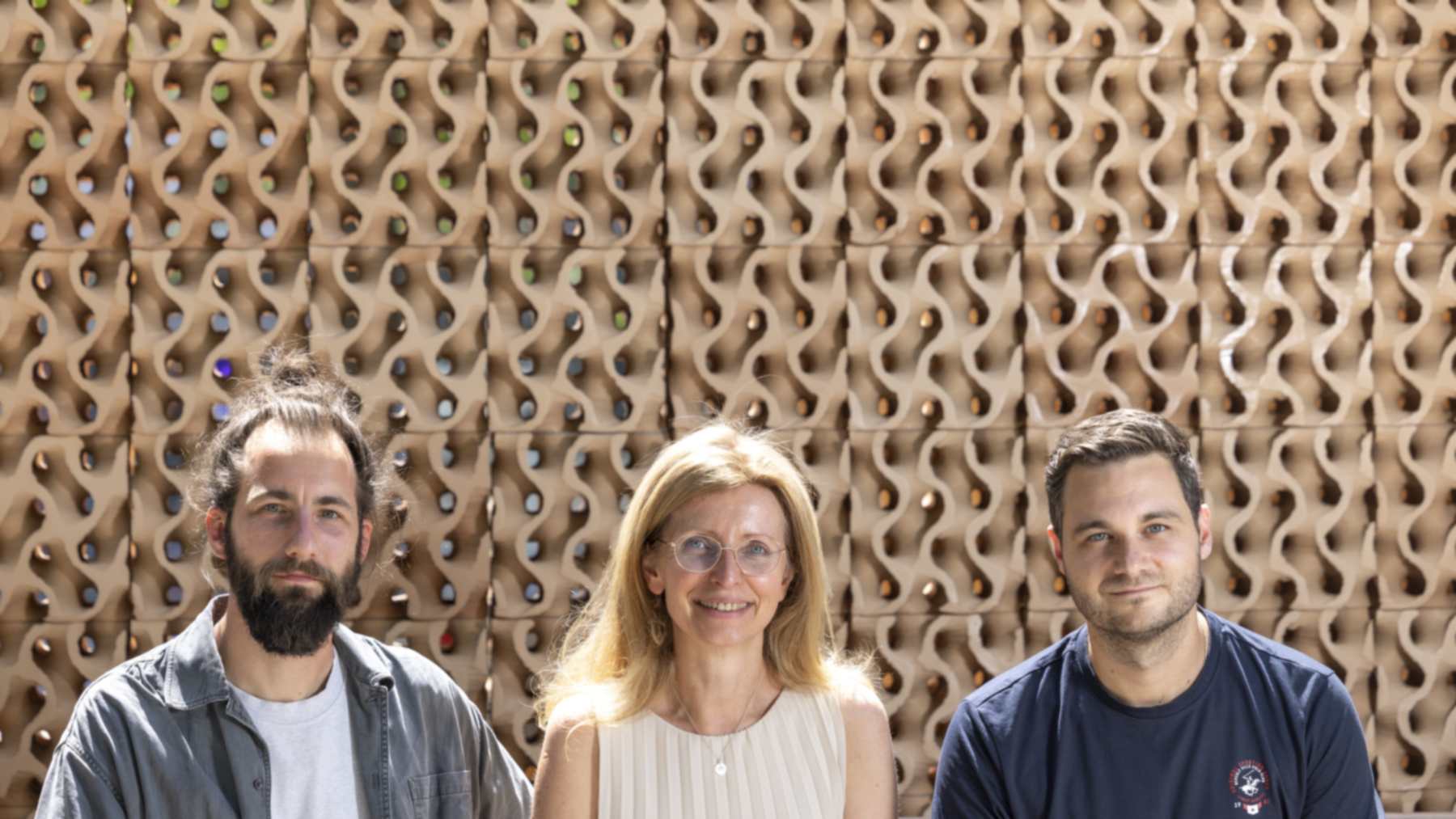
The researchers tested a water-filled cube in a hot attic under controlled conditions. “The cooling effect was clearly noticeable throughout the room,” said Kristijan Ristoski in the university’s announcement, describing work that helped integrate the cubes and their water supply into a wall.
That observation suggests the effect extended beyond the immediate measurement area, but it is not a room-wide temperature reading. For anyone hoping to lower the thermostat or the electric bill, the difference matters.
An old cooling trick
The underlying process is called evaporative cooling. When liquid water turns into vapor, it takes in heat from the ceramic and its surroundings, much as evaporating sweat helps cool your skin.
Milena Stavric, a researcher at the university’s Institute of Architecture and Media, points to clay water jugs and traditional wind towers as older examples of this approach. The new work combines that familiar physical process with computer-designed shapes and ceramic 3D printing.
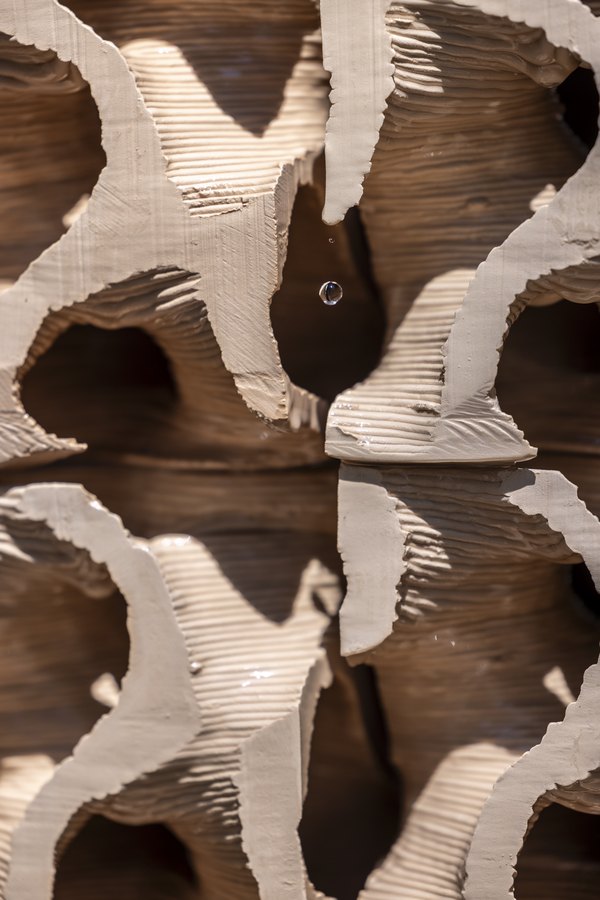
Water moves through tiny spaces in the material by capillary action, the same basic process that lets a paper towel soak up a spill. As moisture reaches exposed surfaces, it can evaporate and carry heat away.
Why print the clay?
Each cube measures roughly 9 inches on a side. Its intricate shape packs a large evaporation surface into a compact object, while firing the printed clay at relatively low temperatures helps preserve its porous structure.
The design serves a practical purpose beyond its unusual appearance. The researchers can shape the pathways through which water spreads and air moves, helping more of the ceramic participate in cooling.
A related 2023 study by members of the team appeared in Ceramics. It showed how additives that burn away during firing can produce different levels of porosity within a printed object, opening possibilities for controlling properties such as water absorption.
Humidity changes the picture
Why would the same wall perform differently on different summer days? Evaporation depends on the surrounding air, so temperature, humidity, airflow, and sunlight all affect the cooling result.
Dry air offers better conditions for this process than air already loaded with moisture. The Australian government’s guidance on evaporative cooling also identifies reduced effectiveness on humid days and water consumption as important limitations.
Inside a building, the added moisture needs attention, too. As that guidance explains, ventilation helps prevent humidity from building up and limiting further cooling, a reminder that a ceramic wall would need to work with the building around it.
Fungi leave useful gaps
The team is also experimenting with fungi and sawdust in its Shape Lab. Threadlike fungal growth, called mycelium, forms a network within the clay mixture before the material is printed and fired.
During firing, the fungal material and sawdust burn away, leaving a network of small and larger pores. Those openings provide routes for water to spread through the finished ceramic, with the aim of improving cooling performance.
Another material under investigation is sediment dredged from Lake Neusiedl. Using some of that material in printable building products could give it a second use, although the researchers are still testing the mixtures.
From a cube to a wall
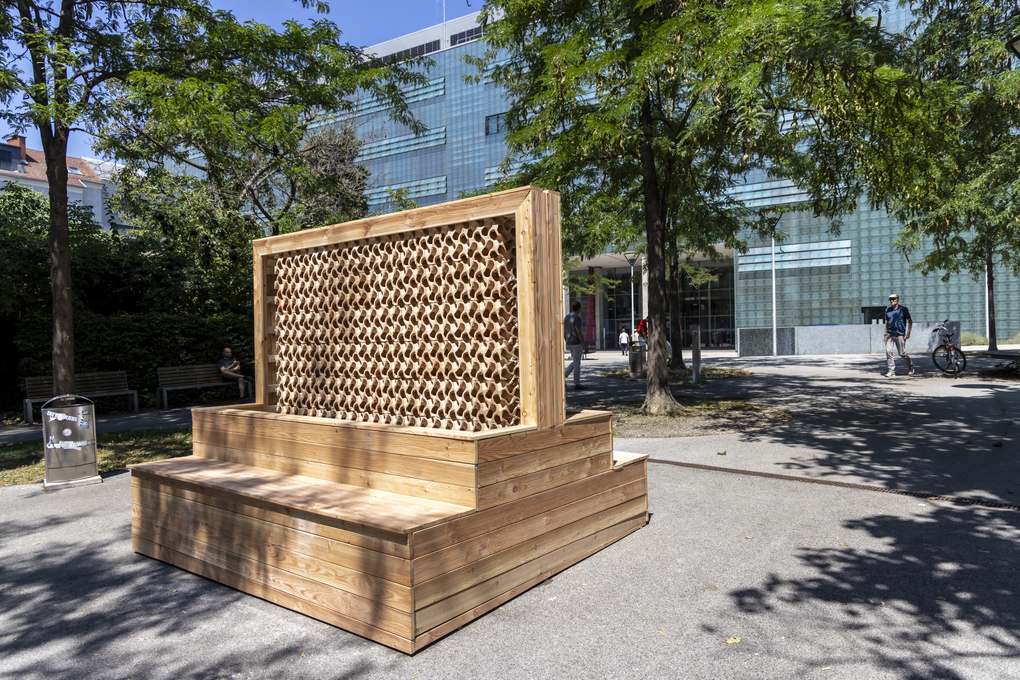
A freestanding demonstration wall, approximately 6.6 feet tall and equally wide, has been installed on the university’s Neue Technik campus. It gives the team a larger structure to examine beyond the initial indoor cube test.
An official update dated September 9, 2026, said measurements of the wall’s outdoor cooling capacity were still underway. It also identified microbiological testing as planned work, showing that practical questions about long-term operation remain open.
The update included another detail that matters when describing the system’s energy use. Researcher Julian Jauk said the next wall would include solar panels to power a small water pump, so the broader installation should not be described as requiring no electricity.
Could it replace air conditioning?
For now, the ceramic cooling wall remains a research project, with commercialization under evaluation. The researchers envision uses in homes, offices, schools, and public waiting areas, but the reported tests do not yet establish reliable performance across those settings.
How much these walls might reduce air-conditioning use will depend on climate, water needs, installation design, and measured performance over time. The university announcement provides no household savings figure, so a lower electric bill remains a possibility rather than a demonstrated outcome.
The peer-reviewed work was published in the book Synergies by JOVIS Verlag on May 26, 2026.
Photo: Lunghammer / TU Graz