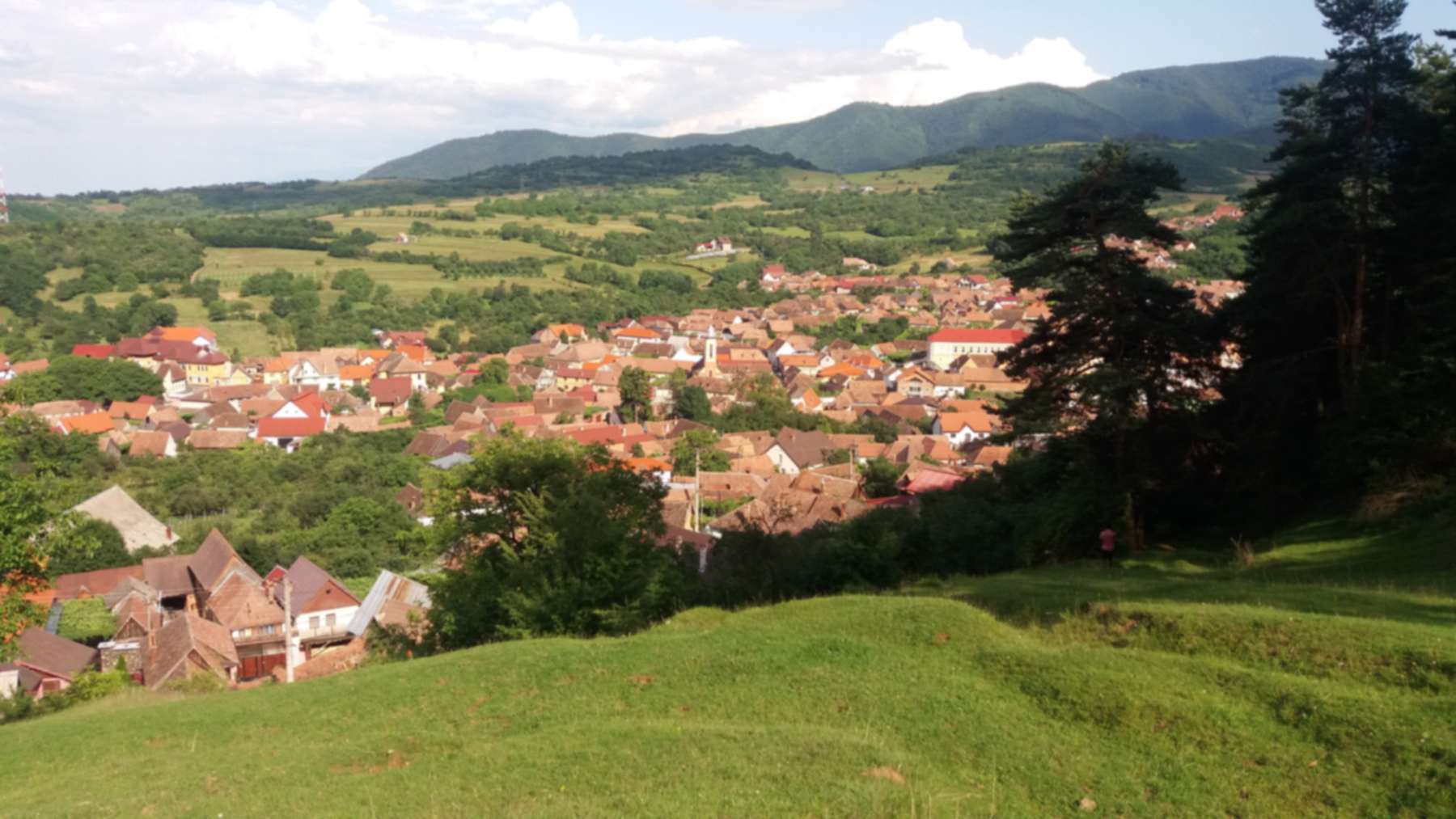
More than 40 Magellanic penguins born in captivity have moved from Mar del Plata to Bubalcó, a wildlife refuge on a river island in Argentina’s Río Negro province, after a court ordered their transfer. The park announced their arrival on September 15, 2026, and said that at first the birds had not explored even a third of their new home.
Bubalcó is a wildlife park run by a foundation of the same name at Isla 19, Contralmirante Guerrico, in Allen, near the border with Neuquén. Its bioparque page gives the size, 84 acres (34 hectares), and describes it as a refuge for animals that cannot return to nature.
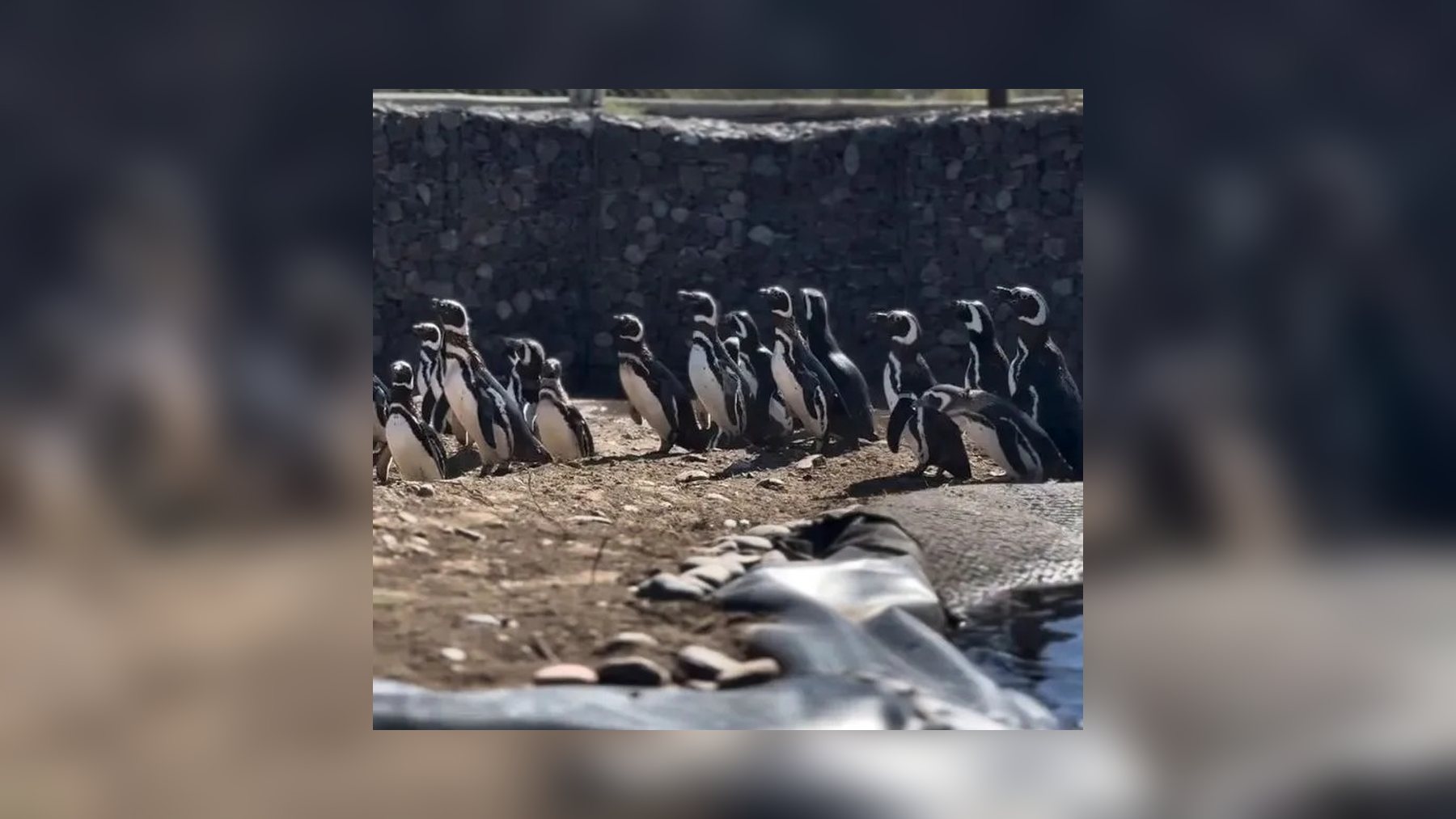
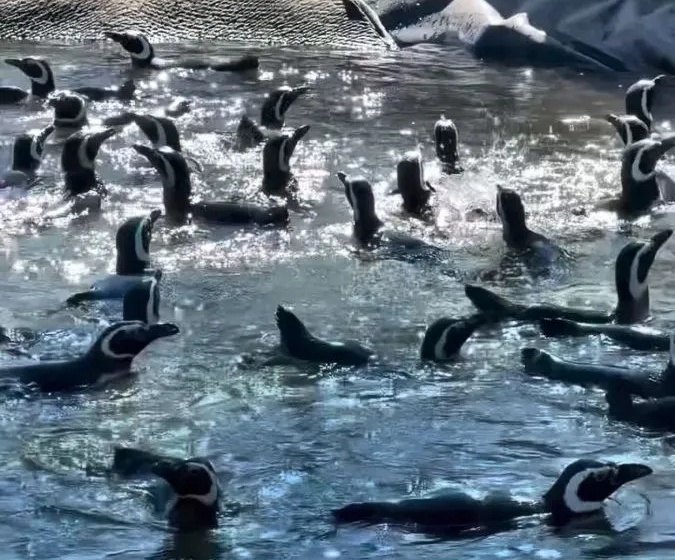
In a video posted on its official Instagram account, penguins stand in a loose line on stony ground beside a black pool liner, and then dozens of them splash in the water. The refuge wrote in Spanish that staff spent the day watching the birds take their first jumps and explore the channel and ramps prepared for them. “They still haven’t covered even a third of their new home,” it added.
A court sent them to Bubalcó
The penguins had lived in Mar del Plata, where it was no longer possible to care for them, according to the post. By court decision they came to Bubalcó, which says it is proud to give them a refuge where they can live in peace and well cared for.
More than 400 wild animals live at Bubalcó, by the foundation’s count, and 40 percent of them came in as rescues. It works with the wildlife agencies of Río Negro and Neuquén and takes in animals from old zoos that can no longer guarantee them the best conditions, its website says.
Born in captivity, with no way back to sea
The birds were born and raised in captivity, the post says, so they need human care to survive and can’t be released. The foundation’s FAQ gives the same reason for every animal in the park, starting with three words: “Because they can’t.” The animals are used to people and are not in a condition to survive in the wild, it explains.
Releasing animals raised by people is risky. One program spent more than $5 million to free 30 birds, and 29 of them were dead within six months.
A wild Magellanic penguin has to catch its own food. According to the Aquarium of the Pacific in Long Beach, California, it swims around a school of fish in shrinking circles, then dashes in to snatch what it can, usually swallowing prey underwater head first. Wild birds usually hunt in groups for small fish, squid and krill, with dives that typically reach 164 feet (50 meters) and last about 90 seconds.
A channel and ramps to explore
Bubalcó has not published plans or measurements of the enclosure. Its post mentions the channel and the ramps and says the space will later be ready to take in other rescues that need it.
Room to swim matters for this species. Its flippers work as paddles, the Aquarium of the Pacific says, letting the birds reach speeds of over 24 kilometers (15 miles) per hour when foraging.
On land, wild Magellanic penguins dig. They nest under bushes, in grass, among rocks or in burrows dug into soft soil or peat, often on cliffs facing the ocean, and those burrows slope down as deep as 2 meters (6 feet).
Fresh water, salt and heat
Magellanic penguins don’t live on ice. They are medium-sized, temperate-water migratory penguins that breed on the coasts of southern Chile and Argentina, as far north as the Valdés Peninsula, and in the Falkland Islands. In winter they follow schools of anchovy north as far as Peru and Brazil. Adults stand 24 to 30 inches (61 to 76 centimeters) tall and weigh 8.3 to 14.3 pounds (3.8 to 6.5 kilograms).
A river island is a long way from salt water. A penguin feeding handbook from the Nutrition Advisory Group of the Association of Zoos and Aquariums, by Sue Crissey, Kerri Slifka and Patty McGill of the Brookfield Zoo, says nasal salt glands let penguins drink salt water, but captive birds are commonly given fresh water. Where they have only fresh water, extra salt has sometimes been added to the diet to keep those glands working. “Whether this is a necessary practice has not been established,” the authors write, though some institutions give about 250 mg of salt per bird a day without apparent harm.
Heat is another matter. When penguins get too hot, the Aquarium of the Pacific notes, they can extend their flippers upward to expose more surface to a breeze.
They arrived as the breeding season starts
The timing is odd, too. On the coast, males start arriving at the colonies in mid-September and reclaim last year’s nest if previously mated, according to the Aquarium of the Pacific. The species is “considered to be among the more aggressive penguin species,” especially early in the breeding season, when males fight each other for nests and females.
What the post leaves open
So far, everything public about the colony comes from Bubalcó. The post says more than 40, not an exact number, and doesn’t name the court. No outside welfare report on the birds has been published.
The penguins may be in Río Negro for a long time. The Aquarium of the Pacific puts their average lifespan in the wild at 10 years, with some living as long as 20, and up to 35 years in aquariums and zoos.
A bear raised in a tiny cage started hibernating again after it got space, cold and time. The penguins in Río Negro have had about a month in theirs.
Bubalcó announced the arrival on its official Instagram account on September 15, 2026, and thanked the birds’ previous caretakers, who can visit them whenever they want. “And welcome, penguins,” the post ended.
Photo: Fundación Bubalcó