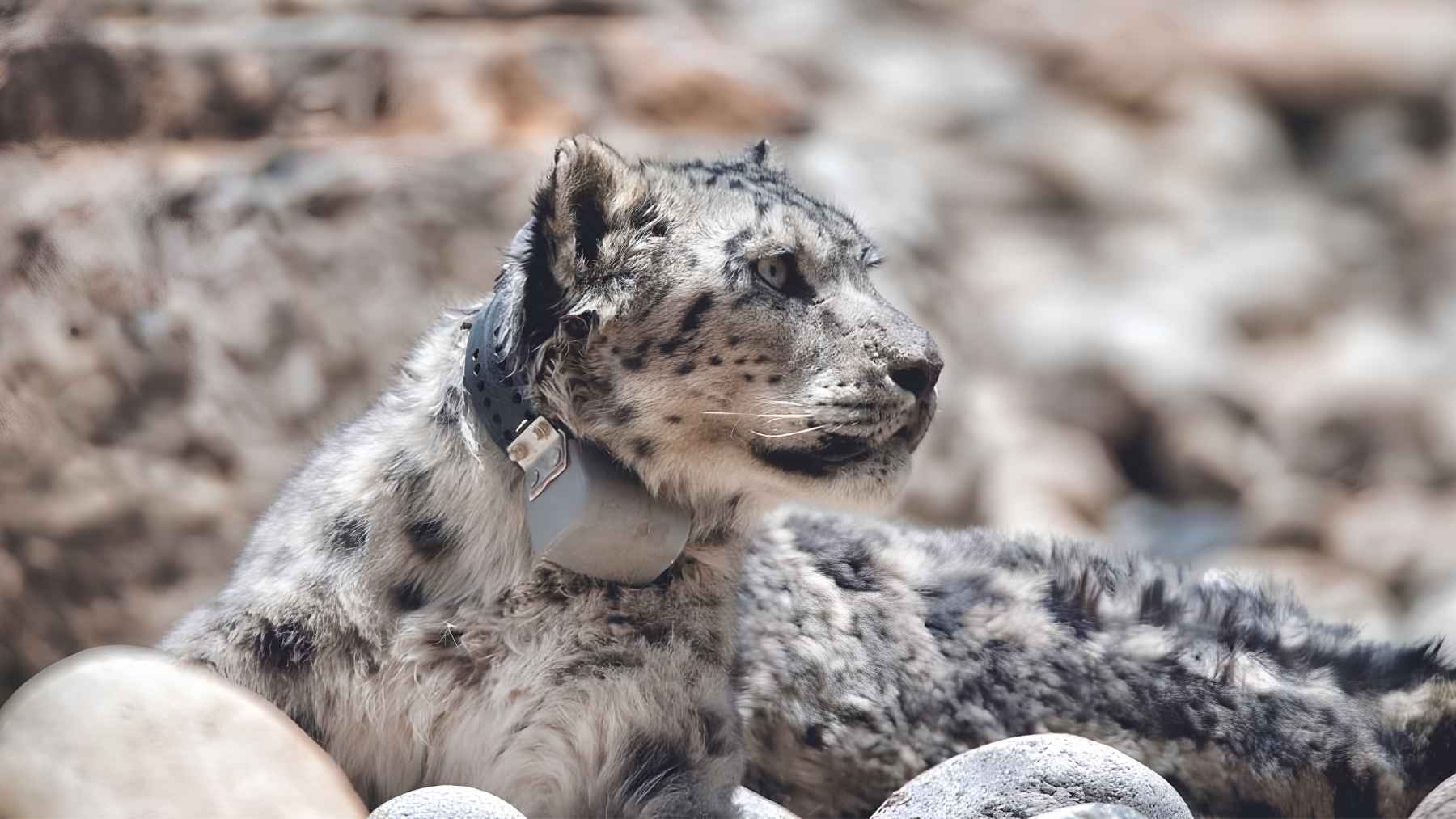
Four GPS locations collars followed the trail of snow leopards in the Himalaya during many days, and it showed how these animals repeatedly crossed into India or China, revealing home ranges between 6 to 97 times larger than previous calculations that were done in Nepal.
Four collars opened a rare window into the mountains
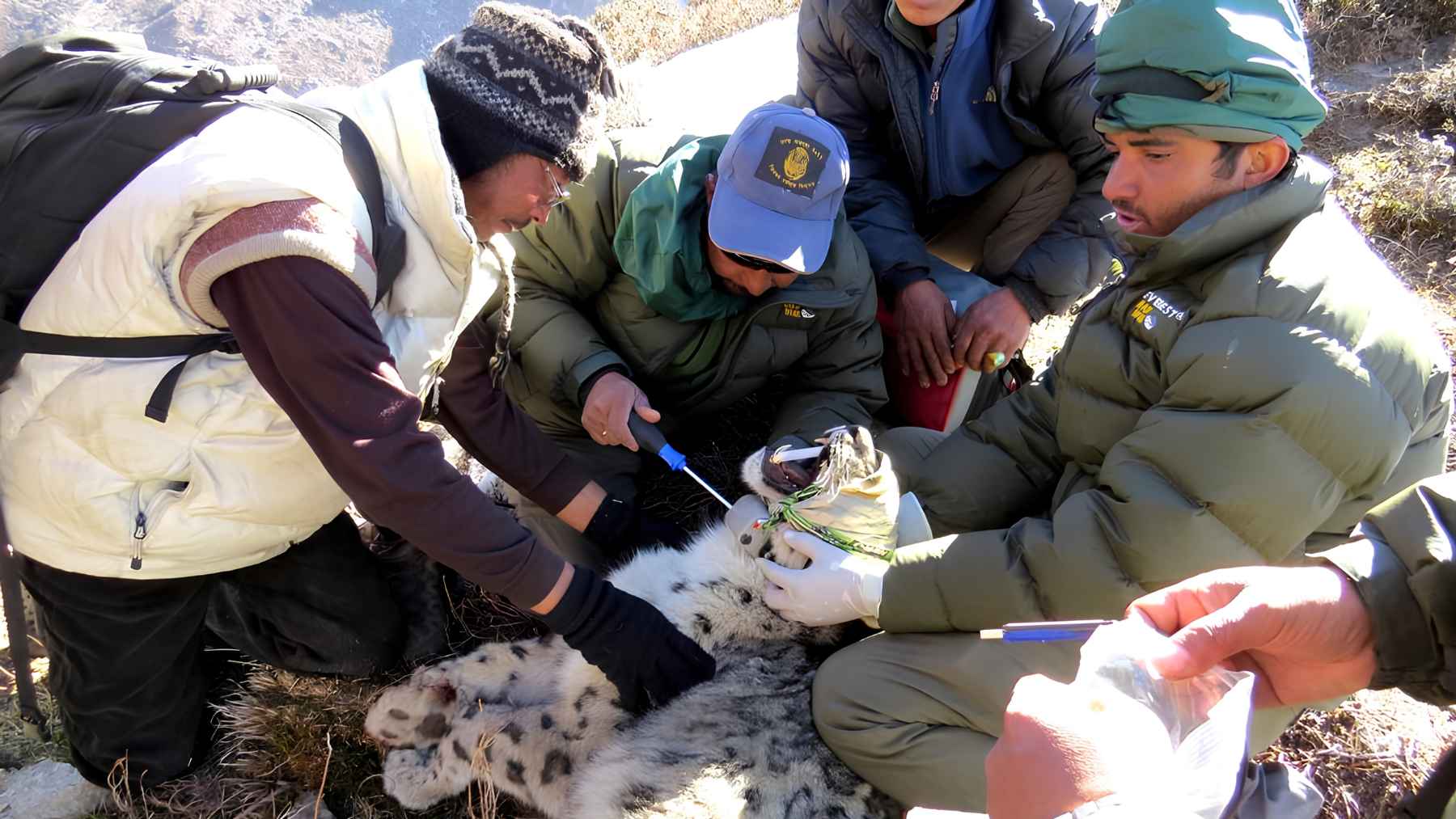
This satellite GPS collar placement in Nepal’s Kangchenjunga Conservation Area was done between November 2013 and May 2017 on four snow leopards. The devices were strictly programmed so that they recorded a position every four hours. This means that they generated 4,707 locations across 1,239 tracking days!
Still, researchers say that getting those points was not easy at all. For example, one collar randomly stopped its transmissions after 20 days and another one only could track the adult male Ghangjenjwenga for 659 days.
The cats treated national borders like ordinary ridgelines
Three of the four snow leopards crossed an international boundary five to seven times each. Specifically, two of them, Yalung and Ghangjenjwenga, moved into India’s Khangchendzonga National Park as if it were a daily part of their lives. For you to have an idea,during their tracking periods, the cats spent 10.3 percent to 34.3 percent of their time outside Nepal!
This idea of cats not following human maps can be illustrated by Rinjan Shrestha quote: “Snow leopards don’t recognize human maps.” Rinjan Shrestha, WWF-Canada’s lead specialist for Asian big cats, wrote this after initially participating in the collocation of the GPS collars.
Why the 97 times figure needs some context
So, how large can a snow leopard’s territory be? People constantly working on these matters suggest that a tighter method estimates ranges of 102 to 312 square kilometers.
But now with the GPS collars, it could be seen that they can collect data across vastly more extensive territory. This happens because the GPS can gather much more information when the territories are inaccessible (which traditional VHF methods could not achieve)
A park boundary cannot protect the whole journey
Having the information,and mostly the confirmation that the leopards are moving around the high mountain habitats of Nepal’s Kangchenjunga Conservation Area, India’s Khangchendzonga National Park, and China’s Qomolangma, leads researchers to suggest coordination between Nepal, India and China.
Actions like compatible monitoring, community support, or connected habitat planning, could really help the conservation follow the animal instead of stopping at a checkpoint. Nepal’s Conservation Action Plan for 2024 to 2030 is another wake-up-call to remember how important regional and international cooperation is to preserve the species.
A small study carries a large warning
Although these GPS collars brought us a lot of new information, still four animals are not enough to describe all of the movements of snow leopards in the Himalayas. Even, as was said before, one of the cats was only tracked for 20 days, which means that the calculations were just based on three of them during a bit more than three months.Maybe this information does not give us a detailed image of the entire animal population, but still, it reveals that protected areas designed around incomplete movement data may cover only part of an animal’s life.
If the different countries come together and “commit to” more collars across other seasons and landscapes, patterns could be shown better. But for now, what is definitely something that can be a fact is that the four snow leopards move across Nepal, India, and China. This means that the protection must transcend borders, not only for the Reserves but also for their animals.