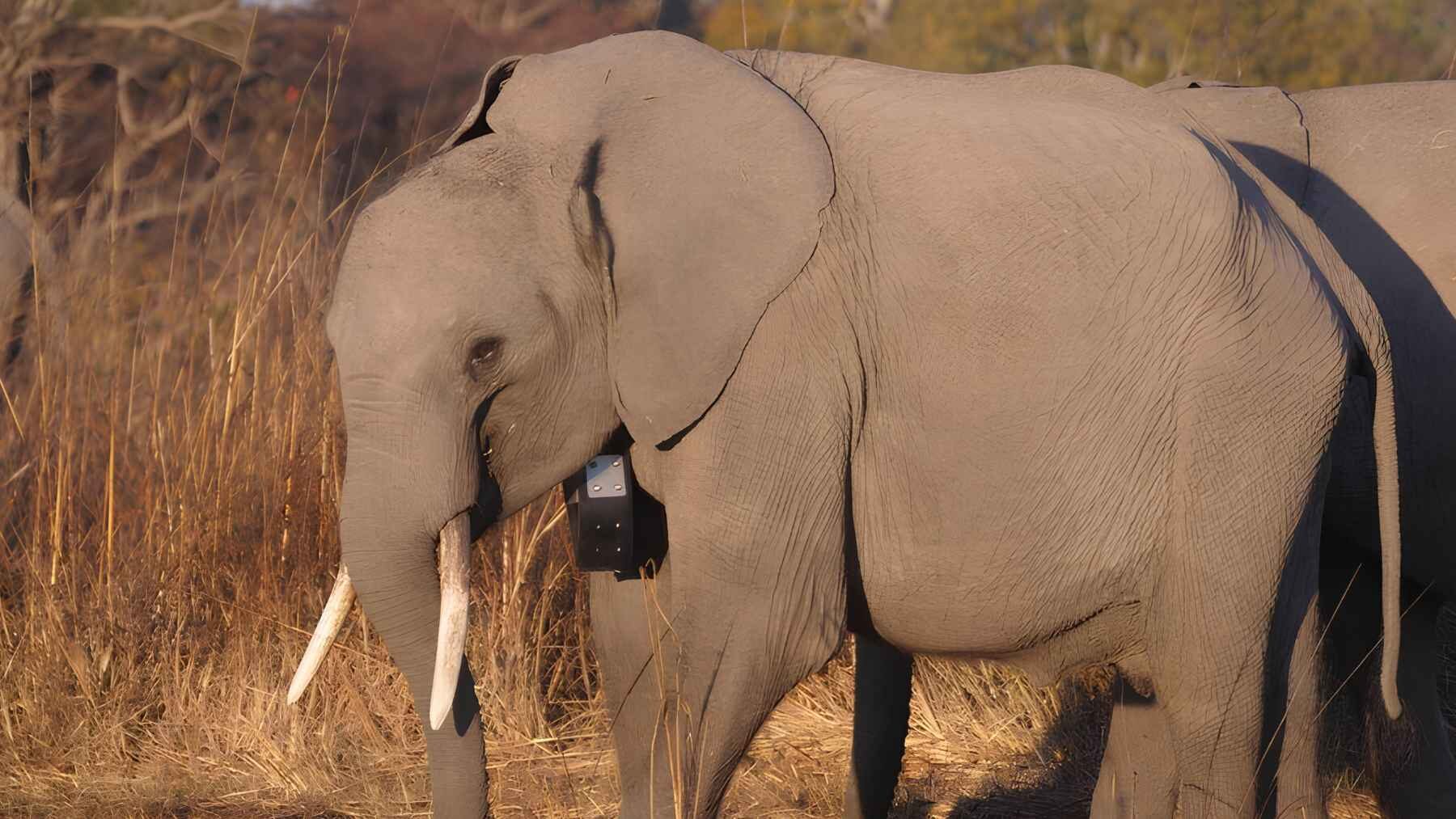
In June 2023, conservationists placed a GPS collar on a young bull elephant north of Sioma Ngwezi National Park in Zambia. Known as Z16, he went on to cover nearly 7,500 miles over roughly two years, moving across four countries and through six national parks. That is about three times the straight-line distance between New York and Los Angeles.
Yet the mileage is only the opening scene. Z16 shows that parts of southern Africa remain connected for a roaming bull, but wider tracking research reveals that fenced borders affect males and female-led family herds very differently. For wildlife corridors to ease pressure in areas with high elephant densities, they must work for mothers, calves, and the people living beside them.
A route older than borders
Z16 did not wander in random loops. In early 2024, he used Namibia’s Sobbe Corridor and Mudumu National Park, crossed into northern Botswana, and moved south through the Okavango Delta toward Makgadikgadi Pans National Park. He later traveled east to Hwange National Park in northwestern Zimbabwe.
Kerryn Carter, a wildlife biologist and founder of Elephant Connection, said bulls appear to use the arrival of summer rains around November as a signal to move. She described their paths as “old routes that have been known for a very long time.” Still, a GPS collar cannot read an elephant’s memory, so the data show consistent, directional travel but cannot prove how or when a route was learned.
The real divide is fencing
A KAZA-wide assessment combined movement records from 291 collared elephants across the five-country landscape. Of those animals, 127 crossed at least one international border, including 67 males and 60 females. However, crossings over fences were far more restricted and occurred almost entirely among males.
A 2022 study in Frontiers in Conservation Science sharpened that picture. Among more than 100 tracked elephants near the Namibia-Botswana border, fenced sections formed an impenetrable boundary for females, with no exchange between collared animals on opposite sides. Males did cross, but seven of 21 accounted for most of those crossings.
One female broke the pattern
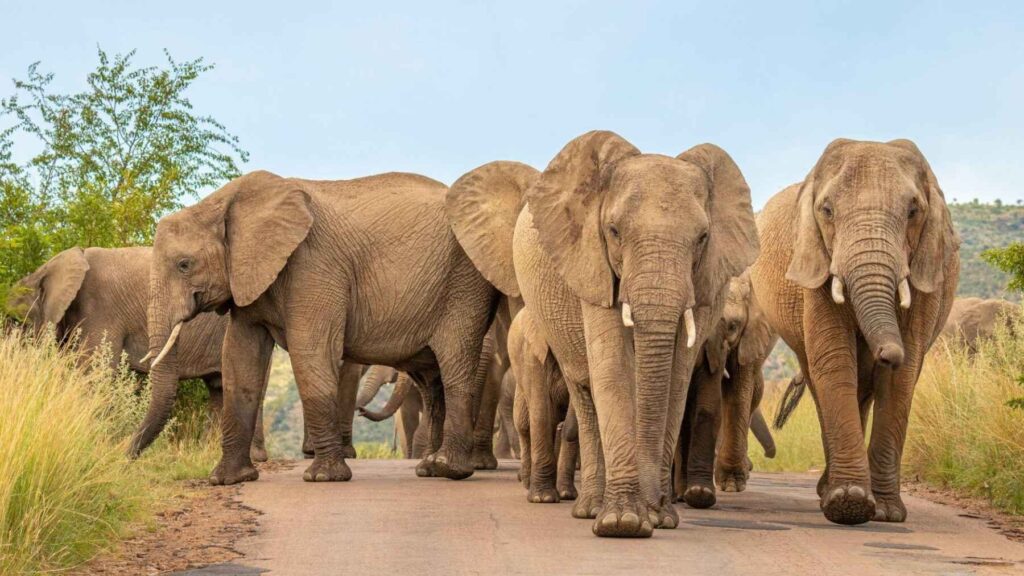
In April 2025, a collared female left Mahango Game Reserve and traveled roughly 93 miles west to Khaudum National Park, crossing several fences without a designated corridor. It was the first female movement of its kind recorded in more than 15 years of satellite tracking in that part of Namibia. One elephant is not a trend, but it proves the journey is possible.
Why are females generally more cautious? Researchers suggest that large rivers may define familiar home ranges, while remnants of old veterinary fences can physically obstruct calves. Past electrification and patrols may also have left a behavioral legacy, although that remains an interpretation rather than something a collar can directly confirm.
A corridor runs through farms
At its narrowest reported core, Sobbe is only about 2.5 miles wide. It sits inside KAZA, a conservation landscape of nearly 200,000 sq. miles spanning Angola, Botswana, Namibia, Zambia, and Zimbabwe. A coordinated 2022 survey estimated 227,900 elephants there, while roughly 2.7 million people also call the landscape home.
WWF scientist Robin Naidoo has compared corridors such as Sobbe to “pressure release valves” and ecological infrastructure. The image fits because a wildlife route needs protection much like a road or water line needs maintenance. Unlike a pipe, however, it runs through lived-in land.
Research by environmental anthropologist Emilie Köhler and Michael Bollig documented the human cost around Sobbe. Farmers may spend nights protecting corn, millet, sorghum, and other crops, sometimes using fires or drums to drive elephants away. Conservation jobs, wildlife credits, and crop defenses can improve tolerance, but benefits must be shared fairly or a green line on a map can become a hard night beside a field.
The real test is the herd
Corridors are partly intended to let elephants spread from crowded areas into lower-density habitat. Bulls such as Z16 make the map look connected, yet the tracking evidence suggests male dispersal alone is unlikely to redistribute the wider population if breeding herds remain behind fences. That is the uncomfortable part.
In practical terms, researchers have recommended reviewing or realigning certain fences and protecting broader landscape permeability rather than relying only on narrow passages. Any plan also needs stronger crop defenses, meaningful compensation, and a real role for communities whose land keeps the routes open. Otherwise, the corridor exists on paper but not in daily life.
So, what should scientists watch next? Not simply whether another bull walks thousands of miles, but whether the Mahango female remains an isolated case. If more females and calves begin using safe crossings, the corridors may finally work at the scale conservation planners need, though until then Z16’s journey is both a success story and a warning.
The study was published on Frontiers in Conservation Science.