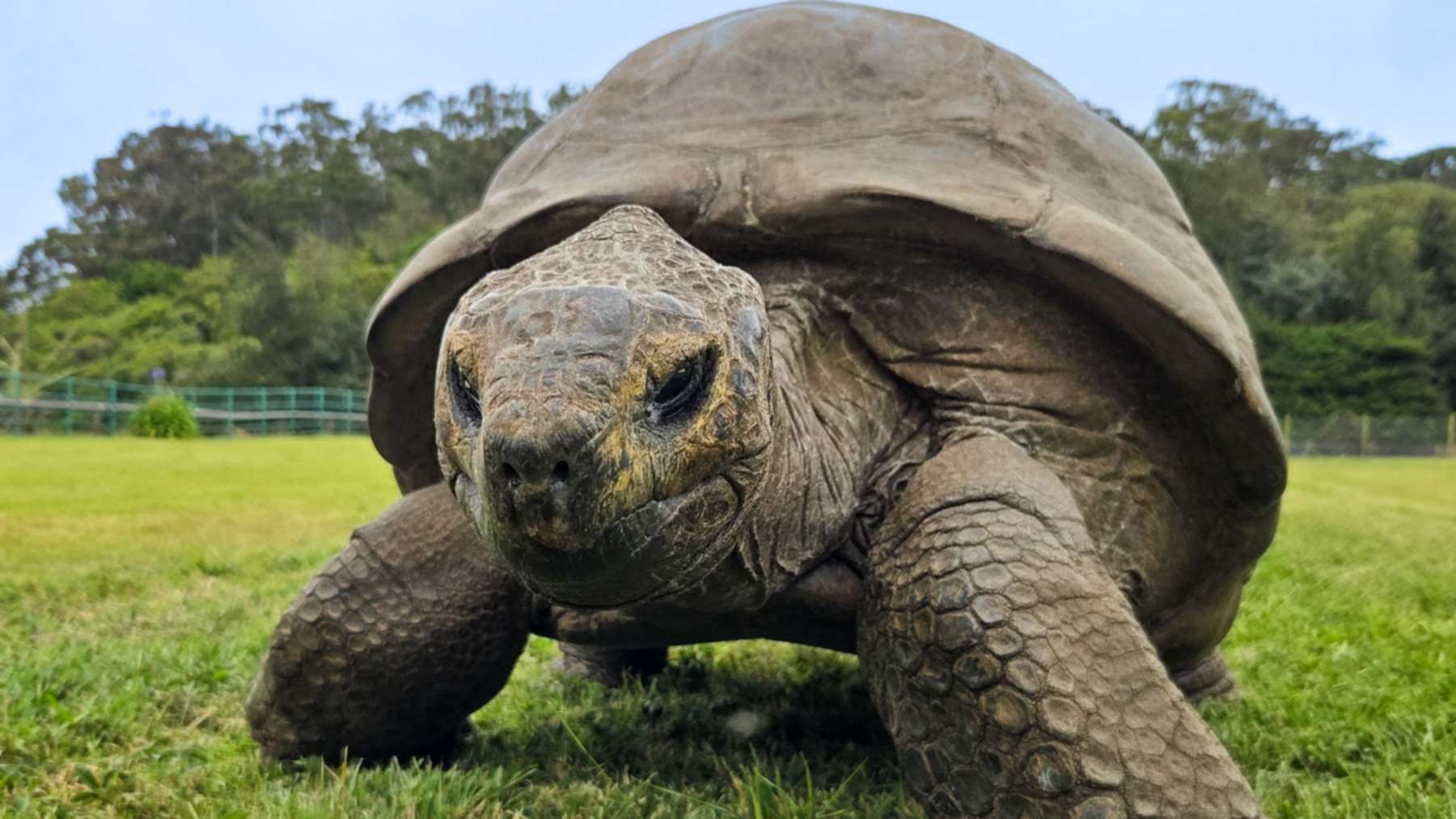
Jonathan, a 194-year-old giant tortoise on the South Atlantic island of Saint Helena, has some gene switches as orderly as those of tortoises aged 5 and 12. An international team reported the finding on October 7 in the journal Science Advances. It is the first study of a giant tortoise’s epigenome.
The epigenome is the layer of chemical tags that tells cells which genes to use, without changing the DNA itself. According to the University of Cambridge announcement, researchers at Kallel, a US longevity nonprofit, led the work. The team also read Jonathan’s genome and found 287 genes with variants seen only in him.
Cheek cells instead of blood
Stephen Clark, a neuro-oncologist who founded Kallel and is the study’s senior author, first asked for a sample in 2017. He wanted blood from Joe Hollins, then the island’s veterinarian. Island officials refused because of concerns about Jonathan’s health and the risk of infection.
Hollins was allowed to scrape cells from inside the tortoise’s mouth instead. According to the paper, the scrapes were taken in the early morning to avoid plant DNA. When Jonathan began biting the air during a pretend feeding, a gloved hand held his mouth open and the other hand scraped under his tongue.
Members of the Space Force at Patrick Space Force Base carried the samples to Brevard County, Florida, the authors note. Sequencing produced about 1.1 billion short DNA reads. For a reference genome, the team used blood from Tank, a younger Aldabra tortoise.
272 promoters that stayed tidy
For the epigenetic comparison, the team examined cheek DNA from Jonathan and four other Aldabra giant tortoises. Two were young, a 5-year-old called Hatch and a 12-year-old called Smalls. The others were adult males, Toka and Poka, whose exact ages are unknown, although both were grown by 1969.
The researchers measured methylation entropy, a gauge of how messy the chemical tags on DNA have become. Across the five animals, disorder in gene promoters, the stretches of DNA that switch genes on and off, rose closely with age. Jonathan himself showed the expected age-related decline in overall DNA methylation.
Even so, 272 promoters stayed orderly in Jonathan and the two youngest tortoises but not in Toka and Poka. About 30% of those genes, 79 in all, belong to known hallmarks of aging. Thirty-five are tied to mitochondria, which supply cells with energy, and 25 to processing RNA.
“We found that the gene regulators involved in energy production and DNA repair have remained incredibly stable in Jonathan over almost two centuries,” said Justin Gerlach of Peterhouse at the University of Cambridge. Mitochondria are drawing attention in other animals too, including a recent look at how mitochondria work inside living Antarctic fish cells.
287 variants found only in him
The genome analysis compared Jonathan with Tank, with humans and with Lonesome George, the last known tortoise of his Galapagos species. It flagged 287 genes with protein-changing variants found only in Jonathan. Of those, 22 show signs of positive selection, including the DNA repair genes POLQ and POLE2.
Jonathan also carries 10 copies of the perforin gene, which immune cells use to kill damaged or cancerous cells. Lonesome George had seven. The authors suggest the extra copies could help clear such cells, but they did not test it.
Other long-lived animals point to the same kind of cellular upkeep. Bowhead whales repair dangerous DNA breaks unusually well and can live past 200.
Hatched around 1832, shipped in 1882
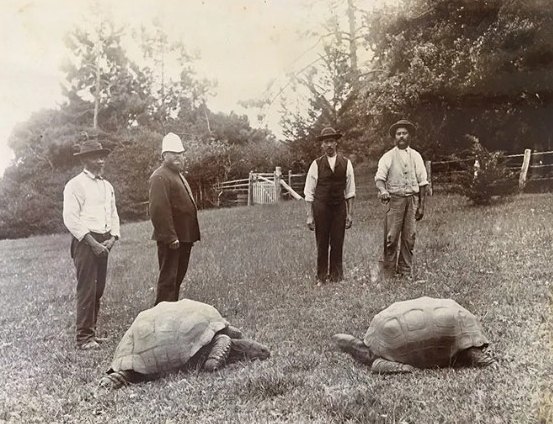
Jonathan is thought to have hatched around 1832, making him a contemporary of Charles Darwin and Queen Victoria. He reached Saint Helena from the Seychelles in 1882, already fully grown, as a gift to the governor. The 194 is an estimate, and Cambridge says he arrived already fully grown.
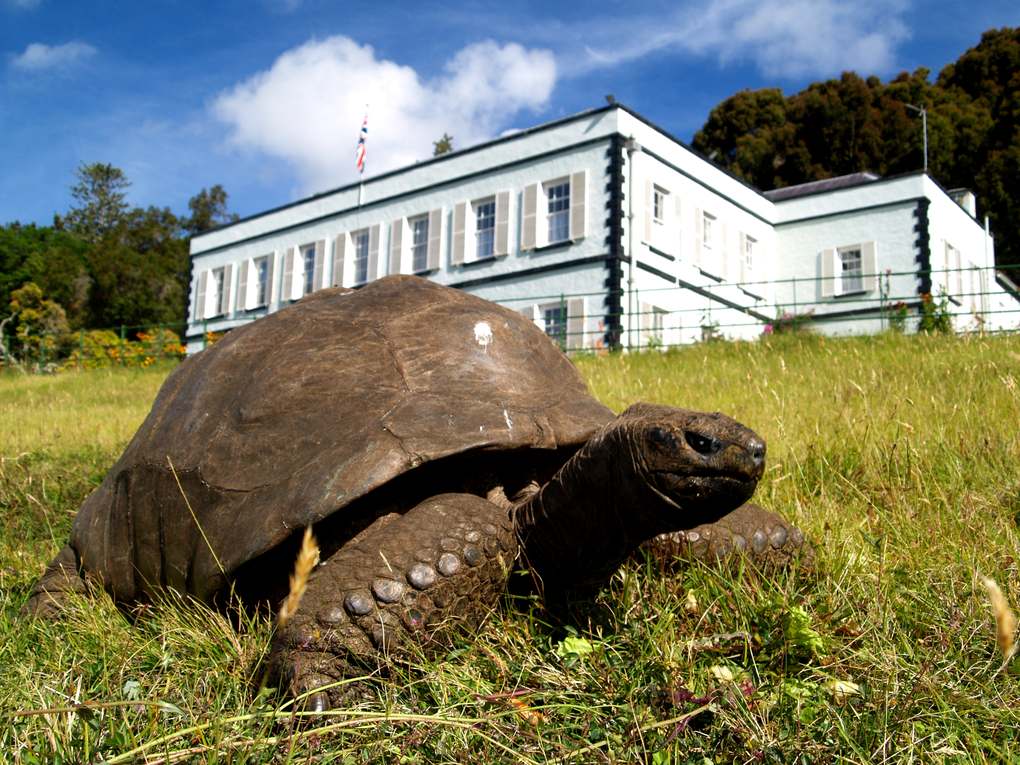
Today he lives with other giant tortoises on the grounds of Plantation House, the governor’s residence. Vanderbilt Health, whose genomics core sequenced his DNA, puts his weight at about 450 pounds (204 kilograms). Cataracts have left him blind, but his hearing remains excellent.
Kallel wants cheap drug trials
Clark, president and chief scientist of the Nashville-based Kallel Foundation, sees the work as a step toward longer healthspan, the years lived in good health. “Nature has already solved the puzzle of ageing in remarkable ways, and Jonathan’s genome provides a blueprint for cellular resilience,” he said.
His foundation wants to test old generic drugs such as rapamycin, which companies rarely study once patents expire. “As a nonprofit, we want to do clinical trials that no drug company wants to do,” Clark told Vanderbilt Health, adding that with enough funding they could start next year.
The tortoise study cost $50,000, paid by the Stephen Voland Research Fund at the Vanderbilt-Ingram Cancer Center. In people, healthy aging is usually tracked through long population studies, like the Finnish work showing that men with good heart health in their 40s more often reached 90.
Only a tenth of promoters checked
“Our biggest limitation was the inability to isolate DNA from Jonathan’s blood,” the authors write. With cheek DNA alone, they got through roughly 10% of the tortoise’s gene promoters, and they had no RNA to check what his rare variants actually do.
Hatch, Smalls, Toka and Poka were each sampled once. Nobody has Jonathan’s DNA from 1882 to compare, so the tidy promoters may track his long life without causing it, a gap the paper itself spells out.
Whether other Aldabras, or other species, share the pattern is still open. Vanderbilt Health says blood samples will be needed to validate the results and that Kallel plans to expand into other long-lived species. Clark has not yet been to Saint Helena.
The full study was published in Science Advances.
Photo: St Helena Government Communications Hub