Bowhead whales can live beyond 200 years without appearing unusually prone to cancer, and researchers think better DNA repair may help explain why. A 2025 study in Nature points to CIRBP, a protein that helps their cells mend dangerous breaks in genetic material.
The finding offers a tantalizing clue about healthy aging, not proof that people could live for centuries. The useful question is whether scientists can learn from the whale’s cellular maintenance without mistaking a laboratory result for a ready-made treatment.
Why a giant whale poses a cancer puzzle
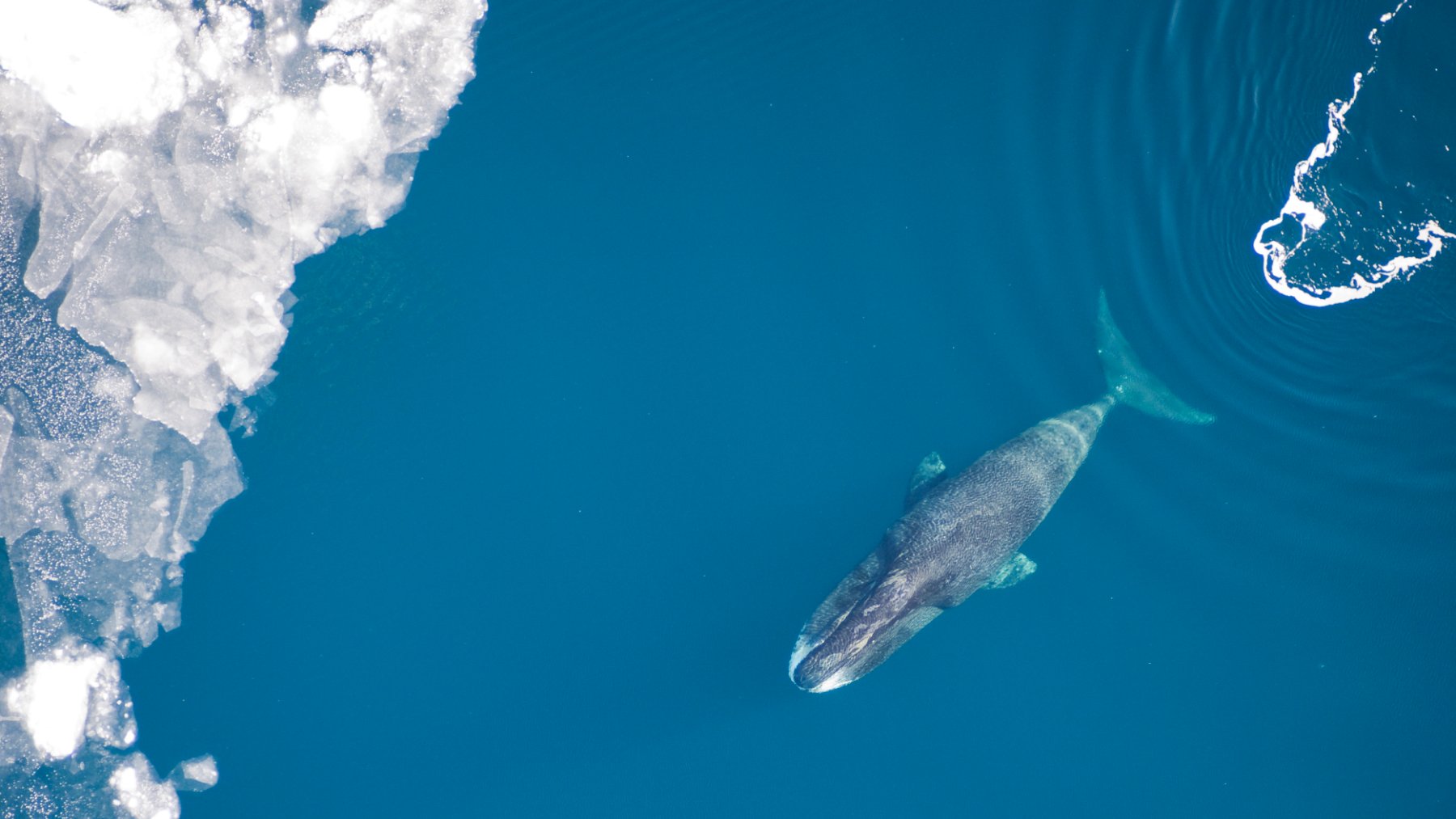
According to NOAA Fisheries, bowheads can reach 200,000 pounds and 62 feet in length. In a simple model of cancer risk, more cells and more years would mean more opportunities for mutations that allow tumors to develop. That straightforward expectation is what makes these Arctic mammals so intriguing.
Scientists call this mismatch “Peto’s paradox,” named after epidemiologist Richard Peto. It does not mean large animals never get cancer, or that bowheads are immune to aging. It suggests that large, long-lived species evolved additional ways to keep dangerous cellular changes under control.
Evolution has not settled on just one solution. Elephants, for instance, have extra copies of a key tumor-suppressor gene, while bowheads appear to rely more heavily on preserving their DNA. Different animals may therefore offer different lessons about avoiding disease.
The first clues were written in the genome
In 2015, a study in Cell Reports compared the bowhead whale’s genome with those of other mammals. Researchers identified changes in genes connected with DNA repair, cell division, cancer, and aging, including ERCC1 and PCNA, which help maintain genetic information. The findings also extended to temperature regulation and immune responses, emphasizing that the whale’s unusual biology involves many interconnected systems.
These were leads, not a single “longevity gene.” The findings suggested possible protective adaptations rather than proving that any one genetic change explains a 200-year lifespan. They gave scientists candidates to investigate through experiments on living cells.
DNA damage is not a rare accident. Normal metabolism, copying mistakes, and environmental exposures can damage a cell’s genetic instructions, leaving its repair systems with work to do throughout life. Over decades, failures in that maintenance can contribute to both cancer and age-related deterioration.
Repairing a dangerous kind of DNA damage
The later research, involving Vera Gorbunova at the University of Rochester, examined double-strand breaks. These occur when both strands of the DNA molecule are severed. Reconnecting the pieces incorrectly can leave mutations or scrambled genetic instructions that contribute to cancer and cellular decline.
Bowhead whale cells repaired these breaks more efficiently and accurately than comparison cells. Researchers also found unusually high levels of CIRBP, short for cold-inducible RNA-binding protein, in the whale’s cells and tissues.
“We found that whale cells are less likely to accumulate oncogenic hits in the first place,” Gorbunova said in the university’s report. In everyday terms, their apparent advantage starts before those dangerous errors build up.
What the protein did in human cells
Human cells grown in the laboratory repaired double-strand breaks better when researchers made them produce bowhead CIRBP. In fruit flies, boosting CIRBP extended lifespan and increased resistance to radiation, showing that its effects were not limited to whale cells.
That is encouraging, but a dish of cells is not a person. A result in fruit flies cannot tell us whether the same approach would benefit an aging human brain or heart. Safety matters as much as improved repair, because these pathways also interact with cell division, inflammation, and tissue regeneration.
Why this is not a cold-shower prescription
CIRBP’s connection with cold is especially interesting in an animal that spends its life in Arctic waters. But the study does not establish that cold showers or ice baths can reproduce the whale’s protective biology, much less help people reach their 200th birthday.
Aging involves far more than broken DNA. Changes in proteins, metabolism, inflammation, and stem cells all contribute, so one whale protein cannot account for everything. That is why researchers need to understand how these systems work together, not just whether one protein can be increased.
An Arctic animal, not just a laboratory clue
Bowheads remain wild animals with needs that no molecular discovery can replace. NOAA identifies climate change, fishing-gear entanglement, vessel strikes, and ocean noise among the threats they face, while their thick blubber and ice-adapted bodies reflect a life tied to Arctic and subarctic waters.
Protecting them preserves more than a promising research model. It also protects an animal whose biology reveals how differently mammals can age.
The study was published on October 29, 2025, in Nature.