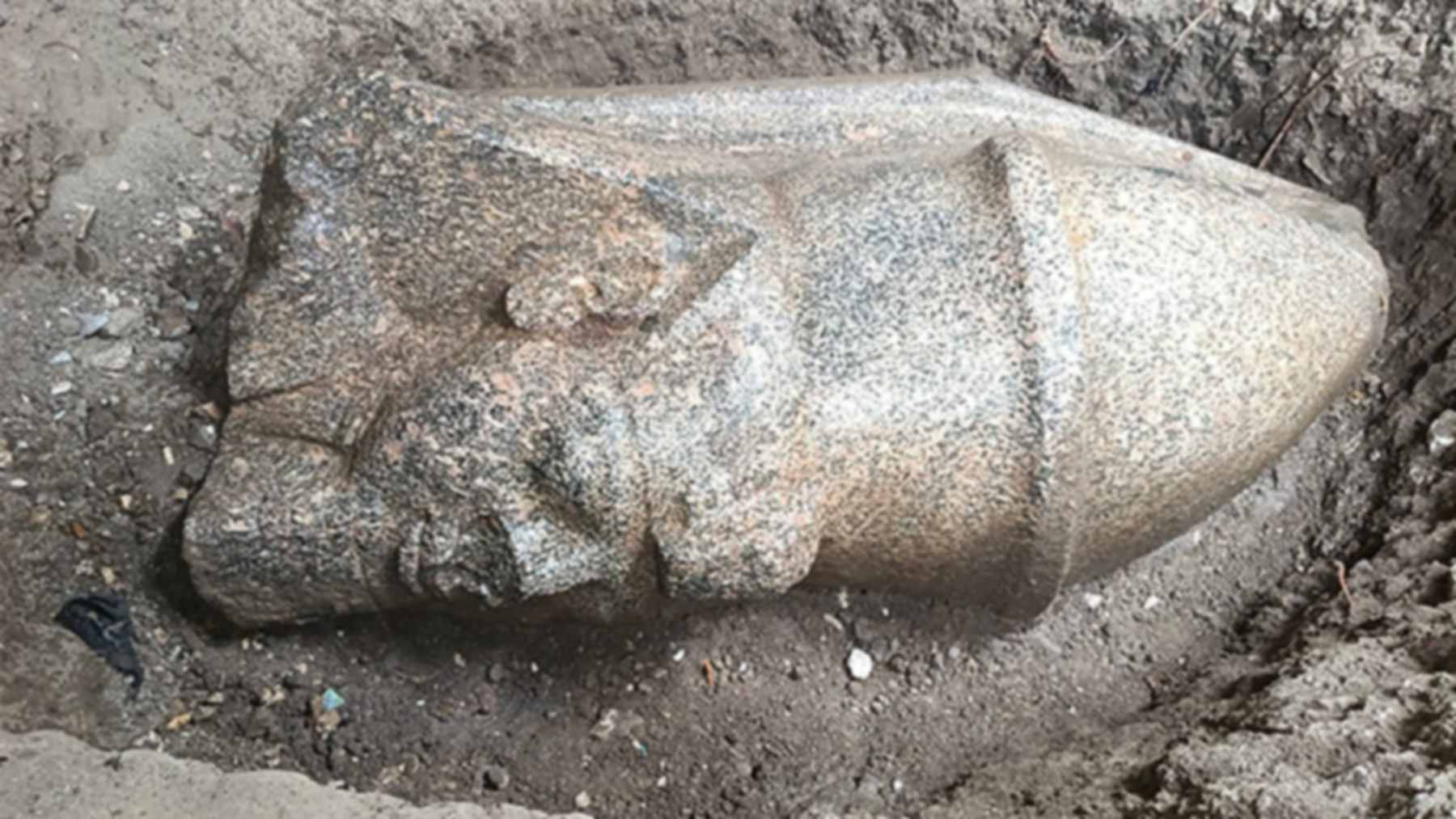
Egyptian archaeologists have found the remains of two colossal royal statues in Behbeit el-Hagar, a village in the Nile Delta. One is a Ramses II statue whose head alone stands about 5 feet 3 inches (1.60 meters) tall, according to Egypt’s Ministry of Tourism and Antiquities.
The ministry announced the find on October 14, 2026. It said the second statue probably shows the same king. A pink granite block carved with two of his royal titles also turned up beside them.
A carved block outside his home
Khaled el-Shahat Khalil came across an inscribed stone while working a plot he owns in front of his house. He reported it to the local antiquities inspectorate. Its staff went to the site at once, and a first inspection pointed to an ancient block.
The Supreme Council of Antiquities then formed a committee and a specialist team to start a rescue excavation. This kind of dig records and protects remains that surface by chance, before anything is damaged or lost.
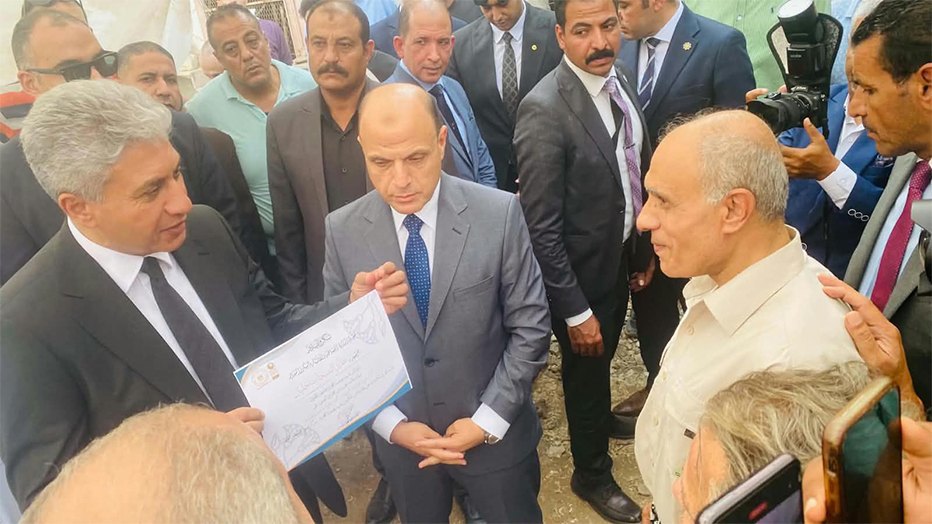
Tourism and Antiquities Minister Sherif Fathy later traveled to the village to honor Khalil on his own land. He gave Khalil and his wife a certificate and a trip to perform Umrah, the pilgrimage to Mecca. Quick reporting, he said, lets specialists handle a find under proper scientific rules.
A head in a double crown
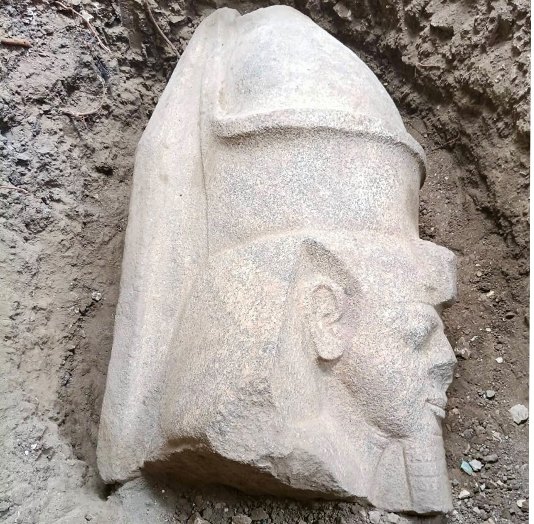
Hisham El-Leithy, secretary general of the Supreme Council of Antiquities, described the first find as a huge head of Ramses II. The king wears the double crown. The Global Egyptian Museum explains that this crown joined the white crown of Upper Egypt with the red crown of Lower Egypt.
Whoever wore it was shown as ruler of both halves of the country, which the museum calls the Two Lands. Both crowns sit together on this single head.
Based on the size of the head, El-Leithy estimated that the full statue may have reached about 28 feet (8.5 meters), base included. Nobody has measured a standing figure, though. The dig has turned up just the head and the upper end of the back pillar.
Sculptors carved a back pillar as a stone brace running up behind a standing figure, and this one carries the king’s Horus name, “Hor-Ka-Nakht-Mery-Maat.” In English it comes out roughly as “Strong bull, beloved of Maat,” after the goddess of truth and order.
The second king lost his legs
Most of a second royal statue lay nearby. It measures about 7 feet 10 inches (2.40 meters) long, and its legs and base are missing. The ministry believes it also represents Ramses II.
Here the king wears the nemes, and part of its top has broken off. According to the Egypt Exploration Society, the nemes was a striped headcloth rather than a true crown. It fell down the back, with two drapes over the shoulders.
Excavators also recovered this statue’s head. Its face survived in good shape. El-Leithy said the features look like those on the first statue.
The ministry says only that the figure probably shows Ramses II, and its announcement mentions no inscription with the king’s name on this second figure.
Two titles on pink granite
Roughly 3 feet (1 meter) north of the second statue, the team found a pink granite block about 4 feet 3 inches (1.30 meters) long.
Its worn hieroglyphs keep two of Ramses II’s titles. One is Nesu-Bity, King of Upper and Lower Egypt. The other is Sa-Ra, Son of Ra, the sun god.
With the Horus name on the back pillar, those titles tie the site to a pharaoh who ruled for about 66 years. His reign ran from roughly 1279 to 1213 BC. A colossal statue of him now greets visitors in the atrium of Cairo’s Grand Egyptian Museum.
Isis temple ruins, older statues
Behbeit el-Hagar is best known for the ruins of a large temple to the goddess Isis. The ministry calls it one of the key archaeological sites of the Delta, rich in granite blocks and building pieces.
Most of that temple dates to Nectanebo II, one of Egypt’s last native kings, in the fourth century BC. That is more than eight centuries after Ramses II died.
So why are his statues here? An older royal building may once have stood on the spot, or later builders may have hauled the sculptures in. The Delta keeps giving up buried places, such as the 2,500-year-old city of Imet.
Fathy said Behbeit el-Hagar will now get more attention from excavators. In his view, there are signs the area may hold further important finds.
Where the giants first stood
The ministry has not said whether the statues lay where they were first set up. El-Leithy said digging and study will continue, to find more fragments and to work out how the pieces relate to one another and to the site.
Until that work comes out, the 28-foot height stays an estimate. The second statue’s identity stays a probable one.
Egypt has announced other finds this year, including 22 painted coffins in a rock-cut chamber beneath Luxor. The full Behbeit el-Hagar announcement was published in Arabic by Egypt’s Ministry of Tourism and Antiquities.
Photo: Egyptian Ministry of Tourism and Antiquities