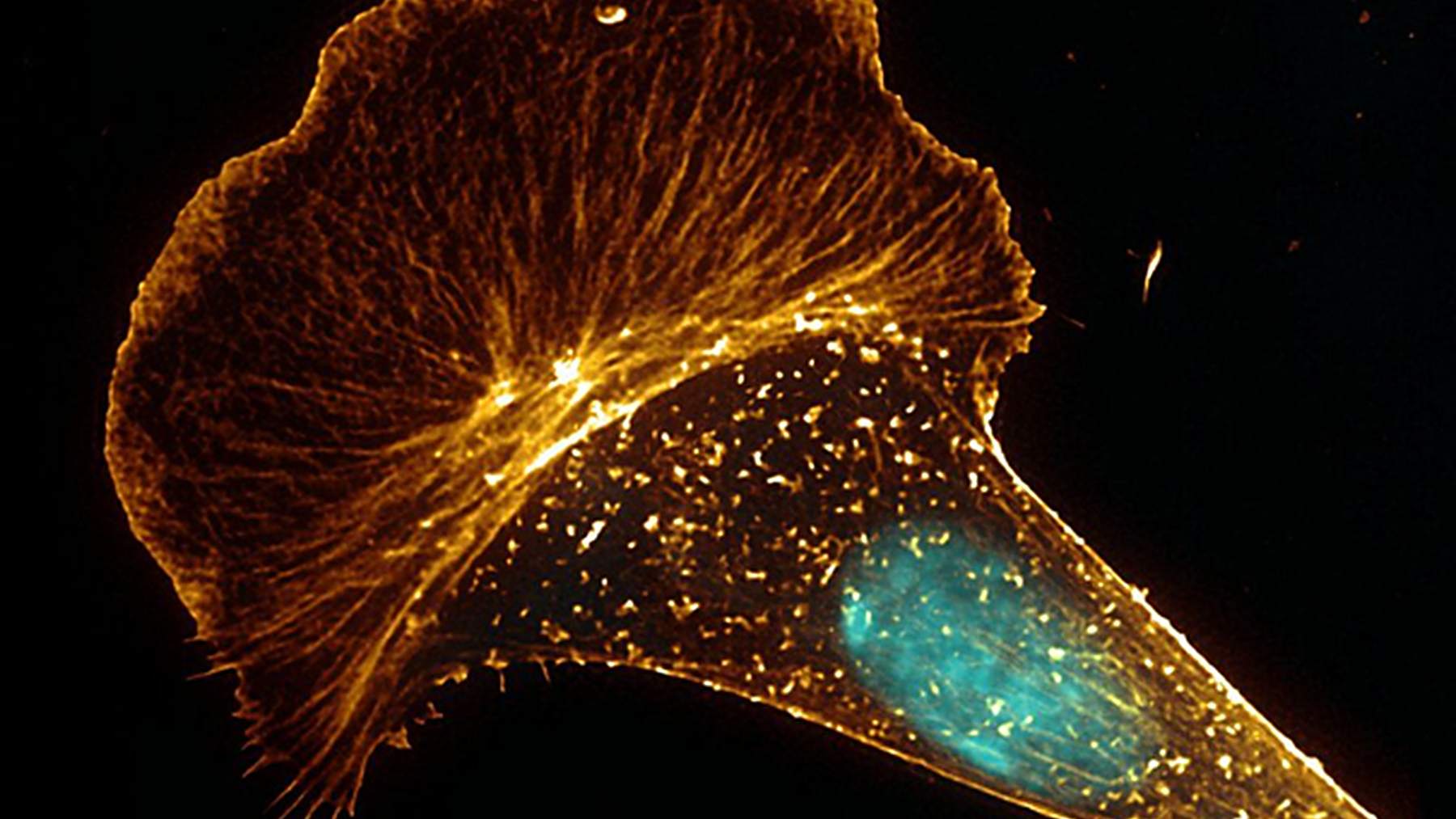
Antarctic fish grow slowly, but the machinery inside their cells does not necessarily follow the same pace. Researchers at the University of Cambridge and British Antarctic Survey have captured high-resolution images of living Antarctic fish cells near 32°F, uncovering surprisingly active internal structures and clues to how these animals survive.
The initial findings reveal connected networks of energy-producing structures and enlarged cellular recycling compartments in fish adapted to waters ranging from about 28.8°F to 35.6°F. They also open a way to investigate an urgent environmental question. Why can animals so well equipped for extreme cold struggle when their surroundings become warmer?
Keeping the microscope cold
The team developed methods to grow cells from the Antarctic spiny plunderfish (Harpagifer antarcticus), a small bottom-dwelling fish. Researchers compared them with cells from the shanny (Lipophrys pholis), which lives in shallow waters around the United Kingdom, using fluorescent dyes to make internal structures visible.
Getting a clear picture meant solving a surprisingly practical problem. A microscope can transfer heat into the very sample it is supposed to observe, changing the behavior of these temperature-sensitive cells.
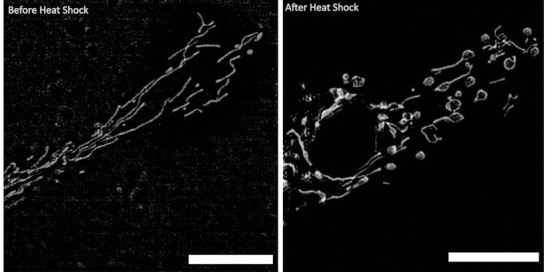
Cambridge engineers addressed that problem with a cooling collar, a specially chosen immersion liquid, and nitrogen flow to reduce condensation. In the published methods study, Antarctic fish cells exposed to 68°F for one hour developed more rounded, fragmented mitochondria, showing why keeping samples cold matters.
Movement without the slowdown
Mitochondria help supply the energy cells need to function. In the Antarctic fish cells, the team observed larger, interconnected mitochondrial networks, which researchers suggest could support energy production and help protect these structures under cold conditions.
The surprise was that mitochondria remained highly mobile despite the low temperature. According to the researchers, that challenges the assumption that slow growth and development must mean everything inside an Antarctic animal also moves slowly.
Think of a quiet building with a busy maintenance crew inside. The comparison is imperfect, but it captures the distinction between the pace of a whole animal’s life and the activity keeping its individual cells working.
The protein folding problem
Why would these cells need so much internal support? One likely pressure comes from making and maintaining proteins, the molecules that carry out many of the basic jobs of life.
Proteins begin as chains of amino acids that must fold into particular shapes to function properly. Cold conditions can slow and disrupt that process, increasing the likelihood of mistakes, much as an incorrectly folded piece of paper fails to become the intended origami shape.
“A misfolded protein is useless at best, but can be really harmful,” explained Francesca van Tartwijk, a cell biologist at British Antarctic Survey and Cambridge. The Antarctic cells also had enlarged lysosomes, compartments that break down cellular material, which researchers suggest may reflect the burden of dealing with damaged or misfolded proteins.
Survival has its limits
Bigger recycling compartments are an important clue, but their size alone does not establish how efficiently they clear unwanted proteins. The proposed connection between these structures and cold survival still needs further testing.
That distinction matters as researchers investigate how Antarctic wildlife responds to warming. “Antarctic animals are incredibly vulnerable to climate change,” said Melody Clark, genetics leader at British Antarctic Survey and a co-leader of the project.
The team wants to determine whether temperature limits arise mainly within cells or from systems that serve the whole animal, such as circulation. Cultured cells offer a way to investigate one part of that puzzle, although observations in a dish cannot explain every challenge faced by a fish in the ocean.
Possibilities beyond Antarctica
The work could eventually help scientists understand problems that occur in human cells, too. Protein misfolding is associated with Alzheimer’s, Parkinson’s, and Huntington’s diseases, making the Antarctic fish a potentially useful system for studying how cells handle this kind of stress.
Developing any treatment from that knowledge would require substantial further research. The scientists also suggest that understanding cold adaptation could inform efforts to protect donated human tissue during refrigerated storage, when keeping biological material healthy is essential.
There is an environmental possibility in biotechnology as well. Learning how cells and enzymes function at lower temperatures might help researchers design processes that need less heating, although any practical energy savings would have to be demonstrated.
A clearer view, with more to learn
British Antarctic Survey described the work in its September 23, 2026, announcement as the first high-resolution imaging of living Antarctic fish cells. The microscope method was published separately in Small Methods, while the newer biological findings were shared as a bioRxiv preprint and remain preliminary.
The next step is to develop imaging conditions that more closely reproduce the polar environments these animals evolved in. Better control could help researchers distinguish the features that support everyday survival from the changes that signal stress.
Researchers now have a way to watch these cold-adapted cells without the microscope’s warmth disrupting the processes they want to understand. The press release was published on the British Antarctic Survey website.
Photo: Department of Chemical Engineering and Biotechnology, University of Cambridge