Where do the batteries from your remote or flashlight go when they stop working? Sri Nihal Tammana began tackling that everyday question in 2019, when he founded Recycle My Battery at age 10. The nonprofit now reports that it has recycled 900,000 used batteries, turning a childhood concern into a growing community effort.
Its approach pairs free collection bins with education for children and adults, giving families somewhere to take those spent batteries. The practical lesson is that explaining why recycling matters is only part of the job. People also need an accessible way to do it.
A news report prompted him to act
The Indian American environmental advocate says his motivation came from seeing a television report about a battery-related fire at a California waste facility. In a first-person account for Ashoka’s Changemakers, he described asking his father how similar incidents could be prevented. That concern soon became a local collection effort.
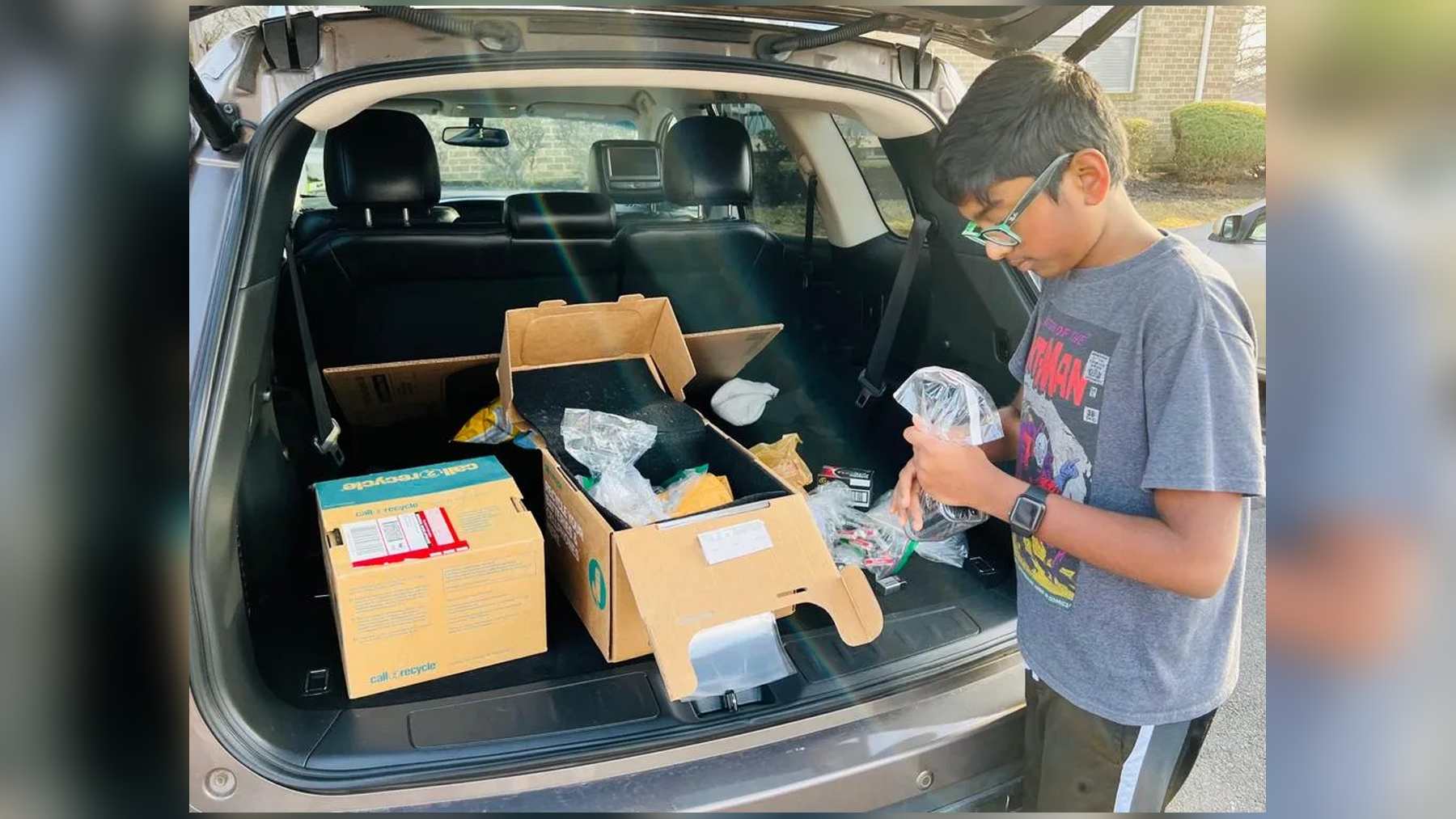
“I began by collecting batteries in my school and community and taking them to free recycling points,” Tammana wrote. Eventually, he said, he brought in so many that he was told he could no longer use those bins. He launched the nonprofit in June 2019 and began installing free collection bins at his school in Edison, New Jersey.
Making battery recycling easier to reach
The collection network puts battery bins in places people already visit. In its 2021 youth award profile, the Environmental Protection Agency described how Tammana partnered with Call2Recycle to provide certified collection bins at schools, libraries, and community centers. The organization’s website now reports more than 1,800 bins.
That setup addresses a familiar obstacle for anyone who has left used batteries in a drawer while wondering where to take them. A collection point at school or a nearby community building can make the next step easier. Education and access work together here, with the bin giving people a place to put the lesson into practice.
Young volunteers bring the message into classrooms
Tammana has reported a network of more than 1,000 youth volunteers. The nonprofit’s “Battery Challenge” turns collection into a classroom competition, with a pizza party for the class that gathers the most used batteries. Its official program page describes school bins as the destination for those collections.
The website also reports an educational reach exceeding 85 million people. That is the organization’s own figure, and the headline counter does not explain how it measures that reach. Readers should treat it as a reported outreach total, without assuming that everyone counted changed their disposal habits.
A world record made the effort visible
One milestone has a separate, documented record. Guinness World Records confirms that Recycle My Battery created a line of 31,204 batteries in Edison on October 7, 2023, earning the record for the longest line of batteries.
Around 90 children and their parents helped assemble it at Woodbrook Elementary School, according to Guinness. The event was organized to raise awareness about battery recycling. It gave a normally overlooked waste item a very visible place in the school community.
Why a “dead” battery still matters
A battery that no longer powers a device can still retain enough energy to cause harm. The EPA warns that some used batteries can start fires, while lithium-ion batteries may become hazardous if bent, broken, or crushed. Putting them in a recycling bin for bottles and cans does not solve that problem.
There is a resource issue, too. The agency explains that recycling lithium-ion batteries helps conserve materials such as lithium and cobalt and can reduce the need for newly mined resources. Its guidance also makes clear that recovery varies by material, so collecting a battery does not automatically mean every component becomes a new product.
What households should do with used batteries
Start by checking the battery’s label and your local collection program’s instructions. The EPA advises keeping rechargeable batteries out of household trash and curbside recycling, while ordinary alkaline batteries have different disposal options depending on the community. It recommends recycling those alkaline batteries or checking with local waste authorities.
For used lithium-ion batteries, the agency recommends covering terminals with nonconductive tape or placing each battery in a separate plastic bag before taking it to an appropriate collection point. Damaged or swollen batteries need specific handling guidance from the manufacturer or local hazardous waste program. Check before dropping them into a collection box.
For families, the useful takeaway is to identify an appropriate drop-off location before the next battery needs replacing. The organization’s current impact figures were published on Recycle My Battery.
Photo: Ashoka Changemakers / Recycle My Battery