London’s Metropolitan Police has seized more than 2,500 illegal e-bikes and e-scooters during the first seven months of 2026, already surpassing the force’s total for all of 2025. The record shows how quickly modified electric two-wheelers have become a road-safety and crime concern across the capital.
The crackdown should not be mistaken for a rejection of electric mobility. Legal e-bikes can replace car journeys and reduce transport emissions, but overpowered machines and privately owned e-scooters used in public fall into a different legal category.
A record crackdown
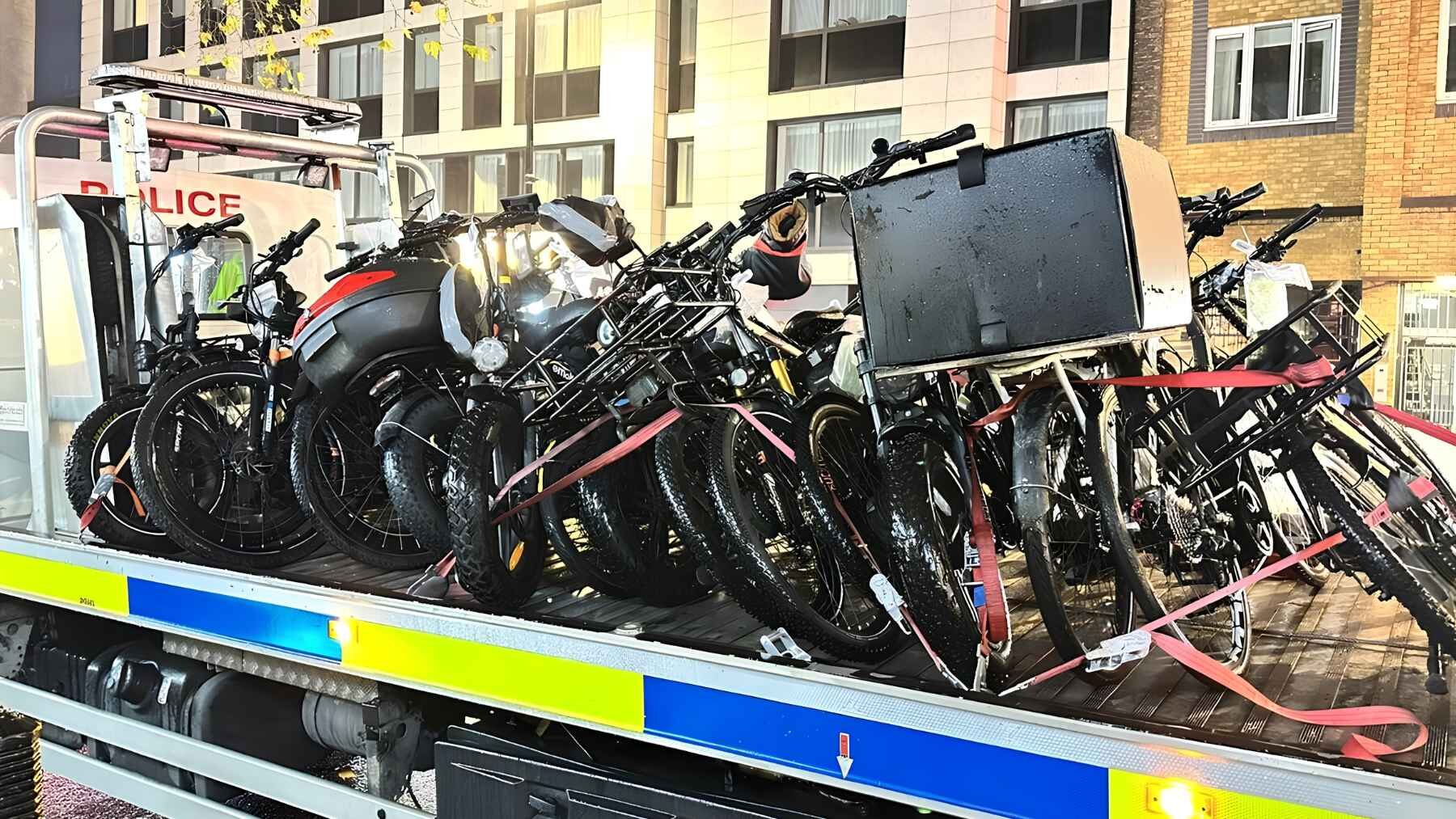
The Met says officers have removed more than 4,750 illegal e-bikes and e-scooters since January 2025. During a stop-site operation in Camden on July 24, police seized 36 vehicles and made two arrests.
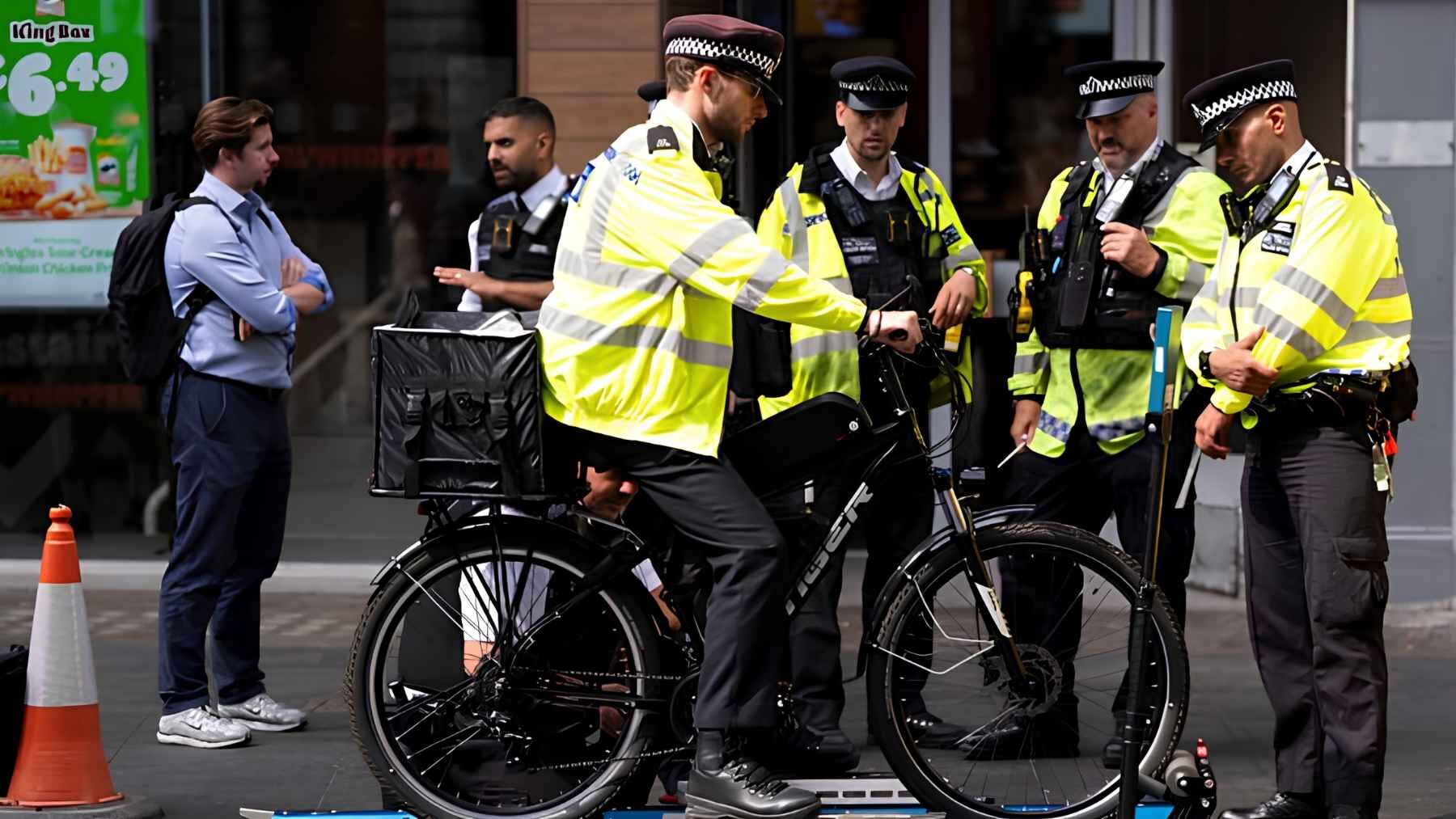
Commander Neerav Patel said officers are combining portable “rolling roads” with an “intelligence-led approach” focused on hotspot areas. Police say illegally modified machines are being used for dangerous riding and crimes including phone snatching and drug dealing.
How roadside testing works
A rolling road is a compact dynamometer that lets officers place a vehicle’s driven wheel on rollers and measure its powered speed. A suspected e-bike can therefore be checked at the roadside without a full test track or laboratory.
The crucial point is not whether a rider can travel faster than 15.5 mph by pedaling or going downhill. Officers are looking at whether the motor continues to propel the bike beyond the legal cutoff, along with other signs that the machine does not meet the rules.
What makes an e-bike legal
In Great Britain, an electrically assisted pedal cycle must have pedals capable of propelling it, a motor with a maximum continuous rated output of 250 watts, and no motor propulsion above 15.5 mph. A rider must be at least 14, but a compliant e-bike does not need registration, tax, insurance, or a driving license.
The throttle rule is more nuanced than the idea that every throttle is illegal. An e-bike that can move without pedaling, sometimes called a “twist and go” model, needs the required approval, while a machine outside the EAPC rules is treated as a motorcycle or moped and must meet the corresponding licensing, insurance, registration, tax, and helmet requirements.
Private e-scooters face stricter rules
Privately owned e-scooters cannot legally be ridden in public places such as roads, sidewalks, or parks. They may only be used on private land with the landowner’s permission, while authorized rental scooters operate under separate trial rules in participating areas.
Two scooters that look nearly identical can have completely different legal status. A rental vehicle from an approved program may be insured for use on certain roads and bike lanes, while the privately owned version beside it can be seized.
Crime figures need context
The Met reported that neighborhood offenses fell 14% in the 12 months through June, equal to 35,000 fewer reported crimes. Theft from a person fell 23%, personal robbery dropped 11%, and neighborhood crime in Westminster declined 36%.
Those figures moved in the same direction as the enforcement campaign, but they do not prove that vehicle seizures caused the entire decline. Other arrests, anti-theft operations, and policing changes were happening at the same time, so the fairest conclusion is that the Met views e-bike enforcement as one part of a broader strategy.
Legal e-bikes still matter for the climate
Peer-reviewed research led by the University of Leeds estimated that e-bikes could replace enough car travel to reduce annual car-related carbon dioxide emissions in England by 24.4 million metric tons under a maximum-capability scenario. That is a measure of technical potential, not a prediction, because it assumes a major shift in everyday travel behavior.
Still, the opportunity is hard to ignore. For a commuter facing traffic jams, exhaust fumes, or a trip that feels too long on a regular bicycle, a legal e-bike can make low-emission travel more practical while requiring far less road space than a car.
Batteries bring another risk
Road legality and battery safety are not the same issue, but they can overlap when vehicles are poorly converted or charged with unsuitable equipment. London Fire Brigade attended 206 e-bike and e-scooter fires in 2025, including 171 involving e-bikes, and said battery failure, conversion kits, and chargers were frequent factors.
That is a reminder to use the manufacturer’s recommended charger, avoid damaged or counterfeit batteries, and never charge a vehicle where it could block an escape route. A cheap conversion can become expensive when safety corners are cut.
What happens after seizure
The Met says thousands of confiscated vehicles have been cleared from the streets and crushed, but its July statement does not explain how batteries and reusable components are handled. That missing detail matters for both fire prevention and responsible waste management.
Environment Agency guidance says e-bikes and similar personal electric vehicles must not be crushed or mechanically treated before batteries and liquids are removed. Those hazardous components should be stored safely and sent to appropriately authorized treatment facilities.
The line London is drawing
Before buying or modifying an e-bike, riders should check the manufacturer markings, the 250-watt continuous rating, the 15.5 mph motor cutoff, the presence of working pedals, and any required approval for throttle operation. For privately owned e-scooters, the public-use ban remains in force.
London does not need fewer safe e-bikes. It needs electric two-wheelers that are legal, responsibly charged, ridden with care, and properly recycled when their working life ends.
The statement was published on Metropolitan Police News.