An electric vehicle battery is not dead the day it stops being ideal for the road. In many cases, it still has enough life left to store solar power, back up a hospital, or keep the lights on when the grid gets strained. That is the shift at the heart of Canada’s new second-life battery project.
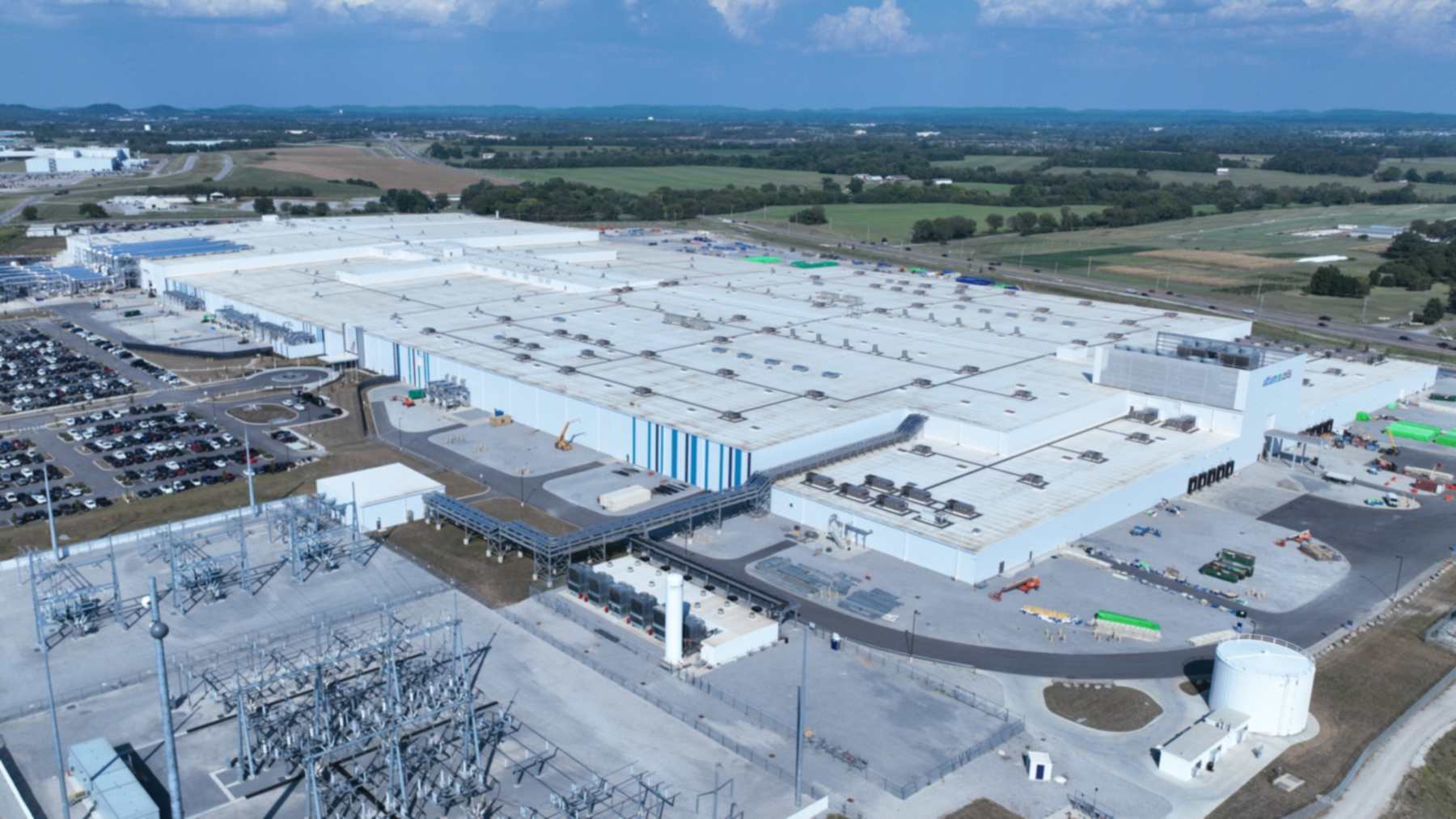
Moment Energy officially opened Megafactory 1 in Vancouver, British Columbia, on June 23, 2026, calling it the world’s largest EV battery repurposing facility. The company says the plant came online only six weeks after the project was announced, and it will turn retired electric-car batteries into energy storage systems for data centers, hospitals, factories, and microgrids.
Batteries get a second job
Here is the key point. A battery that no longer gives an EV enough range can still be useful in a building or a small power system.
UL Solutions says an EV battery that reaches the end of its automotive life typically still has about 80% of its storage capacity. In a car, weight, size, acceleration, and driving range matter every day. In a stationary storage cabinet, the job is simpler — store power when it is available, then release it when it is needed.
That difference changes the whole story. Instead of sending batteries straight to recycling, companies can test them, sort them, and put them back to work for years before their lithium, nickel, cobalt, copper, and other materials are finally recovered.
Why Vancouver matters
Moment Energy says the new facility is expected to produce 1 GWh of battery energy storage systems by 2030. That means 1 billion watt-hours of annual storage-system output, though the number of buildings or sites it can support depends on each installation’s size and use.
The company also expects the project to create more than 100 direct jobs and support more than 1,000 indirect jobs across British Columbia. That matters because clean energy is not only about panels, turbines, and EVs. It is also about factories, technicians, safety testing, and supply chains close to home.
“We announced this project six weeks ago. Today it’s operational,” said Edward Chiang, co-founder and CEO of Moment Energy. He also noted that demand for storage and the supply of retired EV batteries are both accelerating.
The safety question
Repurposing batteries sounds simple, but it is not just a matter of pulling a pack out of a car and plugging it into a building. Each battery module has to be checked, graded, and matched to the right use.
That is where UL 1974 comes in. UL Solutions describes it as a standard used to evaluate repurposed or remanufactured batteries, including the sorting and grading of cells, packs, and modules, along with checks on whether they are still viable for continued use.
Moment Energy says it achieved UL 1974 certification in North America for its second-life battery process. For customers such as utilities, factories, and public institutions, that kind of third-party safety framework can make the difference between an interesting idea and a bankable energy project.
Storage is the missing piece
Solar and wind power are growing fast, but they have one very obvious problem. The sun does not always shine when demand peaks, and wind does not always blow when a city needs power.
That is why batteries are becoming a strategic part of the grid. The International Energy Agency says global energy storage capacity must increase sixfold to 1,500 GW by 2030 to support the rapid expansion of solar and wind, with batteries accounting for most of that growth in its net-zero pathway.
In practical terms, storage can mean fewer blackouts, less wasted renewable energy, and more flexibility during that sticky summer heat we all know, when air conditioners push demand through the roof. It can also show up in a place people notice quickly, the electric bill.
From old EVs to quiet islands
The idea is already being tested far from the factory floor. Moment Energy points to God’s Pocket Resort, an off-grid scuba diving site near Port Hardy, British Columbia, where its battery system reduced diesel generator use by 66%.
The company says the system has a total capacity of 120 kWh and helps cut diesel use by more than 4,200 liters a year. Converted for U.S. readers, that is about 1,100 gallons of diesel that no longer has to be transported, burned, and heard rumbling in the background.
For a remote resort, that is not just a climate detail. It means less noise, fewer fumes, and a cleaner experience for guests who came to be surrounded by nature, not the constant hum of generators.
Recycling still matters
None of this makes recycling unnecessary. Ultimately, every battery will eventually need to be taken apart so its valuable materials can be recovered.
However, reuse can delay that moment and squeeze more value out of materials that were energy-intensive to mine, refine, and manufacture in the first place. That is the circular economy idea in essence — use what already exists for as long as it can safely do useful work.
The bigger question now is scale. If millions of EV batteries begin retiring over the next decade, facilities like Megafactory 1 could turn a looming waste challenge into a practical storage resource.
A new role for EV batteries
For years, the battery debate has focused on range, charging speed, and recycling. Moment Energy’s Vancouver project adds another layer to that conversation.
A battery that once helped cut tailpipe pollution in traffic jams could later help a data center ride through a power spike, a hospital keep critical systems stable, or a remote site reduce diesel fumes. Not bad for something many people would assume was finished.
The press release was published on Moment Energy’s website.