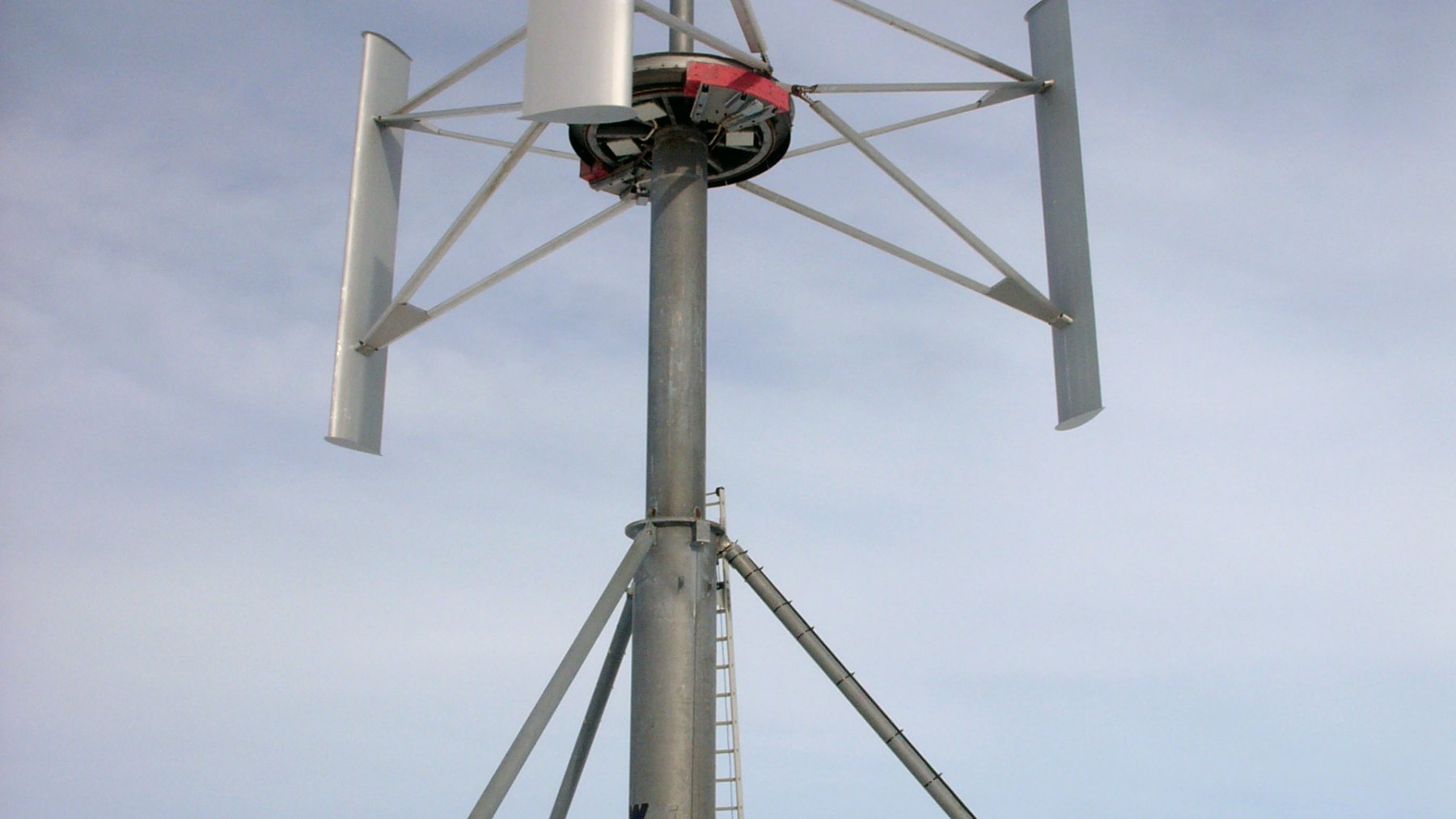
Wind power usually brings to mind towering machines, massive blades, and construction crews pouring concrete deep into the ground. Wind To Watt is trying to shrink that picture down into something more practical, with a modular turbine concept designed for places where fixed power grids do not easily reach.
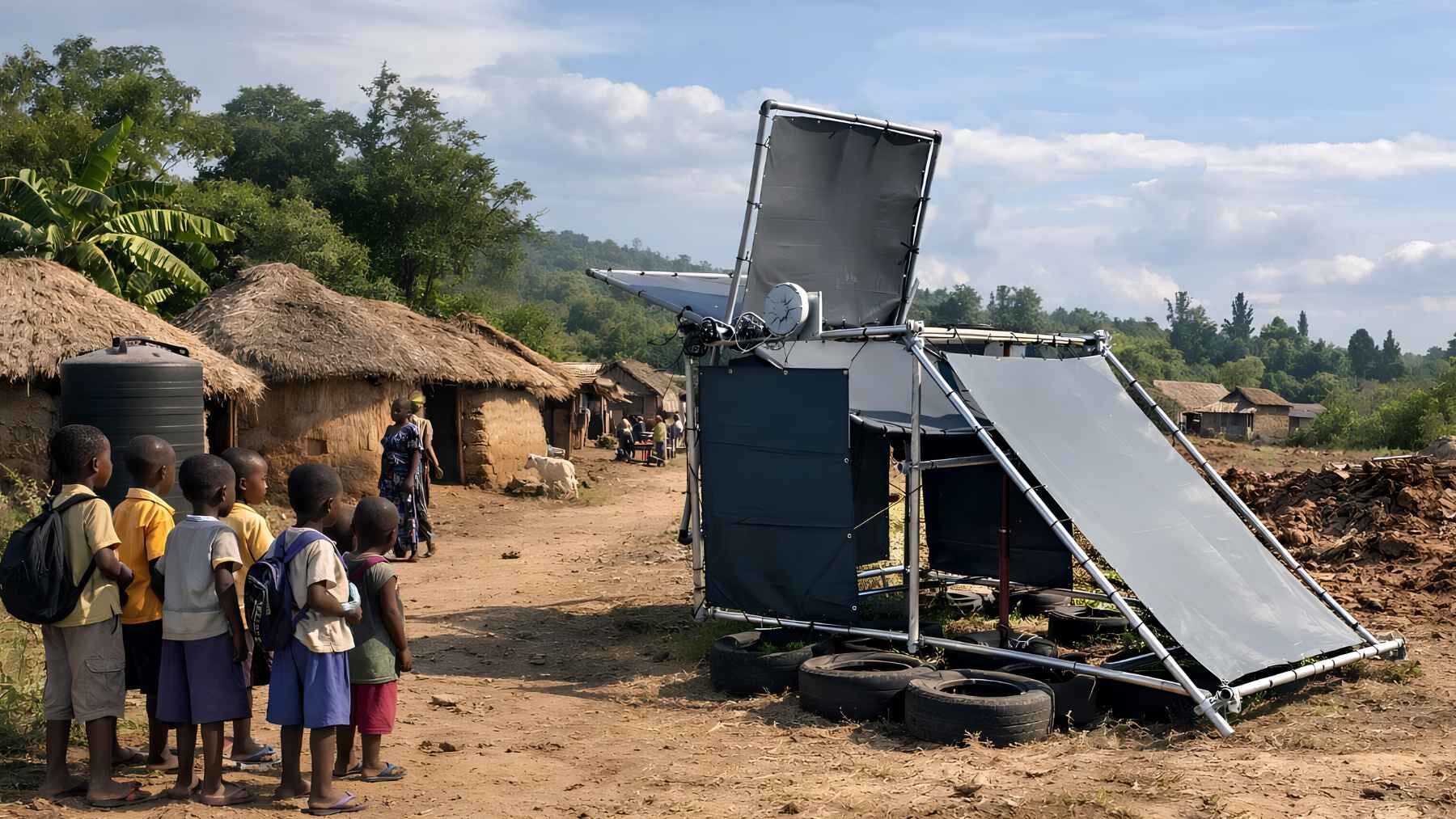
The French project, created by designer and founder Fabien Brun, presents a low-tech, recyclable wind turbine that can be transported, assembled, and adapted without the usual heavy machinery. That could matter for farms, remote work sites, islands, humanitarian projects, and communities where the electric bill is high but the infrastructure is thin.
A different kind of wind turbine
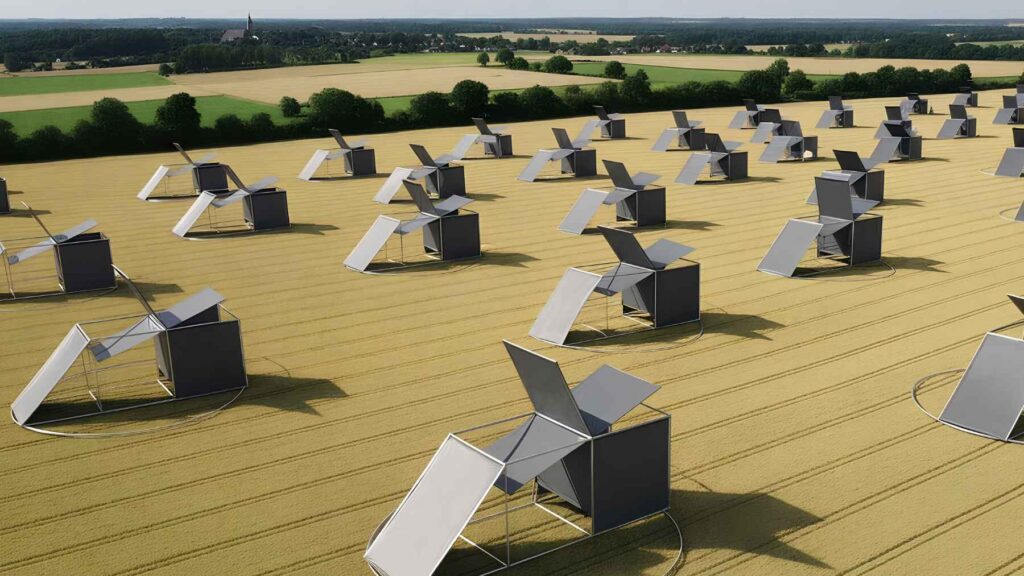
Wind To Watt’s official site describes the device as a 1-kilowatt wind turbine “without civil engineering,” designed for mass production and deployment beyond the usual wind-farm model. The company says the system is modular, scalable, and intended to work without heavy infrastructure.
That is the main idea here. Instead of making wind power only a giant industrial project, Wind To Watt is pitching it as a tool that can be installed closer to the people who need the electricity.
Effectively, that means fewer barriers at the start. No specialized crane, no concrete base, and no major reshaping of the land, according to the project materials and the company’s public description.
Built for rougher places
The turbine is designed around simple materials, mainly aluminum and plastic components. Wind To Watt says this makes the structure lighter, easier to move, and simpler to maintain than many conventional systems.
That sounds modest, but modest can be powerful. A system that can be packed, transported, and assembled on site may be more useful in a rural field or coastal facility than a beautiful design that never leaves the factory floor.
The company also says the turbine can adapt to land or sea settings without changing the terrain. For communities used to diesel generators, trucked fuel, or unstable power, even partial local generation can make daily life less fragile.
The recycling problem wind still faces
Wind energy is one of the central tools in the clean-energy transition, but it is not waste-free. The U.S. Department of Energy (DOE) notes that most of a wind turbine’s mass is made from materials that are easier to recycle, including aluminum, steel, copper, and iron, while composite parts such as blades remain harder to process.
That is where Wind To Watt’s material choices become interesting. By using recyclable aluminum and plastics, the project tries to address circularity from the beginning rather than leaving end-of-life disposal as a problem for later.
Still, it is worth keeping the claim in perspective. Conventional blade waste is not considered hazardous by the DOE, but it does take up landfill space, and recycling remains more expensive or limited in many places.
What the price tells us
Earlier project materials described a target retail price of about $2,850, based on the European Central Bank’s July 6, 2026 reference rate of $1.1415 per euro. The same materials estimated maintenance at about $57 per year and projected a five-year payback, though those figures depend heavily on local wind conditions and electricity prices.
Wind To Watt’s current public pre-order page lists several indicative models before tax, including a 300-watt model at $1,130, a 1-kilowatt model at $5,590, and a planned 10-kilowatt model at about $11,400 using that same exchange rate. The company also warns that prices can change depending on options, delivery, and volumes.
That detail matters. A low-cost wind turbine is only truly affordable if buyers understand what it will actually generate, how much installation will cost, and how often maintenance will be needed.
Small wind, big expectations
Small wind has always had one stubborn question hanging over it. Will the local wind be strong and steady enough to justify the equipment?
Wind To Watt’s answer is modularity. The system is meant to be scaled up or down, with the company listing 300-watt, 1-kilowatt, and 10-kilowatt options for different uses, from residential and humanitarian projects to agriculture, small businesses, and infrastructure.
That flexibility could make it easier to pair wind with solar panels, batteries, or backup systems. On the other hand, buyers will still need site-specific data, because a turbine in a breezy field is not the same as one tucked behind buildings or trees.
Why this could matter
The most useful part of Wind To Watt may not be that it replaces giant wind farms. It probably will not.
The stronger angle is that it targets the gaps left by large-scale infrastructure. Wind farms feed the grid, but a modular turbine could support a farm pump, a remote workshop, a coastal platform, or a community that needs resilience when the grid flickers.
Wind To Watt says it has a pipeline of more than 90 strategic contacts across Europe, the Middle East, Africa, and India. That suggests the project is looking beyond wealthy urban markets and toward places where clean-energy access is still uneven.
The next test is proof
For all its promise, Wind To Watt is still a project that must prove itself outside promotional materials. The key questions are simple, even if the engineering is not.
How much electricity does it produce in normal winds? How long do the parts last in heat, salt, storms, and dust? And can local users repair it without waiting weeks for specialized service?
Those answers will decide whether this becomes a niche design story or a genuinely useful clean-energy tool. For now, Wind To Watt offers a refreshing idea in a sector often defined by size, complexity, and cost.
The official statement was published on Wind To Watt’s website.