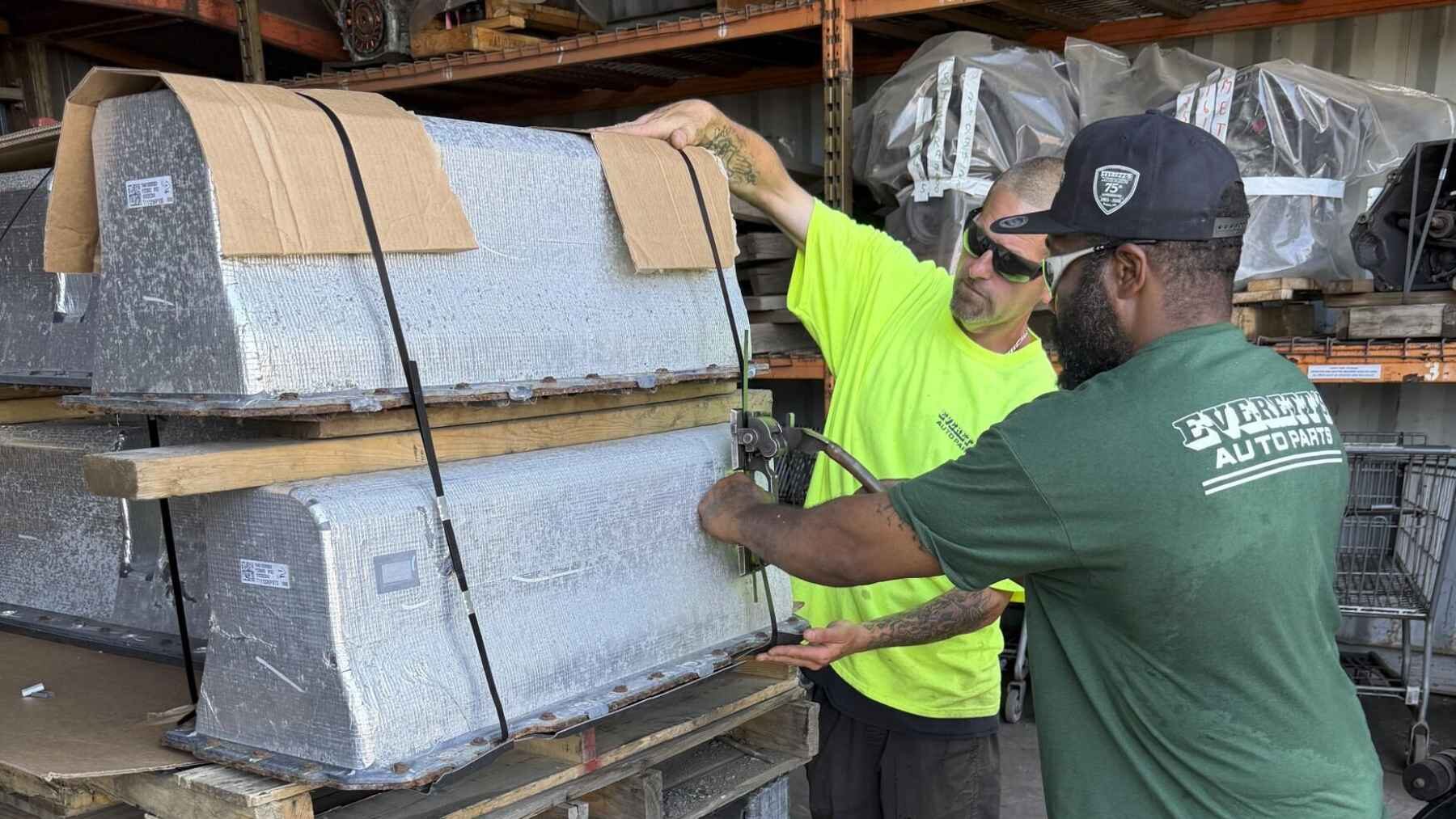
Two used Chevy Volt batteries were strapped to a pallet at Everett Auto Parts in Massachusetts and prepared for recycling. They contained nickel, cobalt, manganese, and lithium, yet the salvage yard would earn nothing from them. Co-owner Thomas Andrade was still relieved because the recycler agreed to take the packs without charging him.
That small victory exposes a larger problem. Recycling electric vehicle batteries can recover materials, reduce the environmental impact of new vehicle production, and keep hazardous packs out of landfills, but their value does not always cover shipping and processing. As more EVs reach the end of their lives, that math could leave junkyards storing unwanted packs and communities facing fire and cleanup risks.
Valuable batteries can become liabilities
At a recycling plant, used batteries are typically shredded into a dark powder known as black mass. Processors can recover battery metals from it and feed them back into new cells, creating the closed loop promised by the EV industry. In practical terms, the loop only works when someone can afford to move the battery through it.
Across Massachusetts at Westover Auto Salvage, chief executive Brian Bachand has a working Tesla battery about the size of a mattress sitting on a rack. He believes it might be worth up to $2,000 as a replacement and listed it for $1,200, but no buyer has appeared. The only recycler willing to take that model quoted a $1,800 charge, turning a potentially valuable part into what Bachand called “a liability.”
Transportation is as important as chemistry. Large packs are heavy, regulated as hazardous material, and costly to handle safely. One may be uneconomic, while five collected together could make a shipment worthwhile, leaving storage racks as waiting rooms for batteries no one wants.
Big companies have an advantage
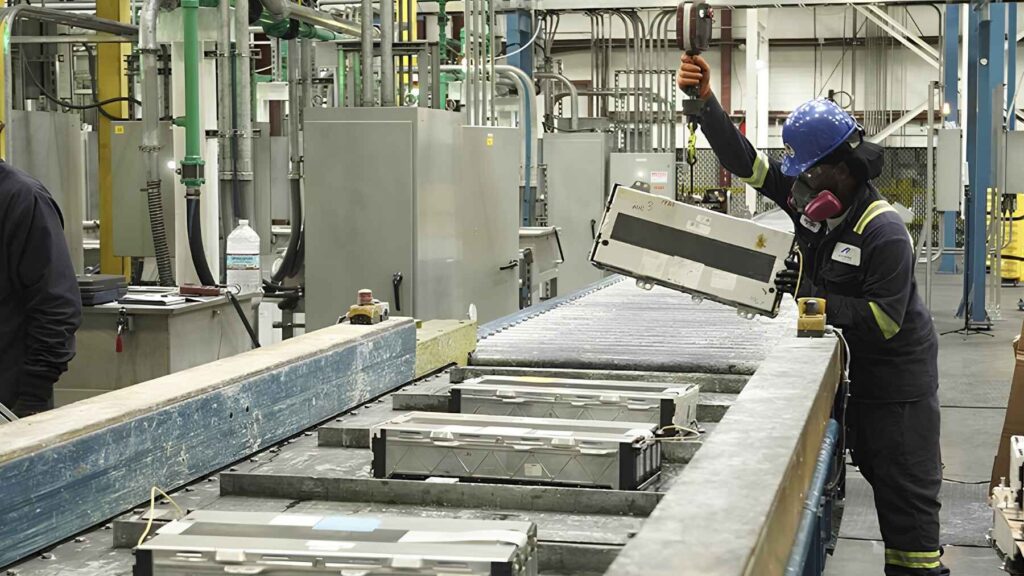
At a recent San Francisco event, General Motors promoted new battery technology and plans to use retired EV packs to help supply power to the electric grid. Redwood Materials founder and chief executive JB Straubel said recycling becomes more competitive over time because the metals retain real value. For a manufacturer handling steady streams of factory scrap, that can be true.
Battery engineer Andy Oury said recycling has changed from an expense into a revenue source for the automaker because recyclers now pay for manufacturing leftovers. High volume makes it easier to fill trucks, coordinate shipments, and negotiate prices. A neighborhood salvage yard with one unusual battery does not have those economies of scale.
There is another imbalance. Emil Nusbaum of the Automotive Recyclers Association noted that gasoline vehicles provide reusable engines and transmissions, often their two most valuable parts. EVs have simpler drive systems that rarely need replacement, so the battery carries more of the vehicle’s uncertain resale value and may arrive at auction as either an asset or a disposal bill.
Cheaper batteries worsen the equation
The pressure has not fully arrived because EV batteries are lasting longer than many observers expected. Benchmark Mineral Intelligence data indicate that most battery material now recycled in the United States comes from factory rejects and production waste, not worn-out cars. Today’s EVs will eventually age out, however, and the volume of used packs will rise.
Automakers are also adopting lithium iron phosphate batteries, commonly called LFP. They cost less, last longer, and avoid expensive metals such as nickel and cobalt. Those are advantages for drivers, but they remove the material value that supports recycling.
Cirba Solutions chief executive David Klanecky said the lithium still has value, but not enough for his company to profit if it must also pay to acquire the pack. Analyst Frederick Bloomfield estimates that North American recyclers charge an inbound fee of about 68 to 91 cents per lb. for LFP batteries. For a pack weighing roughly 2,200 lb., that can mean a $1,500 to $2,000 bill before hazardous-material transportation, while some metal-rich batteries can be worth at least 91 cents per lb. to a recycler.
Poor economics create public risks
The cost problem is already changing behavior. Joe Hearn, co-founder of the responsible vehicle recycling initiative SHiFT, said some shredders and scrap operators are reluctant to accept loads containing an electric or hybrid vehicle. Partners have even had shipments rejected and returned.
Where do the batteries go next? Some could be exported to overseas facilities where recycling may take place under unsafe and unhealthy conditions, while others may sit in yards for months or years. Damaged or poorly stored lithium-ion packs can catch fire, creating a serious safety threat.
Jessica Dunn, a battery recycling scientist at the Union of Concerned Scientists, warned that stockpiled packs can create serious safety risks. She also said EV and hybrid batteries are already turning up in landfills even though dumping them there is illegal. When that happens, the cost can shift to a public agency and, ultimately, taxpayers.
Colorado makes producers responsible
Colorado has responded with a law based on extended producer responsibility. State Senator Lisa Cutter, who co-sponsored the measure, summarized the idea when she said, “There is no magic trash fairy.” Companies that sold the vehicles will have to arrange and pay for collection and recycling when unwanted batteries are abandoned or sent to the wrong place.
The law also requires a specified share of the minerals to be recovered rather than merely moving the packs somewhere else. It won support from environmental advocates, salvage operators, battery recyclers, and the Alliance for Automotive Innovation, which represents most major U.S. automakers. Western Resource Advocates also helped push the measure, while industry groups viewed it as more balanced than the European Union’s broader rules.
The policy does not make low-value battery chemistry suddenly profitable. It assigns the final cost before packs begin piling up in junkyards, landfills, or public cleanup programs. Colorado may now serve as a starting point for other states trying to turn old EV batteries into domestic resources instead of expensive hazards.
The official law was published on the Colorado General Assembly website.