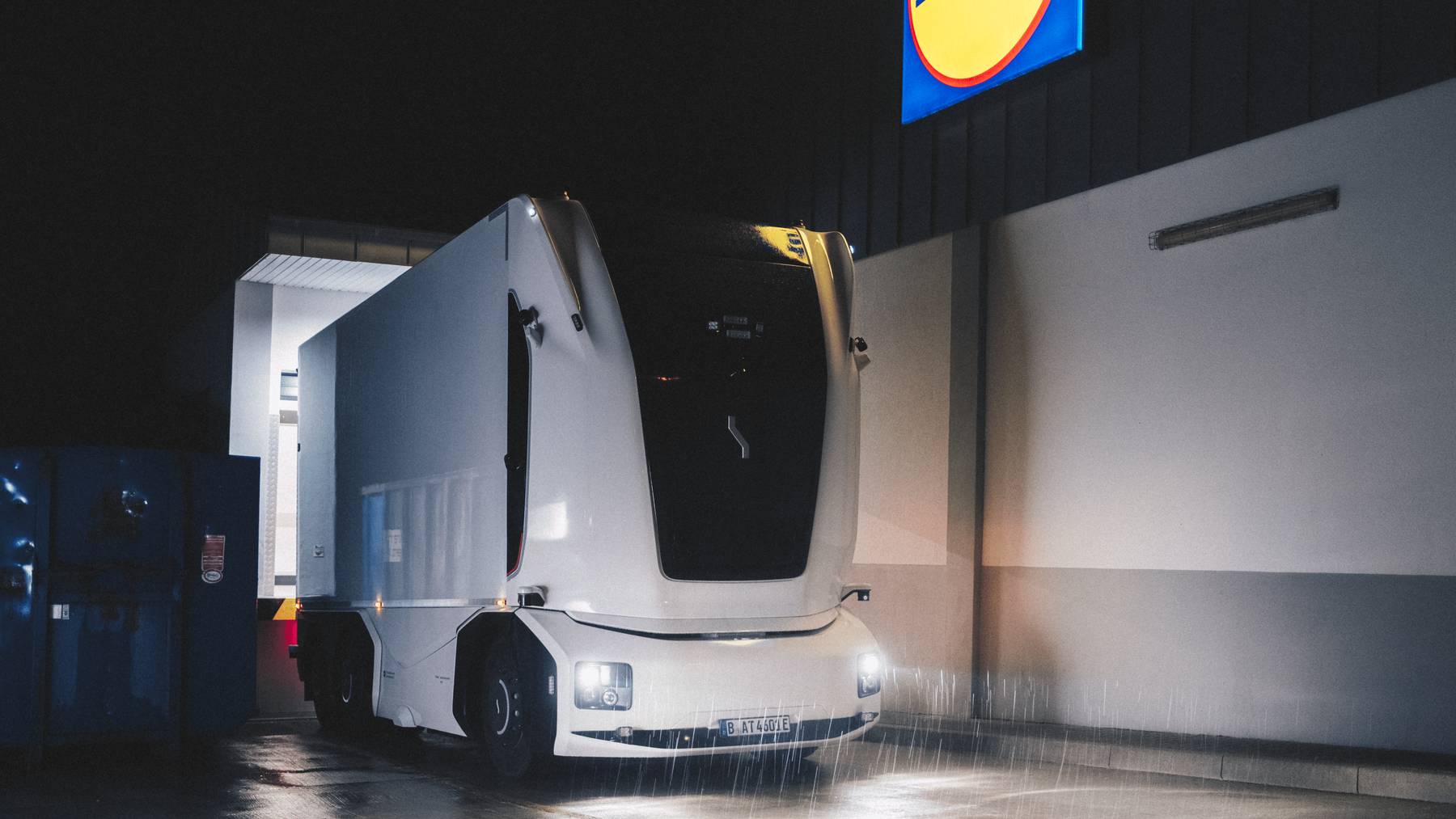
A truck with no cab is now carrying groceries on a public road in Germany. Lidl and the Swedish freight company Einride announced the launch on September 15, 2026, in Edermünde, near Kassel. The electric vehicle runs up to three times a day between a distribution center and a nearby store.
According to Einride’s announcement, the SAE Level 4 truck travels with “no driver or safety operator on board.” It operates under a permit from Germany’s Federal Motor Transport Authority, known as the KBA. The company describes that permit as the first of its kind granted in the country.
Fifteen pallets from Edermünde
The vehicle holds 15 Euro pallets, and Lidl says it covers all dry-goods deliveries on this route. Over the four-month project, Lidl’s press release estimates it could move more than 3,000 pallets. That number counts cargo, and a single trip carries up to 15 pallets.
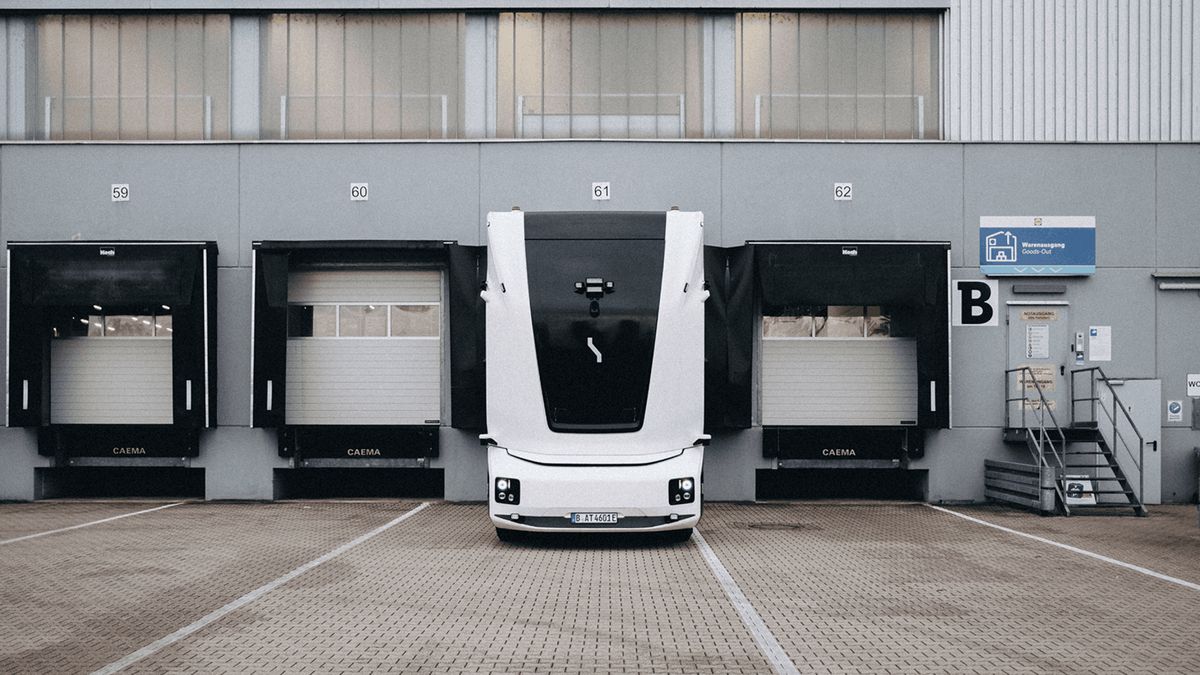
Goods leave Lidl’s administration and distribution center in Edermünde and go straight to one store close by. Lidl also claims a first for its sector. No other German grocery retailer, it says, has used a cabless autonomous electric truck for store deliveries on public roads.
Schwarz Group, Lidl’s parent, says its pilot also takes in site procedures and the drop-off at the store. A grocery chain needs the truck at the right dock on schedule, so those steps get tested too.
A permit with tight borders
Schwarz Group puts the truck’s top speed during the pilot at 25 kilometers per hour, about 15.5 miles per hour. Low speeds are common in early services, as with the autonomous shuttles in Higashiomi, Japan.
Level 4 sits one step below full automation on a six-level scale. At that level, the automated system handles the whole driving task inside a defined area and under set conditions.
On its project page, the group spells out the catch. A Level 4 vehicle does not drive itself everywhere or in every circumstance. Its approved operating area decides what it may do.
Einride treats the German approval as a calling card. “Germany’s approval process is among the toughest in the world,” said Roozbeh Charli, the company’s chief executive.
The worker in another vehicle
Nobody rides in the truck, yet people remain part of every run. Schwarz Group says a so-called Local Operator accompanies the trip in a separate vehicle. During the first phase, that person also loads and unloads the goods.
Einride says its licensed teams continuously oversee autonomous operations through Saga, its AI-powered operating system. Schwarz Group, for its part, insists that humans stay in overall control of the process.
Driver shortages drive the test
Lidl links the project to complex supply chains and a lack of qualified drivers. Schwarz Group adds that automation could take routine tasks off drivers and free them for harder work.
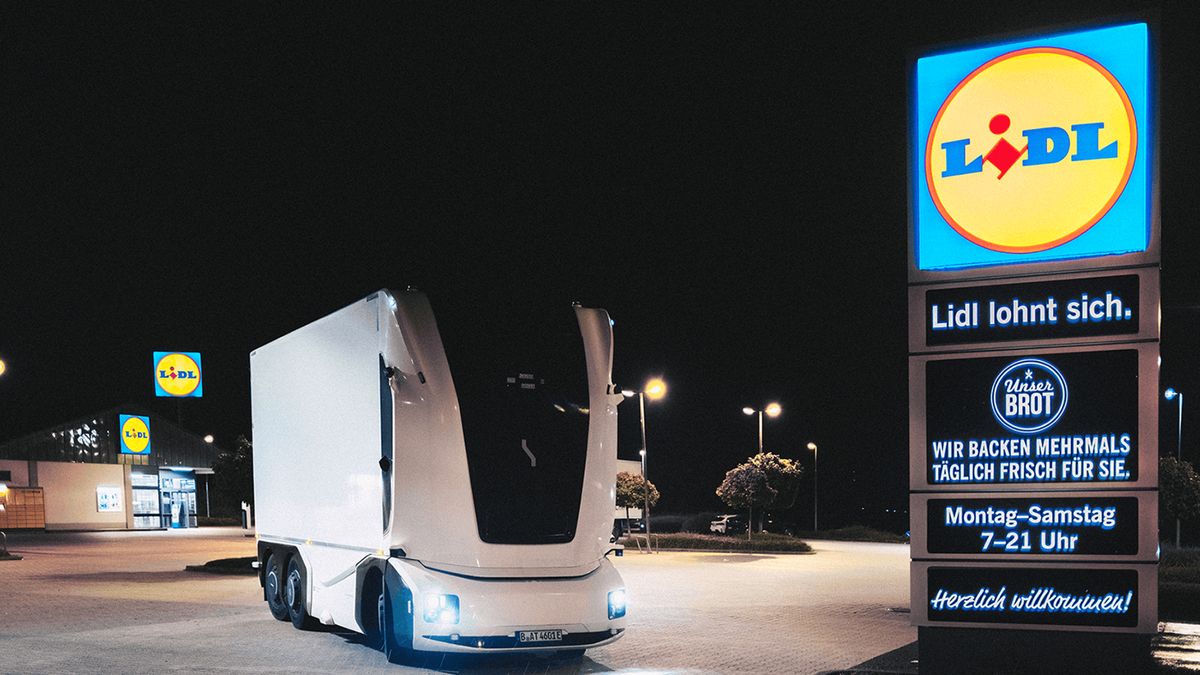
“Intelligence creates efficiency, and that is the backbone for permanently reliable product availability,” said Thomas Dangelmayer, head of operational logistics at Lidl in Germany. Costs matter as well. A transport entrepreneur in Chile says electric trucks there now match diesel on operating cost.
Lidl runs 39 administration and distribution centers and more than 3,250 stores in Germany. The company calls that network the ideal setting for possible later scaling. Public roads are a harder setting than a closed site like the Xinjiang coal mine with its more than 200 driverless haul trucks.
Several stops at another site
After the first route passes validation, Lidl plans a “milk run” at another location, meaning a delivery circuit with several stops. Its release gives no start date for that step. Einride says further deployments with Schwarz Group companies are under discussion.
Regulators are working on the wider map. On June 8, 2026, Germany and 17 other EU member states signed a joint declaration on cross-border testbeds for autonomous vehicles. Freight and logistics are among the planned uses, the European Commission said.
Participating countries will work on common principles for approval and coordinated permits. A first €20 million is earmarked for digital infrastructure. None of this lets the Edermünde truck cross a border.
Emissions and mileage stay unpublished
Schwarz Group says the all-electric truck produces no direct exhaust emissions on the road. Christian Hirte, parliamentary state secretary at Germany’s transport ministry, went further in the launch release. “Autonomous and zero-emission driving has moved from a future vision to a reality on our roads,” he said.
The U.S. Department of Energy notes that an electric vehicle’s full footprint depends partly on how its power is generated. Vehicle and battery manufacturing count as well.
Neither company’s release gives the route’s length, the charging source or a measured carbon saving. Any honest tally would also include the Local Operator’s vehicle.
Schwarz Group says the pilot will examine whether the hoped-for efficiency gains appear in practice. The launch details come from the announcements Einride and Lidl published on September 15, 2026.
Photo: Einride