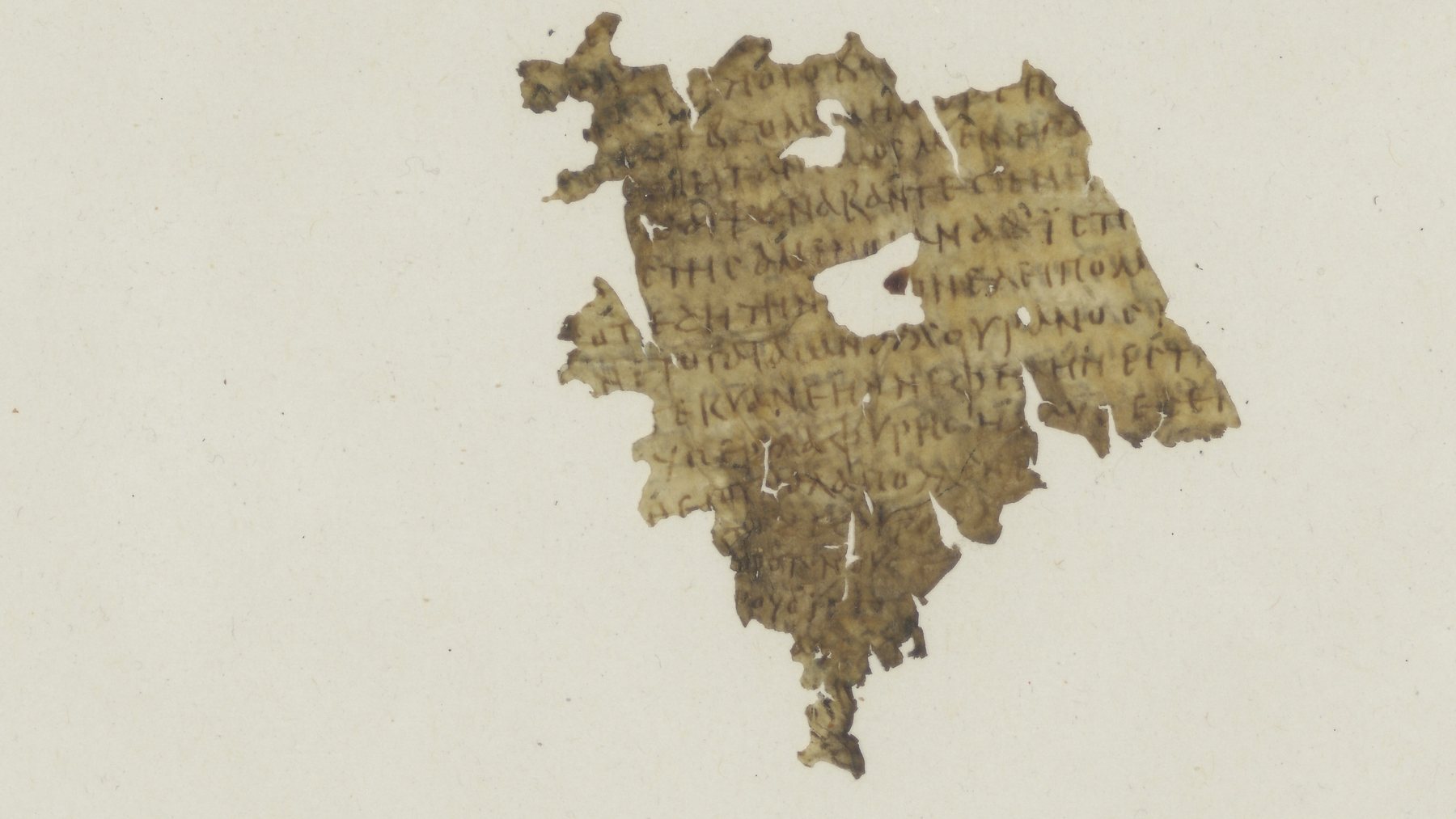
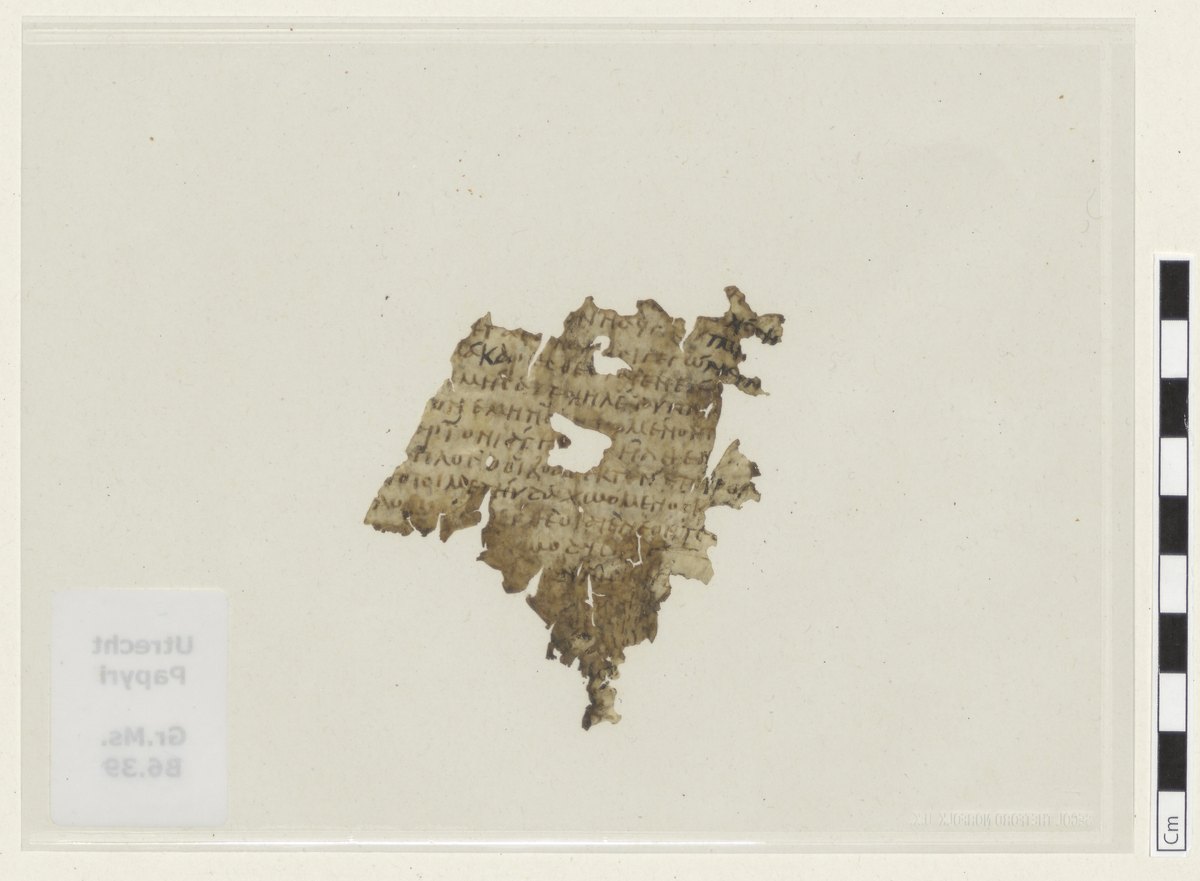
A small, discolored piece of parchment at Utrecht University Library has turned out to be a fragment of the Odyssey about 1,700 years old. Mark de Kreij of Radboud University identified its verses, from Book 12 of Homer’s poem, during a project to publish the library’s ancient manuscripts.
Utrecht University announced the discovery on September 14, 2026, in a news release. It dates the parchment to the third or fourth century CE and describes it as part of a codex, an early bound book. According to the university, “there are only around thirty fragments like it worldwide.”
Carl Schmidt’s estate reached Utrecht
The parchment came to the Netherlands with the collection of Carl Schmidt (1868-1938), a German scholar of Coptic. That language is Egyptian written with the Greek alphabet. Schmidt’s material is now spread across libraries in Berlin, Heidelberg, Copenhagen, Lund, Oslo, Princeton and Utrecht, the library’s history of the collection explains.
In 1956, Professor Gilles Quispel bought the Utrecht share from Schmidt’s niece. Most of the fragments are Bible texts on papyrus and parchment, with Demotic and Greek pieces mixed in.
Before the sale, Quispel discussed a microfilm of part of the material with the scholar Paul Kahle Junior. He liked the dozens of Coptic fragments, but “the Demotic and Greek fragments he considered to be of less value,” the library recalls. Utrecht bought everything anyway.
Homeric words, tiny letters
For decades the piece carried the wrong description. The university says it was first regarded as an unremarkable seventh-century fragment, roughly three centuries too late.
While working through the collection, De Kreij saw that its damaged surface held very small, neat letters. He soon recognized a few words typical of the Homeric epics, and further research matched them to Book 12. Its catalog number in the library’s series of Greek manuscripts is B6.39a.
De Kreij teaches ancient Greek and papyrology at Radboud University in Nijmegen. His faculty page lists the reopening of forgotten papyrus collections among his main interests. Other damaged texts have also been giving up their words lately, including a papyrus scroll carbonized by Vesuvius.
Helios learns about his cattle
Book 12 closes the long story Odysseus tells his hosts on Scheria, the island of the Phaeacians. Over four books he recalls the Lotus Eaters, the Cyclops Polyphemus, Circe, Calypso and the loss of his ship.
Near the end, his crew defies his orders and eats the sacred cattle of the sun god. Utrecht University says its fragment describes exactly the moment Helios finds out.
In Augustus Murray’s 1919 English translation, the messenger Lampetie brings the news to the god. Furious, he warns Zeus that without payment for the animals “I will go down to Hades and shine among the dead.” A storm then destroys the ship and kills the crew.
The university calls this “a crucial tipping point in the Odyssey,” placed roughly halfway through its 24 books. Here the ten-year voyage reaches its lowest point. From here, too, the road opens to Odysseus’ revenge on the men trying to take over his palace.
A Kindle-sized copy in the Fayum
Writing covers both sides of the page. The university suggests that it belonged to a pocket edition of the complete poem, roughly as big as a Kindle. Its owner, in that reading, was “a fan of Homer living in the Fayum oasis” around 300 CE.
Southwest of modern Cairo, that oasis sits in a country whose dry climate has preserved many ancient texts. New finds keep adding to the record, as in the chamber beneath Luxor with eight sealed papyri.
For Utrecht, the slip proves how popular the poem remained in Late Antiquity, about 300-600 CE. By Aristotle’s day, centuries earlier, the poem was already famous. The release also credits Christopher Nolan’s film with bringing Homer back into the spotlight.
The Utrecht volume still unpublished
Several points stay open because no full scholarly edition has appeared. The announcement gives neither the fragment’s measurements nor the exact lines it preserves. Nor does it explain how specialists reached the third or fourth century date.
Its picture of a pocket format and a reader in the Fayum also lacks published evidence so far. The Dutch version of the release frames it as an assumption. Hidden documents rarely say much about their owners, although a parchment a Polish priest hid inside a pulpit in 1884 proved an exception.
The main source for this account is Utrecht University’s news release of September 14, 2026.
De Kreij plans to publish nearly all of the library’s Greco-Roman documents from Egypt shortly. The volume will be titled Hieratic, Demotic, Greek, and Coptic Texts in the Utrecht University Collection.
Photo: Utrecht University