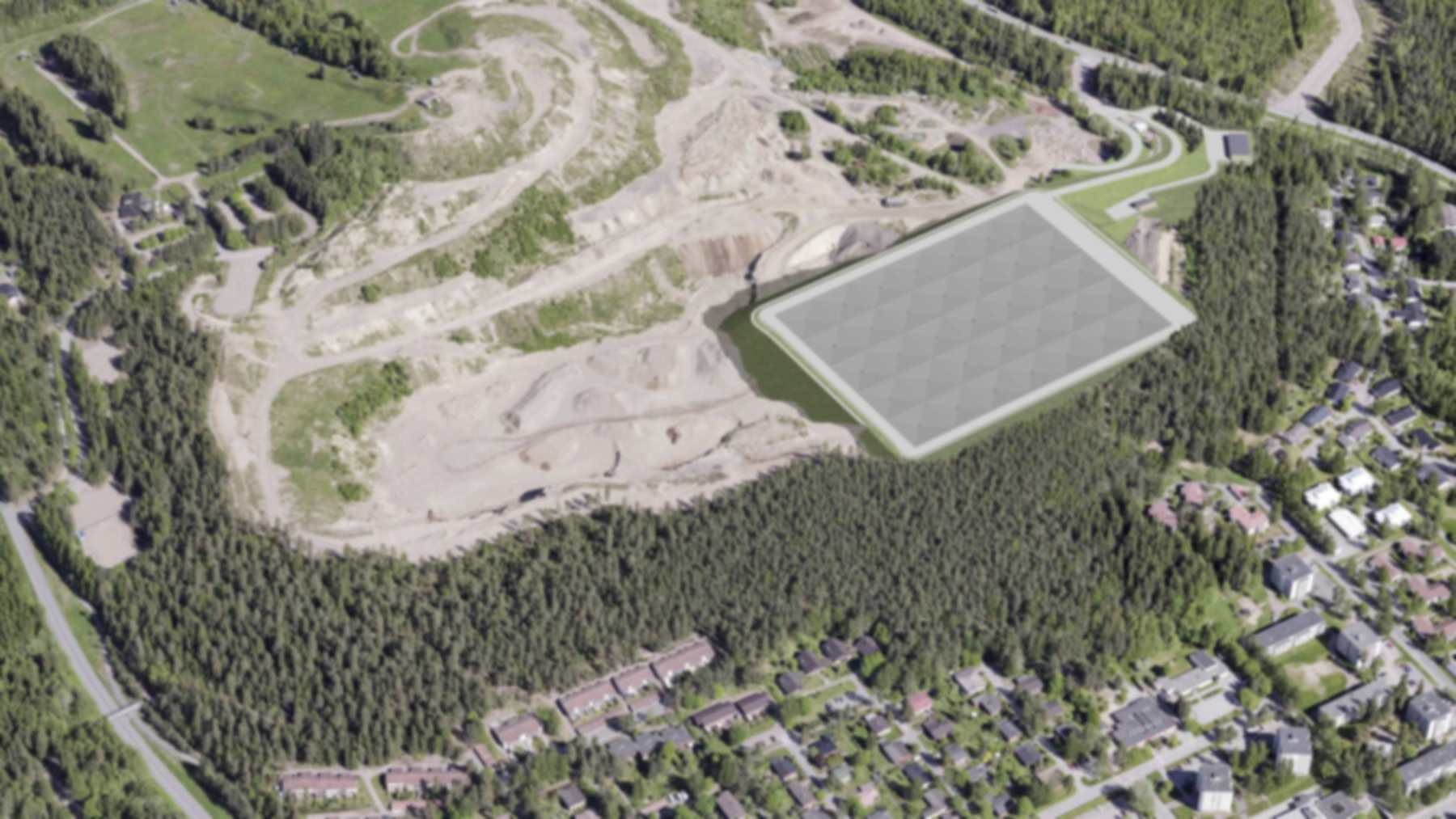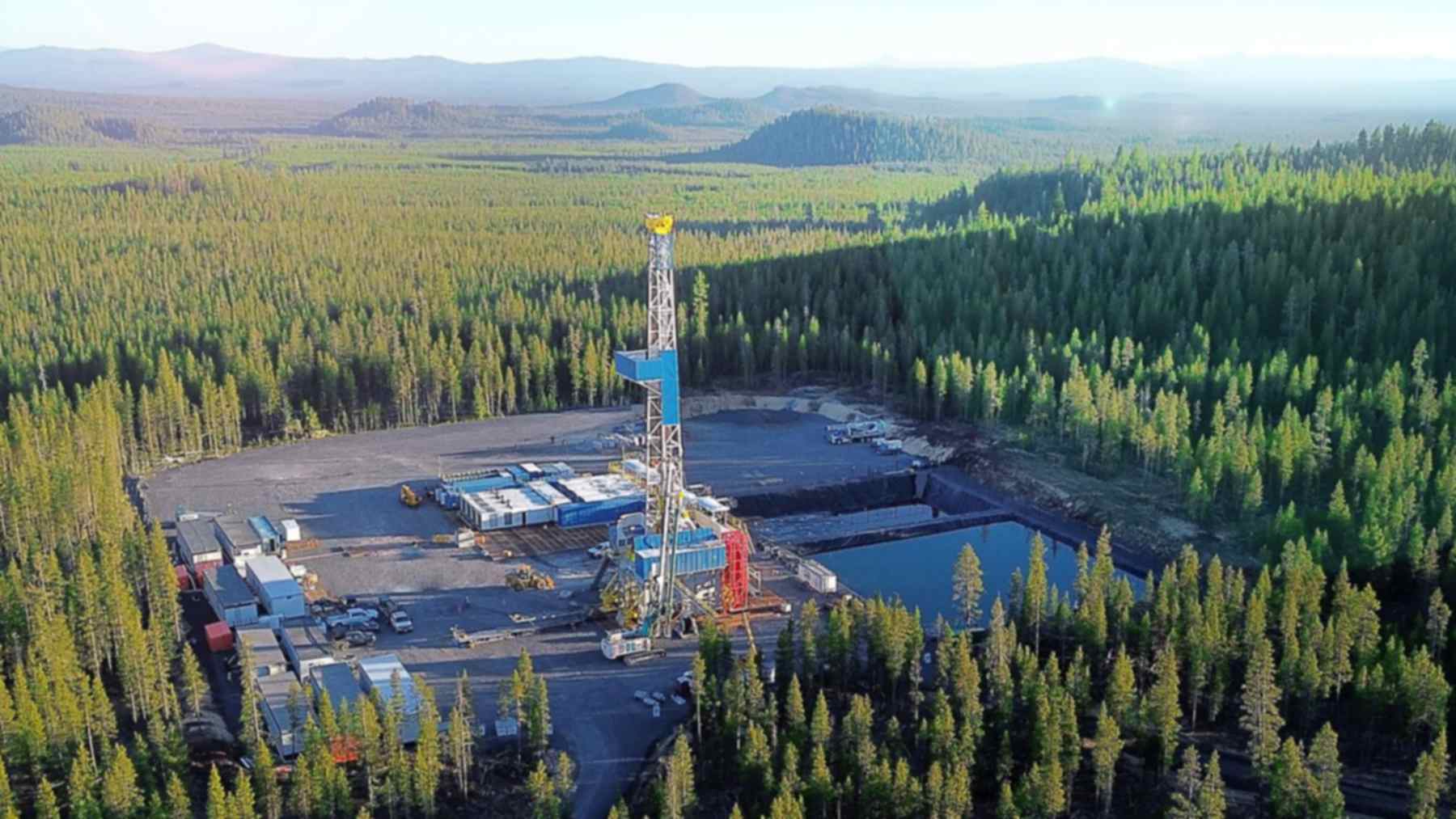
Quaise Energy is drilling a confirmation well for a superhot geothermal plant on the southern flank of Oregon’s Newberry Volcano. The well should reach about 15,000 feet (4,572 meters), almost 3 miles underground. Drilling began in July, and the Houston company plans to send first power to the Pacific Northwest grid in 2030.
Project Obsidian stands out because Quaise built its name on a drill that melts and vaporizes rock with millimeter waves, cousins of kitchen microwaves. Yet the company’s October progress report says the first wells will use conventional drilling. The beam will wait for the hotter 365-degree Celsius wells at the earliest.
A conventional rig goes first
Trenton Cladouhos, Quaise’s vice president of geothermal resource development, explained this first hole in a video released on October 26. It should confirm the geology and test new equipment at superhot temperatures. Later it will monitor the second and third wells on the same pad.
Nabors Industries, a partner and investor, has been working with Quaise on the rig. Once they finish, a wellhead goes on the casing and the rig moves over. Cladouhos said it will then drill an injection well to 15,000 feet or more, followed by a production well.
That sequence matches what Quaise calls a hybrid approach. Conventional tools remove the rock near the surface, and millimeter waves would take over in the basement rock below.
Newberry’s shallow volcanic heat
Cladouhos tied the choice of site to geology in the video. “Newberry’s special for geothermal development because we can reach superhot temperatures at just 15,000 feet,” he said. Very few other places in the United States offer that access, he added.
By his account, the volcano is about half a million years old and last erupted 1,300 years ago. The drill pad sits roughly 2 miles (3.2 kilometers) from the rim of its caldera, which formed 70,000 years ago.
Superhot usually means rock near 752 degrees Fahrenheit (400 degrees Celsius). At those conditions water turns supercritical, a steam-like phase. Quaise says it can carry five to 10 times more energy than ordinary hot water.
Geothermal power already takes many forms, from New Zealand’s Wairakei flash-steam station to Fervo’s 33-megawatt Cape Station in Utah. The United Kingdom has also drilled five kilometers down in search of heat.
Seven wells on 20 acres
Phase one calls for seven wells and more than 50 megawatts of power by 2030. After the confirmation well come two systems of three wells each. One targets an average of 315 degrees Celsius (599 degrees Fahrenheit), and the other 365 degrees Celsius (689 degrees Fahrenheit).
In each system, water goes down a central injection well and passes through the hot rock. Two production wells on either side bring it back up. Quaise is building the cooler system first on purpose.
“We’ll learn a lot from that first system,” Cladouhos said in the company’s report. Those results and lab tests at Oregon State University should lower the risk of the hotter one, he explained.
All seven wells would occupy 20 acres (8 hectares) at the surface and reach across 200 acres (81 hectares) underground. The company’s roadmap then runs to 250 megawatts in phase two and more than 1 gigawatt in phase three.
Beams that vaporize granite
The method grew out of roughly 15 years of work at MIT. It uses a gyrotron, a machine that fusion researchers have used for some 70 years to make intense microwave energy. The holes drilled at MIT measured about 2 inches (5 centimeters) across and 2 inches deep.
In July 2025, Quaise announced a depth of 100 meters (328 feet) in granite at its Central Texas field site, a record for the technique. CEO Carlos Araque said the technology can “drill perfectly clean holes through some of the hardest rocks on Earth.”
That depth equals about 2 percent of the planned Oregon well, a gap the company acknowledges. Quaise says a gyrotron with 10 times more power comes next. Its long-term plans involve holes as deep as 12 miles (19 kilometers).
$25 million with conditions
The Department of Energy has listed Quaise among five field-test projects, with a Newberry demonstration at bottom-hole temperatures of 265 to 365 degrees Celsius. The agency says those readings sit “above the range where most conventional EGS tools and materials have been validated.” EGS means enhanced geothermal systems, which open paths through hot rock so water can circulate.
Quaise’s announcement puts its share at up to $25 million of a $99 million federal effort. The final amount still depends on award negotiations.
The money supports a three-well set designed to show more than 25 megawatts of gross capacity. Two national laboratories and Oregon State University are on the team. Private investors had already closed a $180 million round in August, led by Nabors and Prelude Ventures.
The 2030 date remains a forecast
Every output figure here comes from Quaise’s own projections, and the plant has generated no electricity so far. The company has not yet published a final depth or a measured bottom-hole temperature for this well. Its recent descriptions also differ, citing 700 degrees Fahrenheit in the video and up to 750 degrees in the written report.
Timelines have shifted too. In July 2025, Quaise expected a pilot plant in the western United States as early as 2028, and its target for first power at Obsidian is now 2030.
The company also claims that one superhot well can deliver 10 to 100 times more power than other geothermal wells. Its claim that deep drilling could reach more than 90 percent of humanity remains equally untested in the field.
The latest project details come from Quaise’s October 26 site video and its October 8 report on the 2026 Geothermal Rising Conference in Houston.
The next major test follows this well, when cold water goes into an injector and hot water returns through a producer. Cladouhos expects that flow test to prove out 10 to 15 megawatts of production potential.
Photo: Quaise Energy