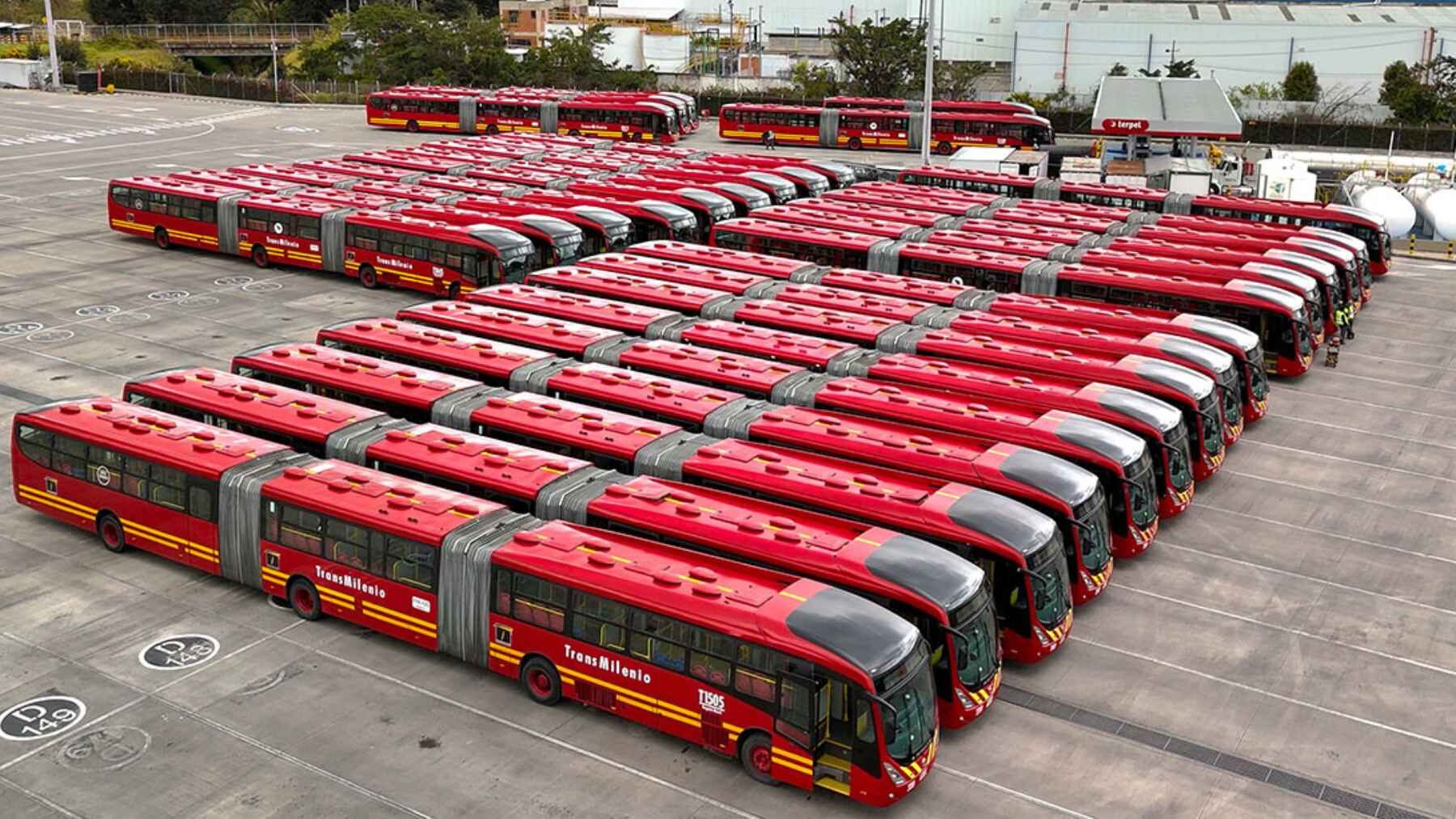
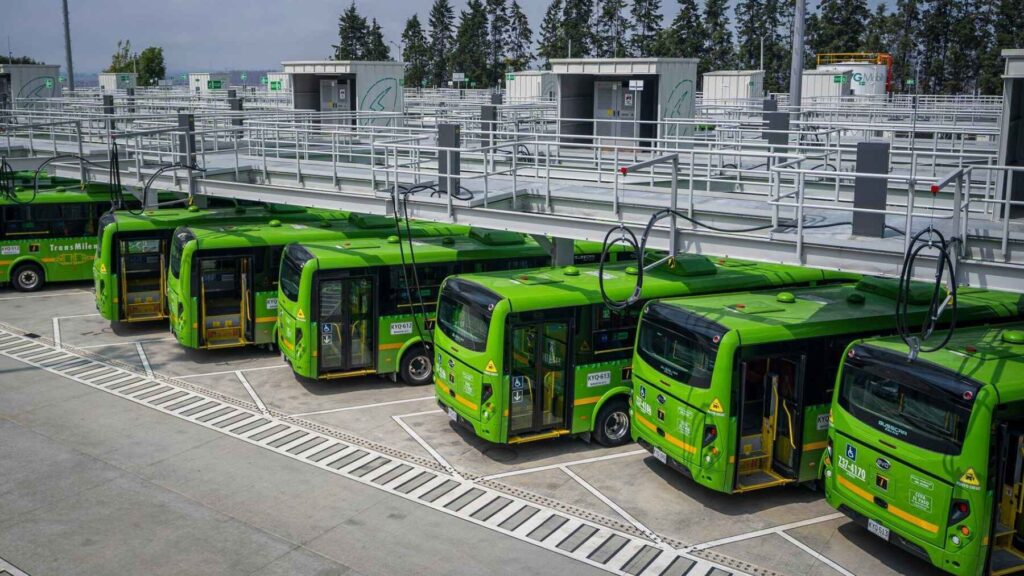
Bogotá has placed one of its biggest bets yet on electric public transit, awarding a roughly $436 million concession for 269 fully electric buses. The order covers 157 articulated and 112 bi-articulated vehicles, along with the charging infrastructure needed to keep them moving.
The buses are scheduled to enter service in three batches in February, July, and December 2027. This will not make every bus in Bogotá electric, despite some of the more dramatic headlines, but it will electrify a major slice of the high-capacity TransMilenio network, where packed platforms and long commutes make every added vehicle count.
Why this order is different
The new order focuses on TransMilenio’s trunk network, the high-capacity backbone that carries riders along the city’s busiest corridors. Phase VI, known as “The New Era,” brings battery power to 157 articulated and 112 bi-articulated buses.
That is a tougher operating test. Larger buses carry more passengers, run demanding schedules, and depend on reliable charging, so the project is really about an entire transport system rather than 269 shiny new vehicles.
The winning provider, E-BRT Móvil Provisión S.A.S., is formed by Buses S.A.S. and Transdev Colombia Holding S.A.S. Reuters reported that its bid uses BYD BC18S02 Attivi-T articulated buses and BC26S01 Attivi-T bi-articulated models, linking the project to a company headquartered in Shenzhen, China.
More space and shorter trips
TransMilenio says its trunk fleet will rise from 2,203 to 2,472 buses, a 12% increase. In practical terms, that means more than 50,300 additional passenger spaces and more ability to manage crowding when a station is packed at rush hour.
The agency estimates that the added capacity could save the average passenger about 16 hours per year. That may sound modest on paper, but anyone who has watched minutes disappear in traffic or on an overcrowded platform knows how quickly they add up.
The new buses are expected to reinforce service on Avenida 68, Avenida Ciudad de Cali, and the NQS extension toward Soacha. These are strategic corridors for a growing system, not quiet test routes on the edge of town.
The climate payoff
Over 15 years, the project is expected to avoid more than 353,760 metric tons of carbon dioxide, which is about 390,000 U.S. tons. TransMilenio compares that reduction with planting trees across an area 57 times larger than Bogotá’s Simón Bolívar Park.
Electric buses also remove tailpipe exhaust from the streets where they operate. That matters around stations and sidewalks, where passengers, vendors, and nearby residents can spend hours close to repeated bus movements, engine noise, and fumes.
The headline number is still a projection, not a measured result. To a large extent, the final climate benefit will depend on charging, maintenance, service performance, and the electricity used during the 15-year operating period.
Charging is part of the deal
This is not simply a vehicle purchase. The provider must design, supply, install, and maintain charging infrastructure at the Calle Sexta depot in Bogotá and the El Vínculo depot-portal in Soacha.
A solar generation system is also planned for El Vínculo. That could help support the depot’s energy needs, although the wider charging operation will still depend on a strong grid connection and careful energy management.
Why does that matter? A bus that cannot charge on schedule becomes an expensive parking space, so chargers, software, maintenance teams, and power availability are part of the environmental story too.
Costs and public money
The approximately $436 million cofinancing agreement is backed 62.4% by Colombia’s national government and 37.6% by Bogotá’s district government. According to TransMilenio, this is the first time the national government has cofinanced an electric fleet for a mass transit system in Colombia.
The agency projects that the buses will have a total cost of ownership 9% below comparable vehicles powered by compressed natural gas. It also expects operating costs to be 21% lower, an important detail when fuel, maintenance, downtime, and the electric bill all shape what a transit system spends.
Three bidders competed for the concession. That competition is part of why Bogotá is presenting Phase VI as both a climate investment and a value-for-money decision rather than an environmental upgrade at any price.
Bogotá is not fully electric yet
Bogotá operated about 1,486 electric buses in 2025, according to the International Council on Clean Transportation. Adding this order would take the city above 1,700 electric buses once the full batch enters service, keeping it among Latin America’s largest electric bus markets.
“269 buses that are 100% electric” is not the same as “a transport fleet that is 100% electric.” The broader TransMilenio and integrated public transport network will continue to include buses using other technologies.
Clear wording matters. A major procurement can be a turning point without being the finish line.
What riders should watch
Big fleet announcements are easy. The real test arrives in 2027, when Bogotá must commission the buses in three batches, keep the charging system available, and turn extra capacity into shorter waits and more reliable trips.
Passengers may notice quieter departures and fewer exhaust fumes, but they will judge the project by what happens on the platform. Does the next bus arrive sooner, is there room to board, and does the service hold up during the hardest part of the rush?
Phase VI also includes a target to raise women’s participation in operations and maintenance from 10.1% to 16.2%. That makes the project more than a hardware upgrade, since it is also a test of whether public money can improve service, cut pollution, and widen access to transit jobs at the same time.
The official statement was published on TransMilenio’s website.