Sweden has found a way to earn money from a problem other countries pay to remove. Waste plants accept foreign trash for a fee and turn it into heat and electricity, making a discarded load useful long after it leaves the curb.
Official figures put Sweden’s imports of waste requiring notification at 3.86 million metric tons in 2024, mainly from the United Kingdom, Norway, and Italy. But that total covers several treatment routes, and burning waste still creates climate emissions. This is an energy success story, not a recycling miracle.
Why Sweden brings in other countries’ waste
Much of the explanation lies beneath the streets. Sweden’s district heating networks distribute heat from central plants through insulated pipes, rather than requiring every building to operate its own boiler. That allows energy recovered from trash to reach apartment radiators instead of going unused.
Sweden also developed more incineration capacity than domestic waste alone could fill. A 2024 Nordic Council of Ministers review put imports of waste-derived fuel for dedicated incinerators at 1.4 million to 1.6 million metric tons annually since 2017. That narrower figure excludes waste sent to recycling facilities and fuel burned in cement factories.
Getting paid before selling the heat
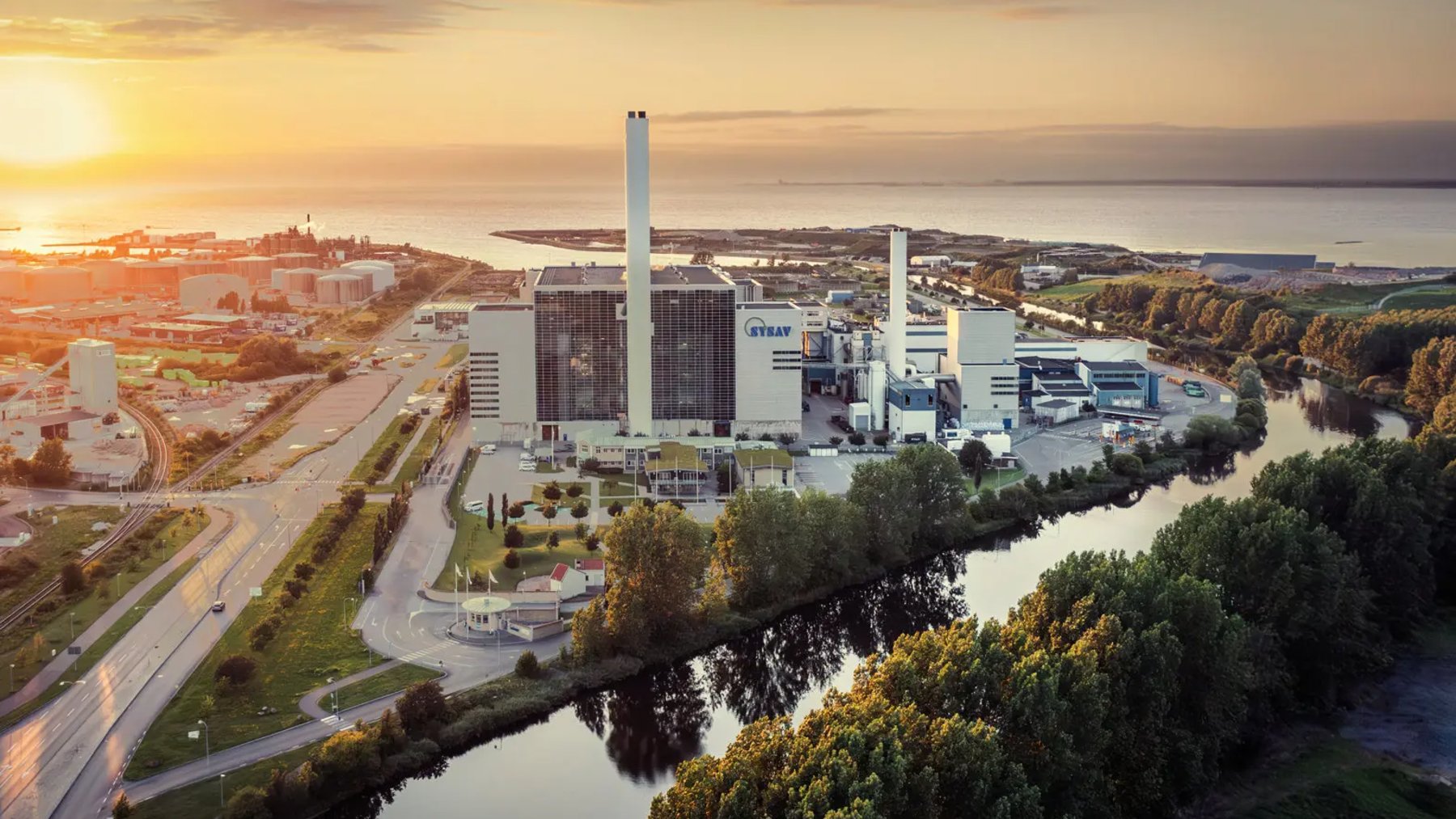
Receiving trash is a waste-treatment service, not a purchase of cheap raw material. Operators can charge for accepting it, then sell the resulting energy. Sysav, which runs a waste-to-energy plant in Malmö, describes foreign deliveries as a service other countries pay for.
How much money does that bring in? The often-cited 373 Swedish kronor per metric ton comes from SVT’s 2015 reporting on 2013. The broadcaster estimated profit at that level, not a standardized present-day fee.
SVT applied that estimate to 2.14 million metric tons imported by heating plants in 2013, arriving at just over 798 million kronor. Those numbers illustrate the historical economics, but they are not a valid basis for calculating today’s industry profits.
What the garbage actually powers
The Swedish Energy Agency reported in March 2025 that energy recovery from waste provided 19.5 terawatt-hours annually. It compared that output with the heating needs of more than 1.47 million apartments and the electricity needs of more than 940,000 apartments. Those figures cover the wider waste-energy system, not foreign trash alone.
For households, the practical payoff is a warm apartment when it is cold outside. The agency emphasizes that waste can be stored and used to support heat and electricity production when temperatures drop, rather than depending on immediate weather conditions.
The carbon problem inside the furnace
The problem is what goes into the furnace. Waste fuel contains both biological material and fossil-based materials, including plastics, so burning it still releases fossil carbon dioxide.
According to the Nordic review, waste incineration accounted for 73% of carbon dioxide-equivalent emissions from Sweden’s combined heat and power sector in 2021. That is not 73% of Sweden’s total emissions. It reflects how waste remained a major carbon source while other parts of the sector moved away from fossil fuels.
Operators point to another part of the calculation. Sysav argues that treating imported waste can avoid methane emissions from landfills abroad. The climate comparison therefore depends on what would otherwise happen to the trash, not just what exits a Swedish chimney.
The tax that did not deliver
Sweden introduced an incineration tax in April 2020, starting at 75 kronor per metric ton. The aim was to encourage more efficient resource use and more recycling.
But the Swedish Tax Agency’s evaluation found that its effect on material recycling was negligible. Parliament repealed the tax effective January 1, 2023. That experience suggests charging at the furnace alone may not be enough to change the waste stream.
Burning is not the same as recycling
EU policy ranks waste prevention, preparation for reuse, and recycling above energy recovery. That order matters because recycling keeps materials available for another use, while combustion uses up their fuel value. A warm radiator is useful, but it is not a substitute for keeping recyclable materials in circulation.
Even the industry draws that distinction. “It should not replace recycling but is essential for handling non-recyclable waste,” Tony Clark of Avfall Sverige said in the Energy Agency’s 2025 article. The challenge is making sure the waste reaching the furnace really belongs there.
Sweden’s model shows the value of recovering energy from leftovers, but import volumes alone reveal little about recycling or climate performance.
The official waste-shipment statistics, last reviewed on December 1, 2025, were published on the Swedish Environmental Protection Agency website.