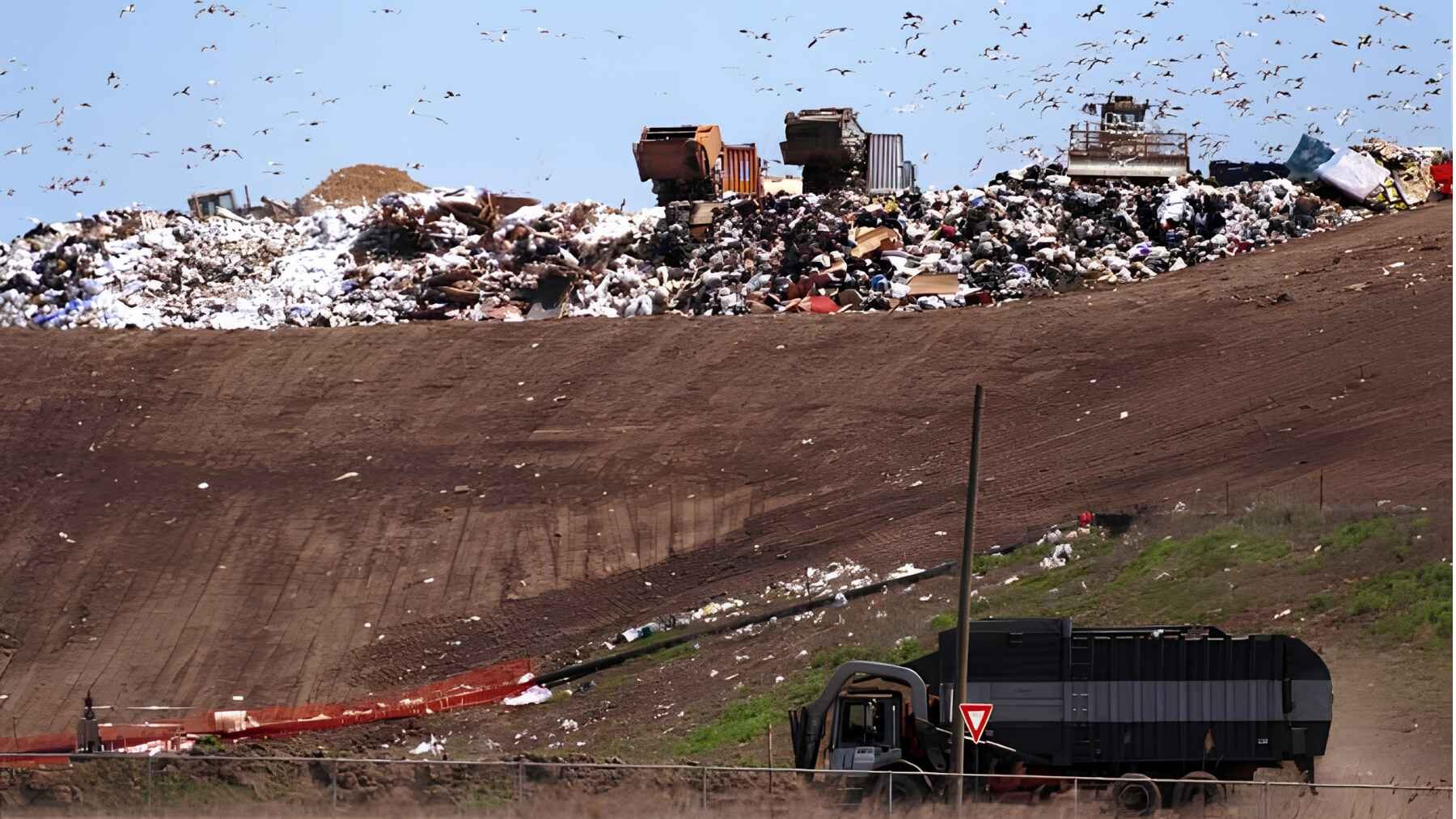
The finding comes from an unusually long monitoring study. Researchers found that the biggest releases came in winter and during periods of falling air pressure. In other words, short surveys can miss quite a lot.
Methane matters because it traps far more heat than carbon dioxide pound for pound. So, measuring a landfill only on a clear summer day can be a little like judging an entire year’s electric bill from one mild afternoon.
A tower watched the landfill for years
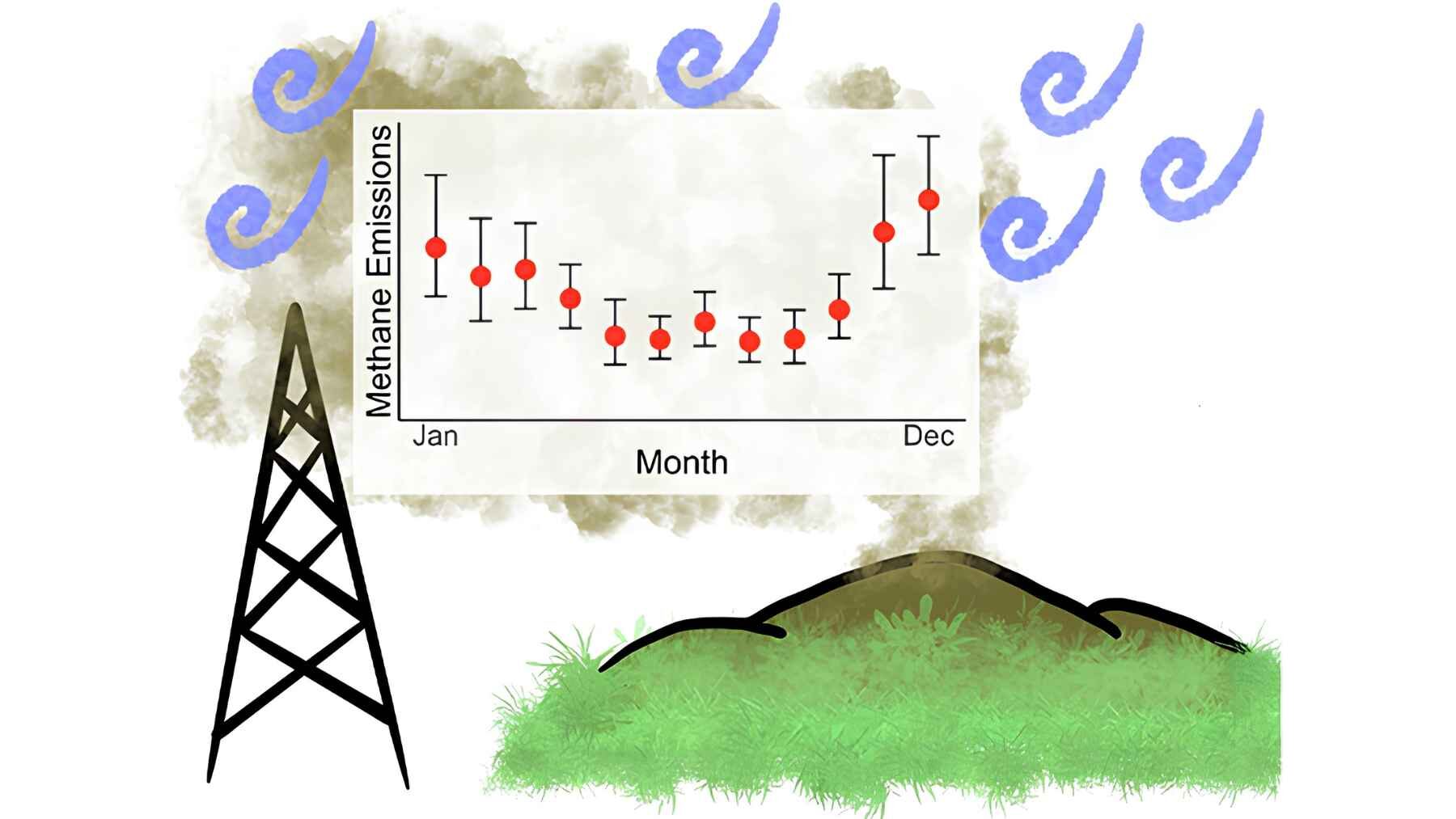
Researchers built their method around two and a half years of nearly continuous methane readings from a roughly 66-foot monitoring tower near East Brunswick.
Wind, temperature, pressure, and background methane levels helped the team estimate how much gas was coming from the landfill month by month. Not just during a few isolated visits.
The team included researchers at Lamont-Doherty Earth Observatory, part of the Columbia Climate School, while Rutgers University operated the tower.
They also checked their estimates against two aircraft flights and mobile measurements taken around the site. The different methods generally agreed when they covered the same periods.
Winter exposed the hidden peak
Here’s where things get interesting. Methane emissions rose during early winter and fell to their lowest levels in summer.
Why would colder weather mean more methane?
In cold conditions, methane-eating microbes in the landfill’s surface soil become less active. Meanwhile, methane-producing microbes can remain busy deeper inside the warm, insulated waste.
Think of the soil cover as a living filter. When that filter slows down near freezing, more methane can get through.
There was some nuance, though. The study found that emissions dropped again during the very coldest temperature range observed.
Falling pressure opened an escape route
Air pressure mattered too.
High pressure can help hold gas inside a landfill. But when a low-pressure weather system arrives, that atmospheric lid becomes weaker, making it easier for methane to move upward and escape.
Lead author Andrew Hallward-Driemeier described the process simply. “Then it all escapes as the pressure drops.”
And there’s a catch. Those cloudy, unsettled days are exactly when aircraft and satellites can struggle to collect useful readings.
The reported gap was fivefold
For 2023, the tower-based estimate averaged about 6,000 pounds of methane per hour, with an uncertainty of roughly 660 pounds.
The amount reported to the U.S. Environmental Protection Agency was about 1,180 pounds per hour. That puts the measured estimate at around five times the reported figure.
That’s not a small difference.
The two summertime aircraft campaigns also produced estimates that were, on average, 37% below the tower’s full-year result.
Does that mean aircraft measurements are useless? No. But a few good-weather flights can miss the winter surge and leave scientists with only part of the picture.
Why quick surveys can fall short
Satellites can scan huge areas. Very useful. But clouds and water vapor may block or blur methane signals, especially around wetlands.
Aircraft offer more detail, but they usually provide snapshots. Crews also tend to fly in summer, when conditions are safer and clearer.
Ground crews have almost the opposite problem. They can find leaks and methane hot spots at close range, but small samples may not represent the entire landfill.
It’s a bit like checking one warm vent and assuming you now know how well the whole house is insulated.
Other studies have raised the same warning
This is not the first research to suggest that landfill methane emissions may be underestimated.
A 2024 airborne survey examined 250 large U.S. landfills across 18 states and detected strong methane plumes at 52% of the sites.
That suggests large releases are not exactly rare.
Still, there’s an important limit here. The New Jersey study followed one landfill. Its fivefold difference cannot simply be applied to every landfill in the country.
Its bigger lesson is about timing. And patience.
Year-round monitoring can reveal swings that occasional measurements simply smooth away.
Trash keeps feeding the methane cycle
Landfill gas forms when organic material breaks down without oxygen. It is roughly half methane and half carbon dioxide.
Municipal solid waste landfills accounted for about 14.4% of human-related U.S. methane emissions in 2022, while all landfills together accounted for about 17%.
Kitchen scraps are a surprisingly big part of the problem.
A federal analysis of landfilled food waste found that food makes up about 24% of municipal landfill waste but produces an estimated 58% of the methane from those landfills that escapes into the atmosphere.
That banana peel or leftover dinner looks harmless in the trash. Underground, though, all that organic waste adds up.
Better timing could cut emissions
So, what can landfill operators actually do?
The researchers suggest measuring emissions across multiple seasons, with special attention to falling air pressure and near-freezing weather.
Landfill operators could also increase gas pumping before pressure drops, when methane may be building up underground. More soil cover during high-risk periods could help too.
Continuous monitoring towers may also help officials work out which large landfills have serious methane problems and which do not.
The study’s public data could make the method easier to examine and adapt, although suitable sites need enough separation from other methane sources and reliable measurements of upwind air.
What the finding means for climate action
Methane stays in the atmosphere for far less time than carbon dioxide, but over a century it has about 28 times the warming impact pound for pound.
That makes landfill methane worth watching closely. Better measurements could help operators capture more gas, reduce emissions, and avoid wasting a potential energy source.
There’s still plenty researchers do not know.
Róisín Commane cautioned that the method should be tested near more landfills before anyone treats the New Jersey result as universal.
For now, the takeaway is pretty simple. When you measure matters.
Weather matters too.
The full study was published in Environmental Science & Technology.