How can a city use a hill that nobody can safely build on? Just outside New Haven a grassy mound that spent decades receiving the city’s trash can be the answer. First the local was sealed, then grass seeds were planted and to end the process the place was left alone until one morning a crew climbed the slope and had a brilliant idea.
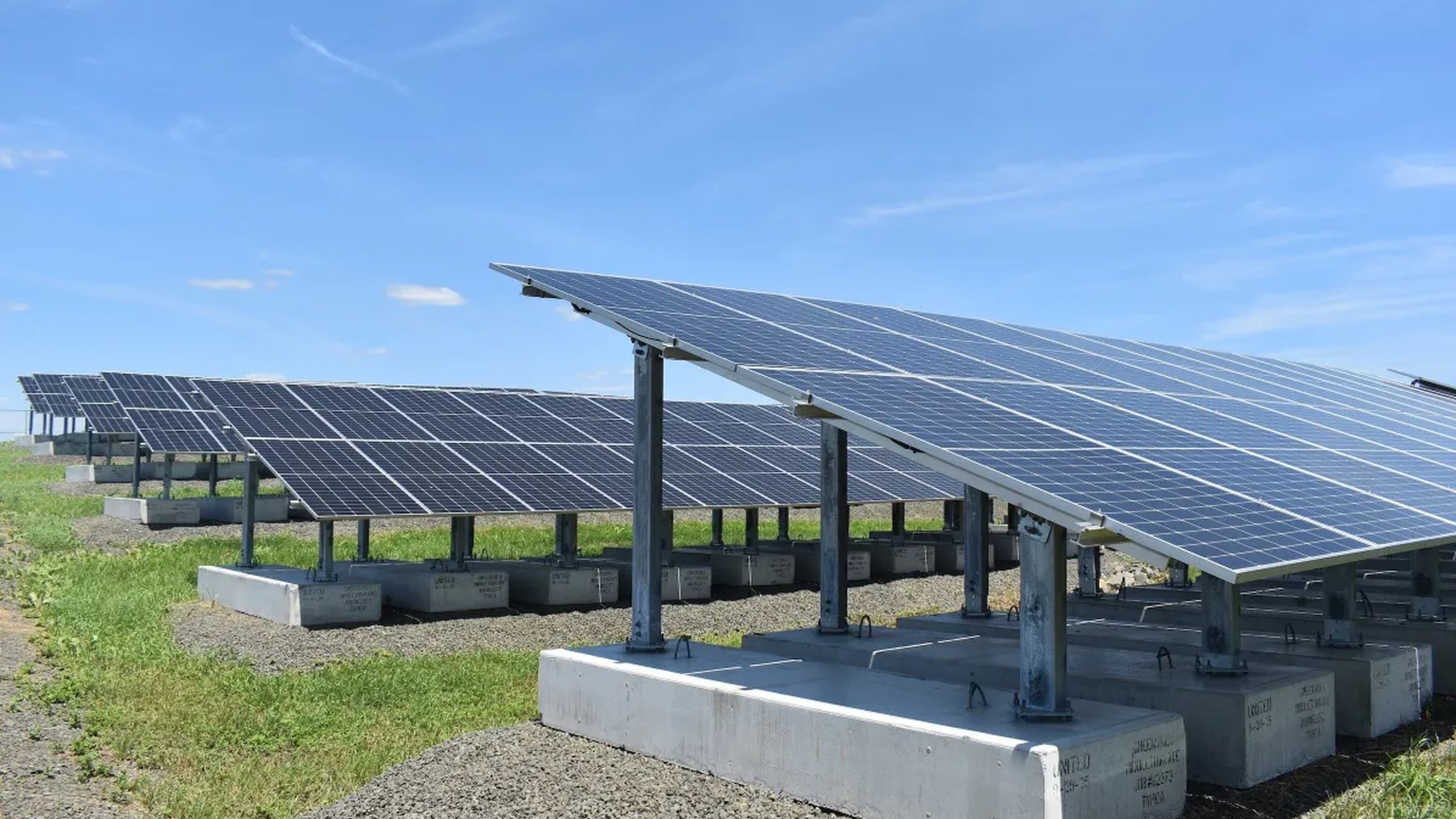
The hill is now a power plant composed of 1,900 solar panels that produce about 1.4 million kilowatt-hours of electricity each year. Enough to power up around 200 homes. The project is the perfect example that even if a plot of land can’t support ordinary construction it can still deliver clean power and local revenue without the need for clearing forests or farmland.
A sealed hill begins producing electricity
The panels cover the slope of the former transfer station on Middletown Avenue. The local utility buys the electricity and distributes it to the customers nearby. Even though the size of the project has the scale of a neighborhood it gives a long-idle property a useful second life. We all know how expensive land is these days and why such projects should happen more often in the future.
The scenario looks even better when we realise New Haven did not pay to build the installation. A private developer leases the site, finances the project and pays the city about $72,000 a year for 20 years. The city estimates compare the project’s carbon savings over those two decades to an equivalent of what 32,000 trees could absorb.
Why solar can work on a closed landfill
The closed landfill is not simply an empty lot though. It was sealed with a protective cap that keeps rain from entering in it and leachate from escaping. If anything happened to puncture that cover it could compromise the site, which in turn rules out any conventional construction from happening there.
Solar is one of the few technologies that can fit those restrictions. The panels rest on ballasted supports instead of on foundations that could pierce the cap. In case the equipment needs any kind of repair and can just be removed and added back. No digs need to happen.
And there are more benefits: every acre of sealed landfill used for the panels is an acre of farmland or forest that the developer does not need to plant. To top it off the hill was already degraded, so the project adds energy consumption without the need of consuming untouched landscape.
New Haven turns an old liability into an asset
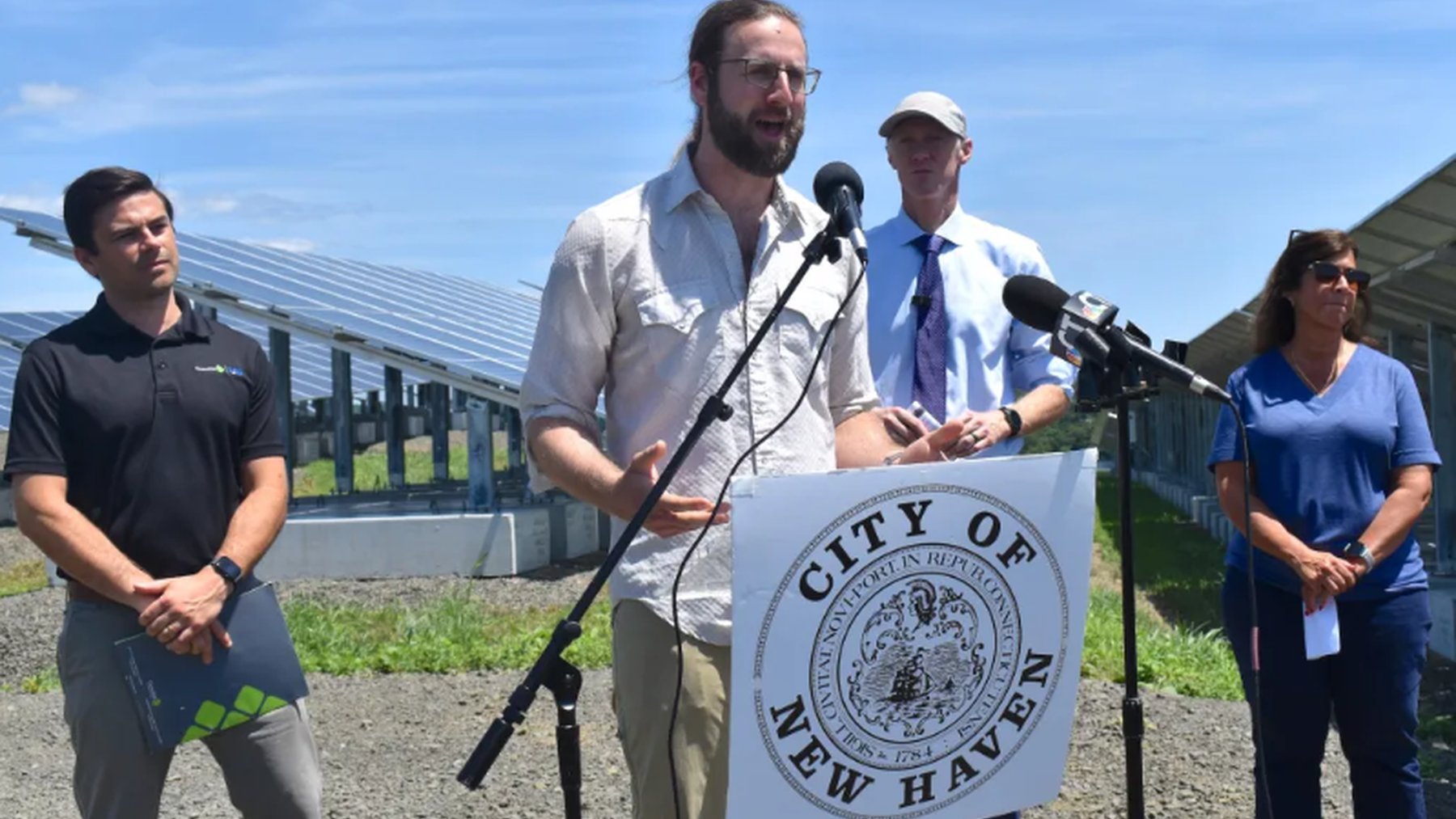
Mayor Justin Elicker captured the contrast while standing at the site: “We are literally standing on New Haven’s waste from the past and talking about New Haven’s future as a city that protects the environment”. It’s a simple project that holds a powerful message. Elicker also noted that the property had offered little practical value before: “We couldn’t use it for anything, so it was really just a big mound that people drove past every day on the highway”.
State policy has quietly helped projects like this to move forward. Connecticut has given preference to energy developments on landfills and contaminated sites, helping degraded properties to be used instead of using undeveloped land. New Haven is also planning to introduce energy projects totaling about 4 megawatts and $250,000 in annual lease revenue.
The national opportunity is far larger
The New Haven landfill is only an example but around the United States more than 10,000 closed landfills are sealed, fenced and inactive. A national analysis examined more than 4,300 sites that had usable data and estimated that the whole suitable landfill space could generate 63 gigawatts of solar energy.
This would translate to roughly 83 terawatt-hours of electricity a year, enough to support 7.5 to 20 million homes. Yet there is a huge gap between what could be and what has been done. Of those estimates only 500 megawatts of solar landfill had been built when the count was conducted. And of those, three-quarters were concentrated in four Northeastern states.
It’s interesting to note that the green that grows on those landfills is also useful. The mowed grass and low vegetation between the panel rows can provide habitat for animals, giving the animals places to live that people tend to avoid.
Why some landfill hills will not work
Despite the great estimates not every landfill ends up being useful. Some of them continue moving underneath, which can displace previously set solar arrays. Others are just too far from a power line large enough to accept the electricity. The ever present risk of surface contamination can also make any kind of construction harder or more expensive.
Time too is an obstacle. For example, Hartford has an agreement connected to the former Leibert Road landfill beside the interstate called Mount Trashmore, but it has only been signed. The building process hasn’t even begun, which shows how the developments tend to arrive slowly, hill by hill.