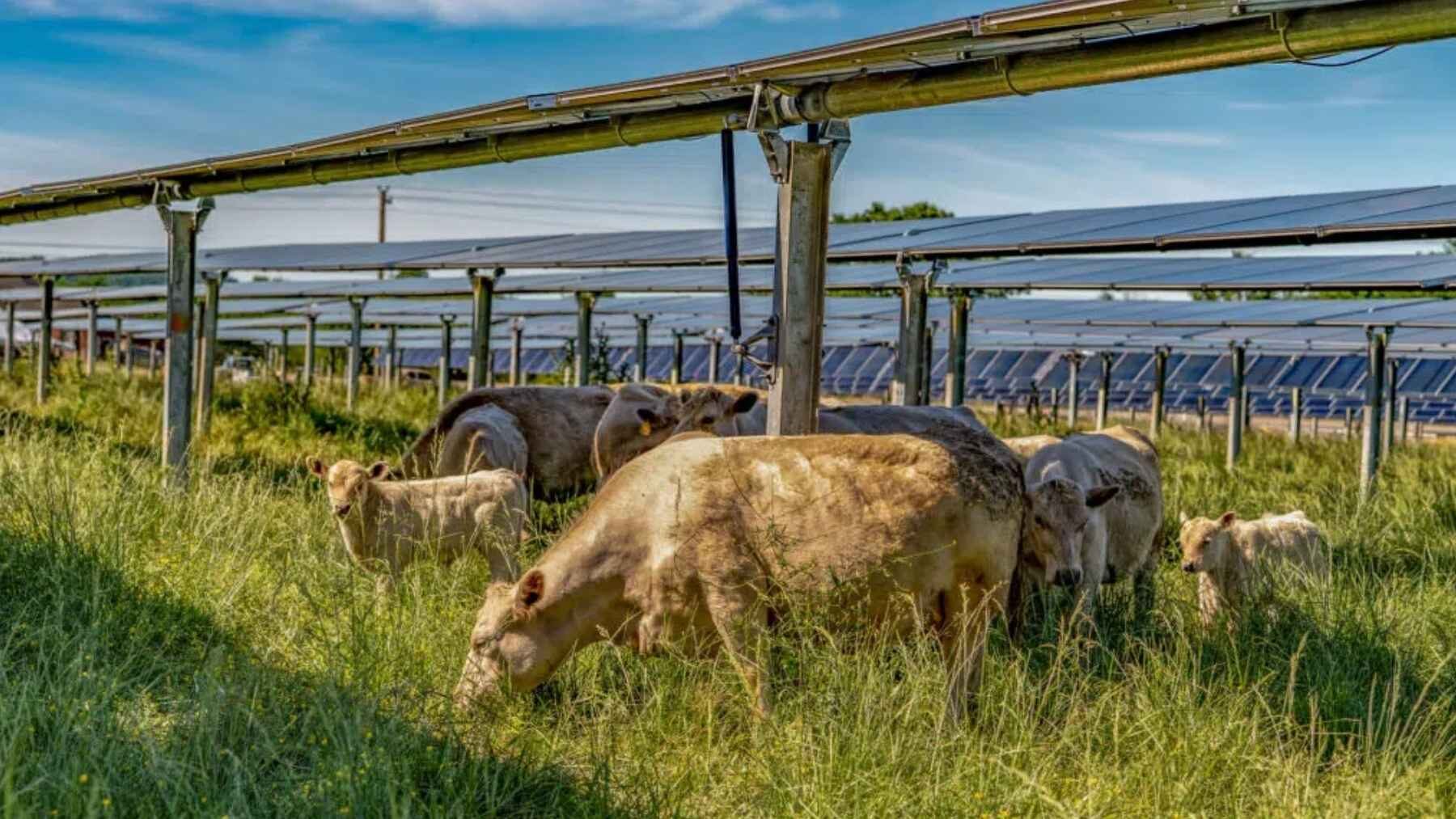
Instead of choosing between green energy and farming, one project in Tennessee is proving you can actually have both.10 cows and their calves at a solar ranch in Christiana, Tennessee, are grazing under working solar panels instead of being pushed off the land.
On April 30, 2026, Silicon Ranch launched the 40-acre, roughly 5-megawatt site as the first commercial deployment of their CattleTracker system. It was designed so that it could also work with cattle. The way it was designed allows the panels to rotate until they become almost horizontal when the cows enter a row. The idea is super practical: to keep the pasture productive while they test if the cattle can handle the maintenance of the vegetation.
Solar panels make room for cattle
In general, it is not common for a cow to fit beneath a conventional solar array. That is why, at Christiana, the company raised the supports so that they look like solar carports, and then programmed the trackers to enter a special “grazing” position.
When the panels are placed in a way that makes them flatter, the animals tend to have more space to walk around or to rest in the shade. It is true that putting the modules that way is not the best option to capture solar light, but this can be solved by rotating the animals between different paddocks.
Half-ton animals meet fragile hardware
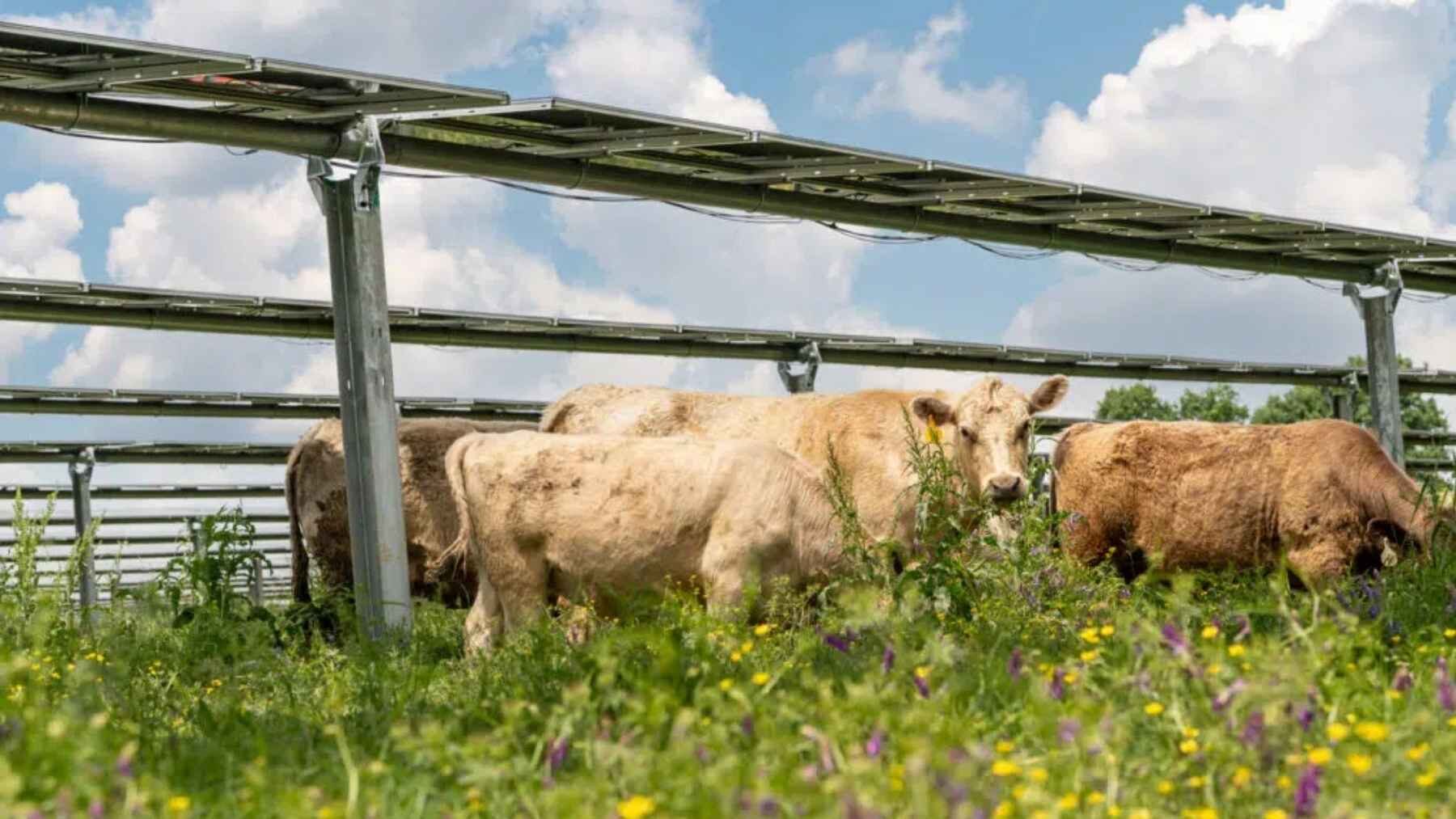
Cows can weigh more than 1,200 pounds and love using metallic structures to scratch themselves or even random cables that bring them a lot of curiosity and temptation to touch them.
This is why it is very important to keep control of all the materials the system has. The cattle need to be taken care of, but they should not destroy the equipment. If not, the production costs would go up.
Why sheep were easier
This type of grazing is not something new at all, but traditionally sheep have been the protagonists in this grazing. In 2024, more than 130,000 acres of U.S. solar land were grazed by sheep, since they fit perfectly underneath the standard structures without the need to redesign anything.
Cows are much larger, but they are the most common rural animal in the United States. In fact, Silicon Ranch says the country has 17 times more cattle than sheep, so a “friendly-solar model” could have a high impact if it works with animals that farmers already raise.
The cows have a maintenance job
The big thing is that the grass continues growing during the whole summer, and if the vegetation gets out of control, it covers the solar panels and the energy generation drops. Cutting the grass with machines would solve the problem, but it brings other risks: dust or rocks can damage the equipment. That is why cows do the heavy work without putting the infrastructure at risk.
The test is not finished
All this trial started in 2023 uniting solar engineers, animal-welfare specialists, ranchers, and soil scientists. They not only look at how cows react or if the panels hold up, but also they are alert to soil health, the water and the business numbers. At the end of the day, the researchers recognize that one thing is to think that the theory works,and another very different one is to collect evidence to convince the rest of the world that this system works.
They need to show that the cows can thrive at a commercial solar site and not just tolerate it. If the results are as expected, the 20-acre test block could show that land beneath an array does not have to stop being farmland. And that is still evidence in progress.
The official press release was published on Silicon Ranch.