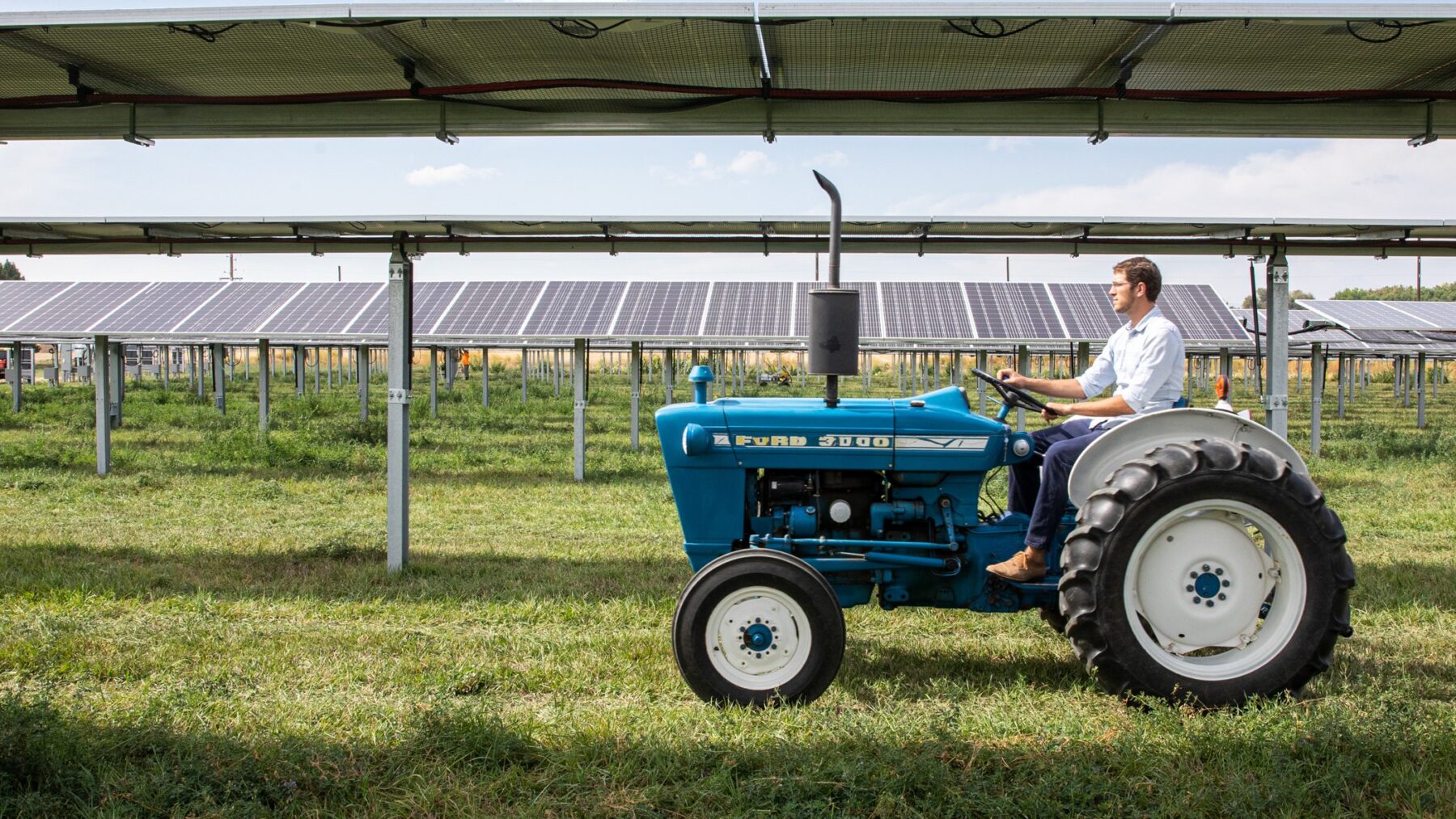
Rows of solar panels usually suggest land that has stopped being a farm. Outside Longmont, Colorado, the picture is different. Flax, medicinal herbs, grasses, berry bushes, poultry, and pollinator habitat share the ground with an array that generates electricity for more than 300 homes.
The project arrives at a useful moment for Colorado. Solar now supplies 14.18% of the state’s electricity, so the question is no longer only how many panels can be installed. It is also where they go, who benefits, and whether rural land can keep producing food while producing power.
One farm now delivers two harvests
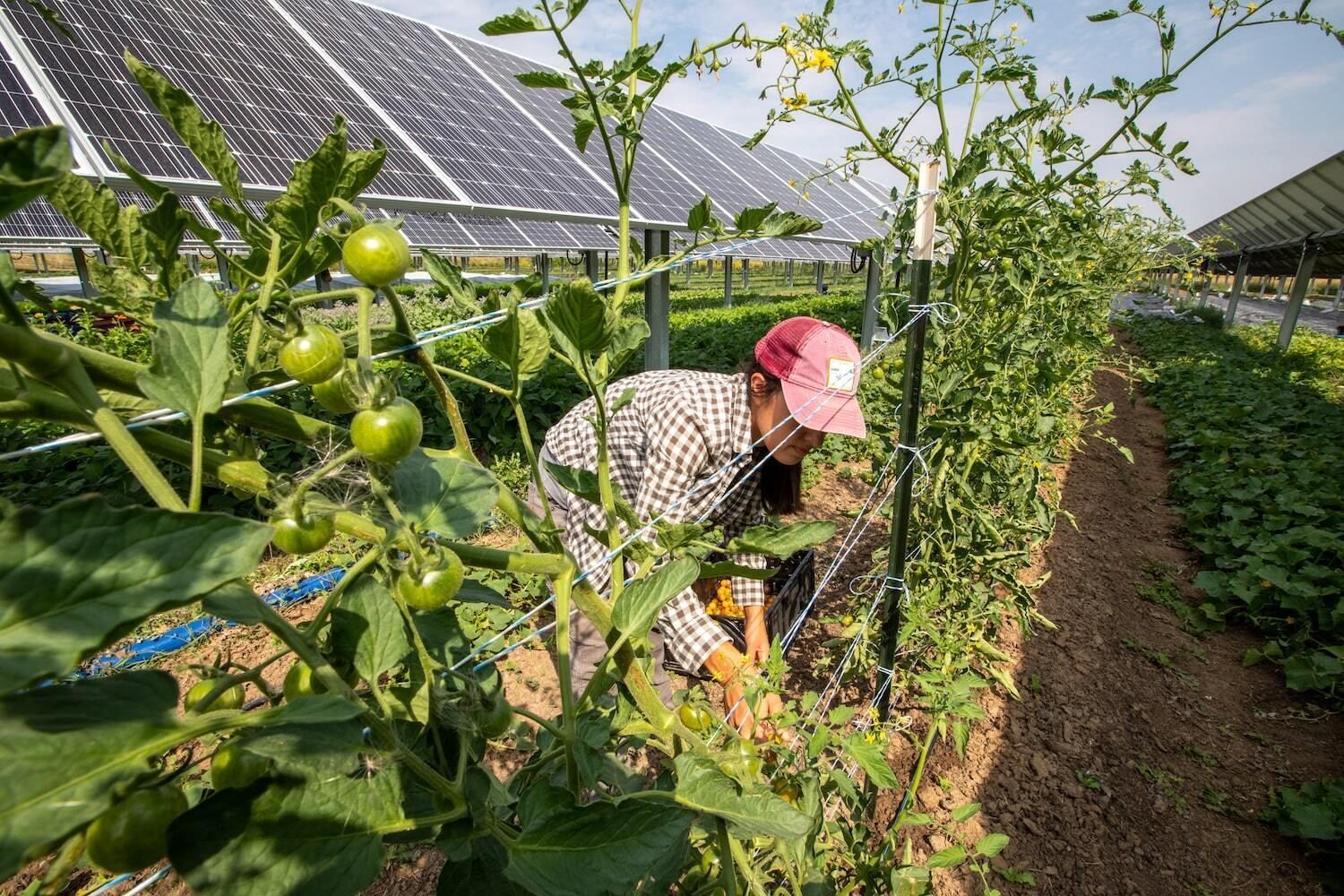
Jack’s Solar Garden places 3,276 photovoltaic panels on about five acres of a 24-acre family farm. The 1.2 MW system uses panels mounted roughly 6 and 8 feet above the ground, leaving room for vegetation, farmworkers, and some agricultural activity beneath and between the rows.
The farm is named after owner Byron Kominek’s grandfather, who bought the property in 1972. A recent report said the array cost about $2 million, produces around 2 GWh of electricity each year, and sells that power through a local utility. “The solar array provides me with the basic income that covers the cost of the farm,” Kominek said.
Agrivoltaics changes the land-use equation
This arrangement is known as agrivoltaics. In simple terms, it means placing solar energy and agriculture on the same land instead of treating them as competing uses. Crops may grow beneath elevated panels, livestock can graze between rows, and flowering plants can support bees and other pollinators.
That does not mean every crop wants shade or every solar farm can remain productive farmland. In dry regions, however, carefully positioned panels can act like farm infrastructure. They intercept some intense sunlight, change where rainfall reaches the soil, and create small zones with different temperatures and moisture levels.
Shade becomes valuable during dry years
When Kominek returned to the farm in 2016, warmer summers and declining rainfall were already hurting grass grown for hay and livestock feed. The solar array later created cooler pockets where flax, herbs, vegetables, and other plants could be tested. In spring 2026, the farm also planted 1,500 berry bushes that Kominek expects will receive protection from scorching summer heat and some fall frost.
The strongest evidence comes from four years of field data collected at the site. Research led by Matthew Sturchio and Alan Knapp at Colorado State University and Cornell University found that panels could reduce water stress, improve soil moisture, and increase plant growth by about 20% or more during dry years. On the east side of panels, grass production was up to 90% higher in some cases than in a nearby open plot.
“The most important takeaway” was that an array designed mainly for electricity still provided grasses with a better environment during a dry year, Sturchio said. The benefit was smaller in normal or wet years. That nuance matters because agrivoltaics is not a magic recipe, and weather, crop choice, panel height, spacing, and movement all shape the result.
Solar income can steady an uncertain farm
Farming income can swing with drought, heat, pests, and market prices. Electricity offers a second revenue stream that is less directly tied to whether a crop survives one brutal summer. In practical terms, that can help cover land and operating costs while giving a farmer room to experiment with berries, herbs, or other products.
The Longmont site has also hosted vegetables, ducks, geese, chickens, a beehive, and pollinator habitat. Researchers and growers have had to work around metal supports and changing shade, so the system adds complexity as well as opportunity. Still, the land has not simply been fenced off and removed from agricultural use, and that is the key difference.
Colorado is putting policy behind the idea
Colorado already has 5,687 MW of solar capacity, enough to match the electricity use of more than 1.2 million homes, according to the Solar Energy Industries Association. The industry supports 8,071 jobs and has attracted about $10.9 billion in investment. The association projects another 6,000 MW over the next five years.
The state is also funding experiments rather than assuming the model will work everywhere. A 2023 Colorado law authorized agrivoltaic research and demonstration grants and initially directed $500,000 toward projects. The Colorado Department of Agriculture later announced $300,000 for five additional projects for the 2025-26 fiscal year.
The practical limits cannot be ignored
Upfront cost remains a major hurdle, as the $2 million Longmont array makes clear. Farmers also need a workable connection to the electric grid, favorable local rules, maintenance access, and enough spacing for people, animals, or equipment. A panel layout built only to maximize electricity may not be the best layout for crops.
There are ecological questions too. Too much shade can suppress sun-loving plants, runoff can leave some strips wetter and others drier, and construction can damage soil if a site is heavily graded. That is why the most credible version of agrivoltaics is not “panels anywhere,” but solar designed around the land that is already there.
A different kind of solar growth
Jack’s Solar Garden does not prove that every farm should become a power plant. What it shows is more practical. With the right crop, climate, design, and grid connection, a farm may be able to collect two harvests from the same sunlight, one in food or forage and another in electricity.
For Colorado, that could reduce some of the tension around rural solar development while giving farmers a financial cushion against hotter, drier seasons. The model still needs careful testing and local adaptation, but it offers a way forward that does not begin by asking agriculture to move aside.
The latest field study on the farm’s grassland response was published in Environmental Research Letters.