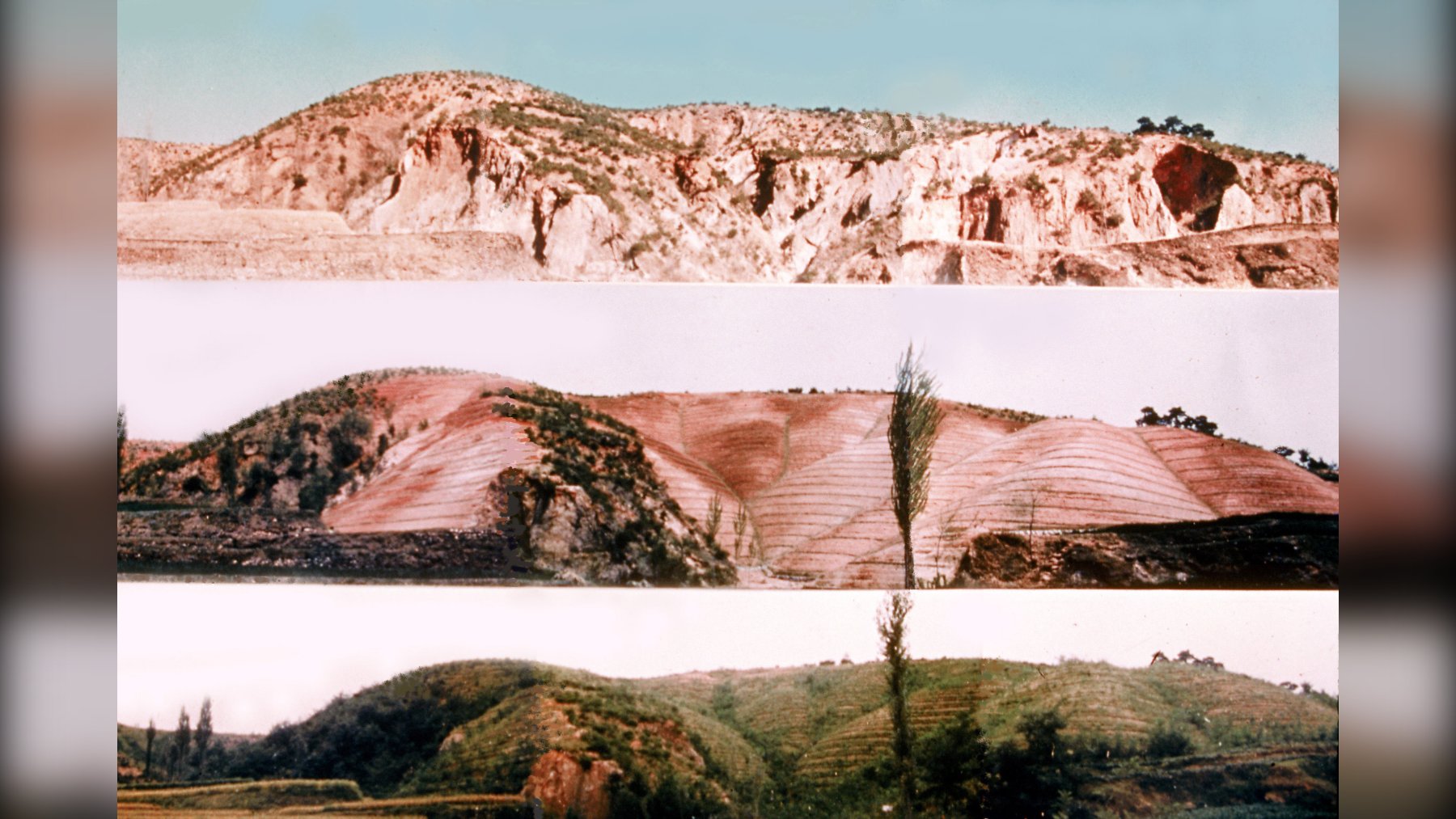
South Korea planted more than 10 billion trees between the 1960s and 1980s as it rebuilt forests devastated by exploitation, war, and demand for firewood. By 2020, the average volume of standing wood per hectare had reached roughly 29 times its 1953 level, showing that the recovery went far beyond planting day.
A 2026 study drawing on 9,619 archival records helps explain how those efforts became lasting forests. Its central lesson is practical, not glamorous. Research, village participation, protection, and repeated checks on surviving trees mattered alongside the billions of seedlings put into the ground.
The hills were forest land in name only
When fighting stopped in 1953, South Korea’s mountains bore the damage of colonial exploitation, wartime destruction, and heavy cutting for fuel. Assessments in the 1950s and early 1960s classified more than 4 million hectares, nearly 58% of forest land, as degraded or “bare mountain.”
The pressure came partly from everyday life. Traditional ondol floor heating relied heavily on forest biomass, including firewood, so keeping a home warm placed demands on already depleted hillsides. Restoring trees meant dealing with what households needed from them.
Villages turned a national plan into local work
The Korea Forest Service was established in 1967, and the First Ten-Year Forest Rehabilitation Plan began in 1973 under President Park Chung-hee. Linked to the Saemaul, or New Village, Movement, the campaign involved communities in raising seedlings, planting trees, and protecting nearby forests.
Village nurseries supplied 34.8% of approximately 2.7 billion seedlings produced nationally during the first plan. By 1978, four years ahead of schedule, the plan had planted 2.96 billion trees across 1.08 million hectares, reaching 108% of its original area target.
Homes needed heat, not just planting promises
Planting could achieve little if families still had to cut recovering forests for fuel. Villages established dedicated fuelwood plantations, whose area expanded from around 10,000 hectares in early 1973 to more than 75,000 hectares in 1977.
At the same time, coal briquettes increasingly replaced firewood in household heating. For households able to switch, heating no longer depended as directly on collecting wood from nearby hillsides. Protecting new trees became easier when the daily demand for fuel changed, too.
The crucial work happened after planting day
What happened when seedlings failed? The 2026 study describes checks by officials from different districts, followed by higher-level inspections, to verify whether planted trees actually survived. Poor results required replanting the following spring, so autumn inspections changed what happened on the ground instead of merely filling a report.
Government reports cited by the researchers show survival rates rising from often below 50% in the 1950s to above 90% in the late 1970s. The turnaround was not one uninterrupted success story, but a process of learning from what went wrong.
The authors also caution against treating South Korea’s experience as a ready-made recipe for every country. Different social, institutional, and ecological conditions require different approaches, even when the basic commitment to follow-up remains useful. This archival research reconstructs a national experience rather than testing a universal formula for reforestation.
Why standing wood tells a better story
South Korea’s average growing stock rose from roughly 5.7 cubic meters per hectare in 1953 to about 165 in 2020. “Growing stock” measures the volume of standing wood, making it a more revealing recovery indicator than the number of seedlings distributed.
Forests also cover roughly 63% of the country, close to two-thirds of its land. That green footprint matters, but the rise in wood volume shows why simply labeling an area as forest does not tell the whole story.
A planting tally records effort, while the wood left standing reflects trees surviving and growing. That distinction matters whenever a restoration campaign announces an enormous target. The useful question is what will still be there decades later.
A greener landscape still needs protection
The comeback does not make these forests immune to environmental change. A 2021 modeling study of South Korea’s plant biodiversity found that continued forest management could help counter climate and land-use pressures. But existing practices were projected to fall short of fully offsetting future biodiversity losses, pointing to a need for additional measures.
“The message is that you can bring nature back,” Inger Andersen told The Korea Times in 2023 while leading the United Nations Environment Programme. South Korea’s next test is to keep that recovery resilient, rather than treating a high planting total as the finish line.
The 2026 study was published in Environmental Management.