The federal government could pay Southern California’s largest water supplier as much as $65 million to leave part of its Colorado River allocation in Lake Mead instead of withdrawing it during 2026.
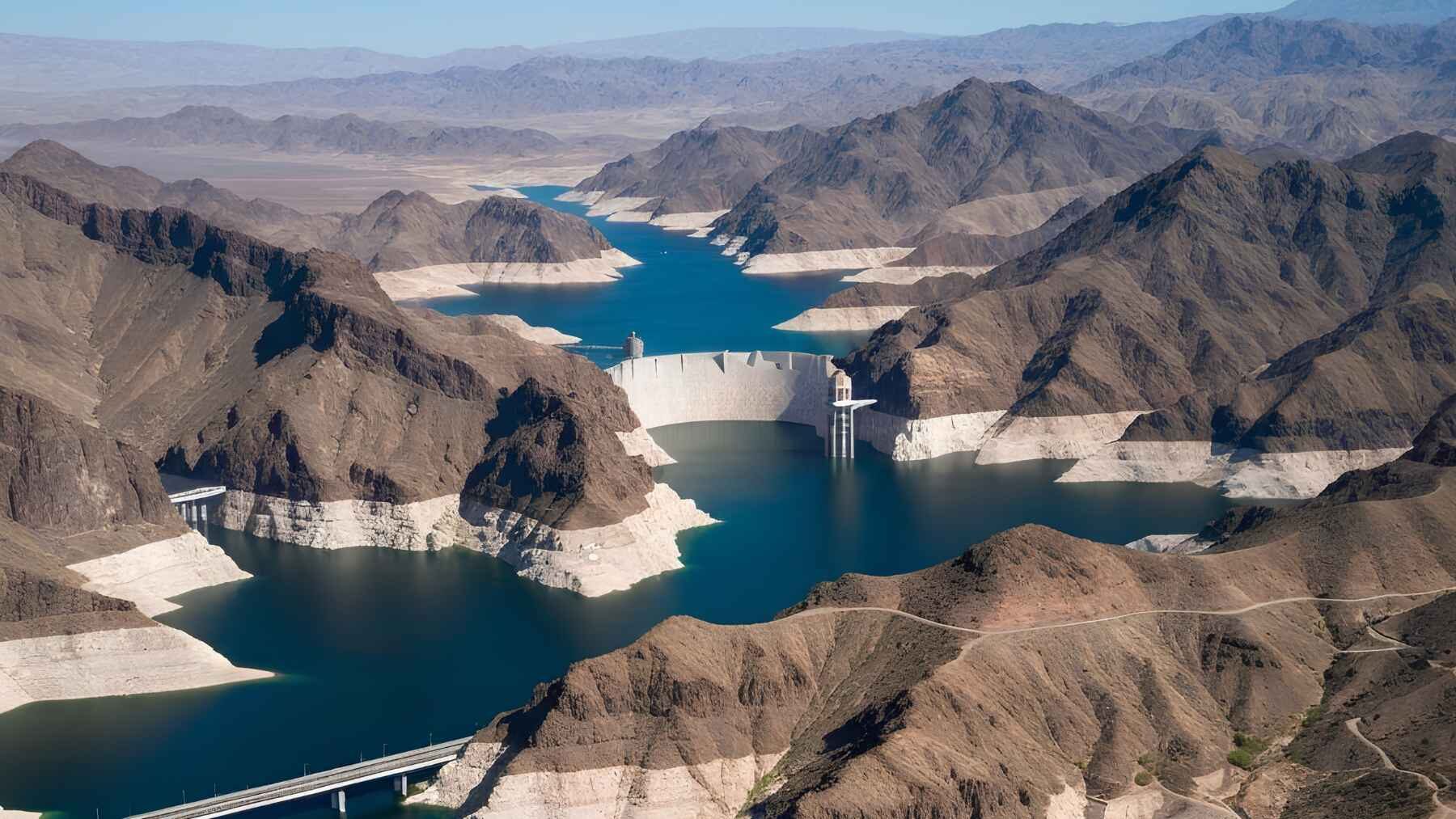
The unusual arrangement comes as record-low snowpack and long-running drought place growing pressure on the Colorado River system. Keeping more water behind Hoover Dam may help slow Lake Mead’s decline, protect regional water supplies, and reduce the threat to one of the Southwest’s most important sources of hydroelectric power.
California will be paid to save water
Under the newly approved agreement, the Metropolitan Water District of Southern California will receive $325 for every acre-foot of Colorado River water it leaves in Lake Mead during 2026. Payments will cover up to 200,000 acre-feet, creating a maximum possible payout of $65 million.
An acre-foot is the amount of water needed to cover one acre of land with water one foot deep. It equals roughly 326,000 gallons, which Metropolitan says is enough to supply about three Southern California households for a year.
At the maximum level, the agreement could leave about 65 billion gallons in the reservoir. That is an enormous amount of water, but it remains small compared with the scale of the Colorado River system and the losses caused by years of dry conditions.
Instead of taking its entire allocation, Metropolitan will effectively be paid to keep water in storage. In practical terms, the government is buying time for Lake Mead.
Lake Mead faces another dangerous decline
Lake Mead is the largest reservoir in the United States by capacity and a critical storage point for Colorado River water. It supplies cities, farms, tribal communities, ecosystems, recreation areas, and power facilities across the Southwest and northern Mexico.
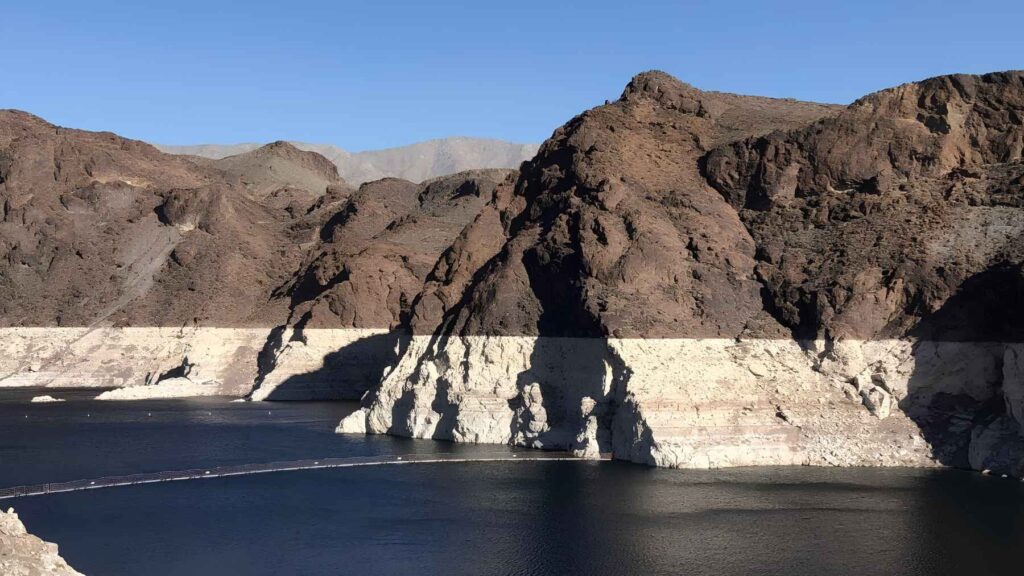
The wider Colorado River system was holding only about 36% of its total storage capacity in April 2026. Federal officials blamed the decline on prolonged drought, record-low winter snowpack, and unusually hot conditions that have reduced runoff into the river.
That matters because snow in the Rocky Mountains acts like a natural water tower. It builds during winter, melts during spring and summer, and feeds rivers and reservoirs downstream.
However, when there is little snow, there is less water available months later. The tap does not suddenly run dry, but the entire system loses another layer of protection.
Federal projections also show that reduced releases from Lake Powell could push Lake Mead even lower. The government plans to hold more water upstream to protect Glen Canyon Dam, but that means less water flowing downstream toward Hoover Dam during 2026.
Hoover Dam power is also at risk
Lake Mead is not only a giant water reserve. Its water drives turbines inside Hoover Dam, generating electricity for customers in Nevada, Arizona, and California.
Hydroelectric generation depends on the height of the water behind the dam. The higher the reservoir, the greater the pressure pushing water through the turbines. When the water level falls, the turbines become less efficient and produce less electricity.
Metropolitan has warned that Hoover Dam’s generating capacity could eventually fall by as much as 70% if the reservoir drops far enough. Federal officials have separately said that current drought measures could cause an additional 40% reduction in Hoover Dam’s power output as early as fall 2026.
What does that mean for ordinary households? Hoover Dam is only one part of the regional electricity network, so a decline would not automatically switch off the lights. Losing inexpensive hydropower, however, could make it harder and more costly to balance the grid, especially during the sticky summer heat when air conditioners are running all day.
Keeping water in Lake Mead therefore serves two purposes. It supports water storage while preserving some of the pressure needed to generate electricity.
Years of conservation made the deal possible
Metropolitan says it can participate because Southern California has spent decades reducing its dependence on imported Colorado River water. Since 1990, the district and its customers have invested about $1.7 billion in conservation, water recycling, groundwater recovery, storage, and diversified supplies.
Those efforts have reportedly produced more than 8.8 million acre-feet of water savings and additional local supplies. Measures have included more efficient appliances, landscaping changes, recycled wastewater, and projects that capture or restore groundwater.
The result is a little more flexibility during a crisis. Southern California still relies heavily on imported water, yet it may not need to withdraw every available gallon from Lake Mead in 2026.
Metropolitan serves nearly 19 million people across Los Angeles, Orange, Riverside, San Bernardino, San Diego, and Ventura counties. That makes the agreement significant far beyond a single city or water district.
Board Chairman Adán Ortega Jr. said the region’s long-term investments had “built resilience” and allowed it to help stabilize the Colorado River when the system needed support. General Manager Shivaji Deshmukh described the agreements as “important short-term relief.”
Tribal and agricultural agreements add more water
Metropolitan’s board also approved related partnerships involving the Quechan Tribe and Bard Water District. Those arrangements could conserve up to 19,000 acre-feet of agricultural water each year during 2027 and 2028.
Agriculture uses a large share of Colorado River water, so even temporary reductions can produce measurable savings. Such programs, however, must also consider farmers, rural economies, tribal water rights, food production, and environmental conditions.
That is why cooperation matters. No single city, farm, tribe, or state can solve the river’s shortage alone.
The broader federal conservation program was designed to pay water users for verified reductions in consumption and create more durable improvements in how water is managed. It includes immediate conservation projects as well as longer-term efficiency measures intended to keep additional water in Lake Mead.
Federal officials say earlier pilot projects showed that voluntary, compensated conservation can increase reservoir storage and soften some of the effects of drought. Still, paying users to consume less is mainly an emergency bridge, not a permanent answer.
A short-term lifeline, not a full solution
The Colorado River provides at least part of the municipal water supply for roughly 40 million people. It also supports major farming regions, wildlife habitat, recreation, tribal nations, and power generation across seven U.S. states.
Leaving 200,000 acre-feet in Lake Mead will not reverse decades of decline by itself. Continued drought, rising temperatures, competing water demands, and unresolved rules for managing the river after 2026 remain much larger challenges.
However, the agreement shows how the region’s approach is changing. Water once expected to flow toward city pipes, lawns, and businesses is now valuable enough to be purchased simply for staying in the reservoir.
That buys Lake Mead breathing room. And right now, every foot counts.
The official statement was published on the Metropolitan Water District of Southern California website.