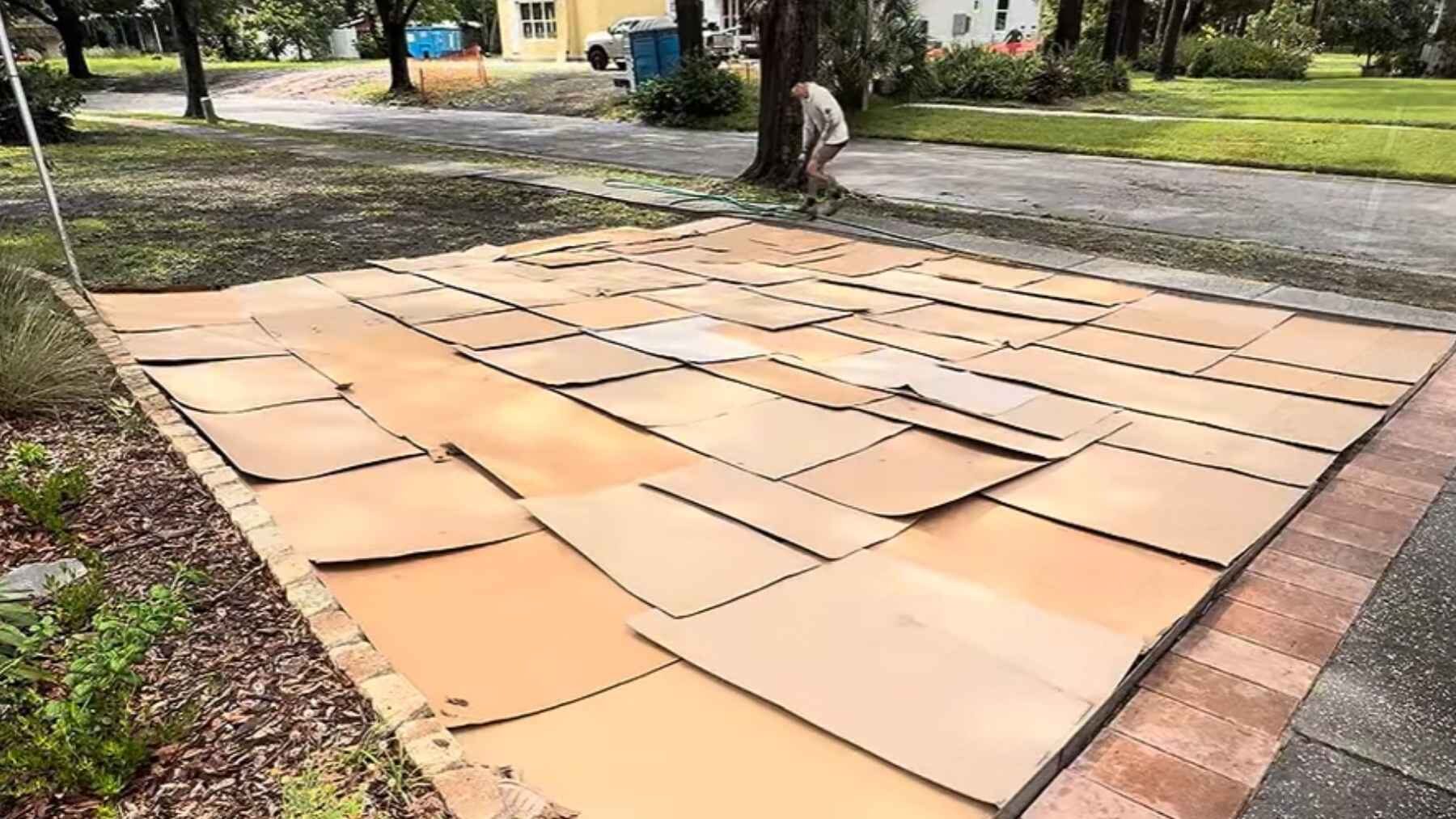
Can old shipping boxes really become the first layer of a living front yard? A Florida homeowner soaked cardboard over a struggling lawn, covered it with organic material and deep mulch, then planted a mix intended to serve birds, pollinating insects, and the people living there.
The makeover was described as a “Florida-friendly native pollinator garden” designed to work like a low-maintenance oak hammock ecosystem. The project offers a practical lesson for other homeowners. Cardboard can begin the change, but good design and plants suited to the site are what make it last.
Cardboard did the first job
The method is called sheet mulching, sheet composting, or lasagna gardening. The University of Florida’s Institute of Food and Agricultural Sciences explains that layers placed over turf block light, suppress weeds, and turn the old lawn into part of a new no-dig garden bed.
In practical terms, the grass is cut low, plain cardboard is overlapped and soaked, then compost and mulch go on top. Extension guidance recommends removing tape and labels, using unwaxed cardboard, and keeping the layers away from trunks and plant stems.
Why not simply spray the lawn? Sheet mulching controls many weeds without herbicide, while the decomposing layers add organic matter and help the soil hold moisture. It is not magic, though, because weed seeds in compost or clippings can still sprout and require follow-up work.
Built like a Florida hammock
A Florida hammock is a dense stand of broad-leaved trees growing on slightly raised land, often with live oaks and other hardwoods. The homeowner was not recreating a full forest, but borrowing its layered and sheltered structure for a residential yard.
Curved stone walkways and defined edges made the space usable, while native and naturalized plants were chosen to draw birds and pollinators.
Edible plants also entered the plan, with the creator saying the garden would provide “food not just for the animals, but for us, too.”
For bees and butterflies, a pretty flower bed is only the start. The Xerces Society for Invertebrate Conservation recommends regionally native plants and a mix with overlapping bloom periods, so pollen and nectar are available across more of the year.
Water savings need context
Outdoor use accounts for about 30 percent of water consumption at the average U.S. single-family home, according to the Environmental Protection Agency.
In hotter and drier parts of the country, the share can rise much higher, which is why the lawn and irrigation system can show up so clearly on the water bill.
A 29-month study of 27 central Florida homes found that landscapes with less turf, more planted beds, microirrigation, and seasonal scheduling used 39 percent less irrigation water than conventional yards. The combined design saved roughly 1,440 to 1,800 gallons per week when watering occurred twice weekly.
Still, “native” does not automatically mean “no water.” Florida researchers caution that a plant’s origin alone does not guarantee lower irrigation or fertilizer needs in every altered residential site, so soil, sunlight, drainage, and establishment care still matter.
Why wildlife notices
A yard’s plant choices can shape the food available to birds as well as pollinators.
University of Delaware ecologist Desirée Narango and colleagues found that Carolina chickadees in the Washington, D.C., region had sustainable population growth in yards with more than 70 percent native plant biomass, while heavily nonnative yards supported fewer caterpillars and poorer breeding results.
That percentage is not a universal target for every Florida property.
But the broader finding matters because many native insects depend on particular host plants, and those insects become food for nesting birds. The oak-hammock idea has more than visual appeal.
Start with one patch
Lawn replacement does not have to happen all at once. A homeowner can test the approach in a corner, along a curb strip, or beside an existing bed, then watch how the cardboard, mulch, weeds, and new plants respond through a rainy season.
Low maintenance also does not mean zero work from the first day. New plants need water while their roots become established, open gaps need weeding, and paths and borders require occasional attention.
Even so, every successful patch can mean less mowing, fewer recurring lawn inputs, and more time away from weekend yard chores.
The smartest first step is to study one small area, checking its light, soil, drainage, and intended use before choosing species. Old cardboard may start the job, but the living system comes afterward.
The original yard transformation was published by Food Forest Florida on YouTube.
YouTube; @FoodForestFlorida.