A routine sewer project in the Dutch town of Wijk bij Duurstede has turned into a rare archaeological mystery. Beneath an ordinary street, workers uncovered a large piece of shaped wood that may have belonged to a medieval ship.
The find matters because it was made on the site of old Dorestad, one of northern Europe’s major trading places in the early Middle Ages. For now, experts are being careful. The timber could point to Viking-era movement and trade, or it could belong to a later cargo vessel from a very different chapter of medieval history.
A street repair opens a window
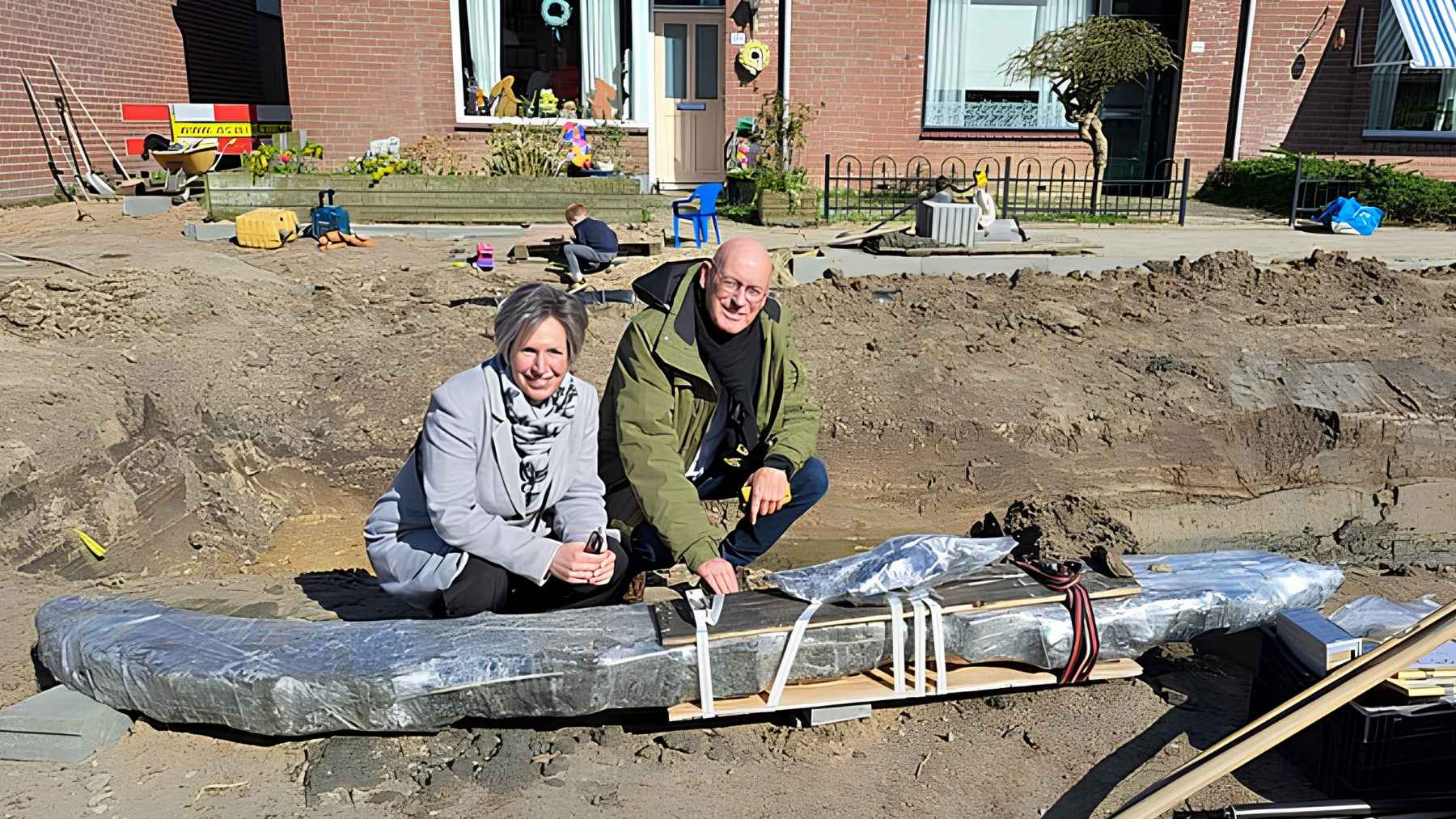
The discovery came during work on the Promenade, where crews were replacing the sewer system and building a rainwater drainage area. A worked wooden beam sticking out of the ground caught the eye of Danny van Basten, a volunteer with ArcheoTeam Wijk bij Duurstede.
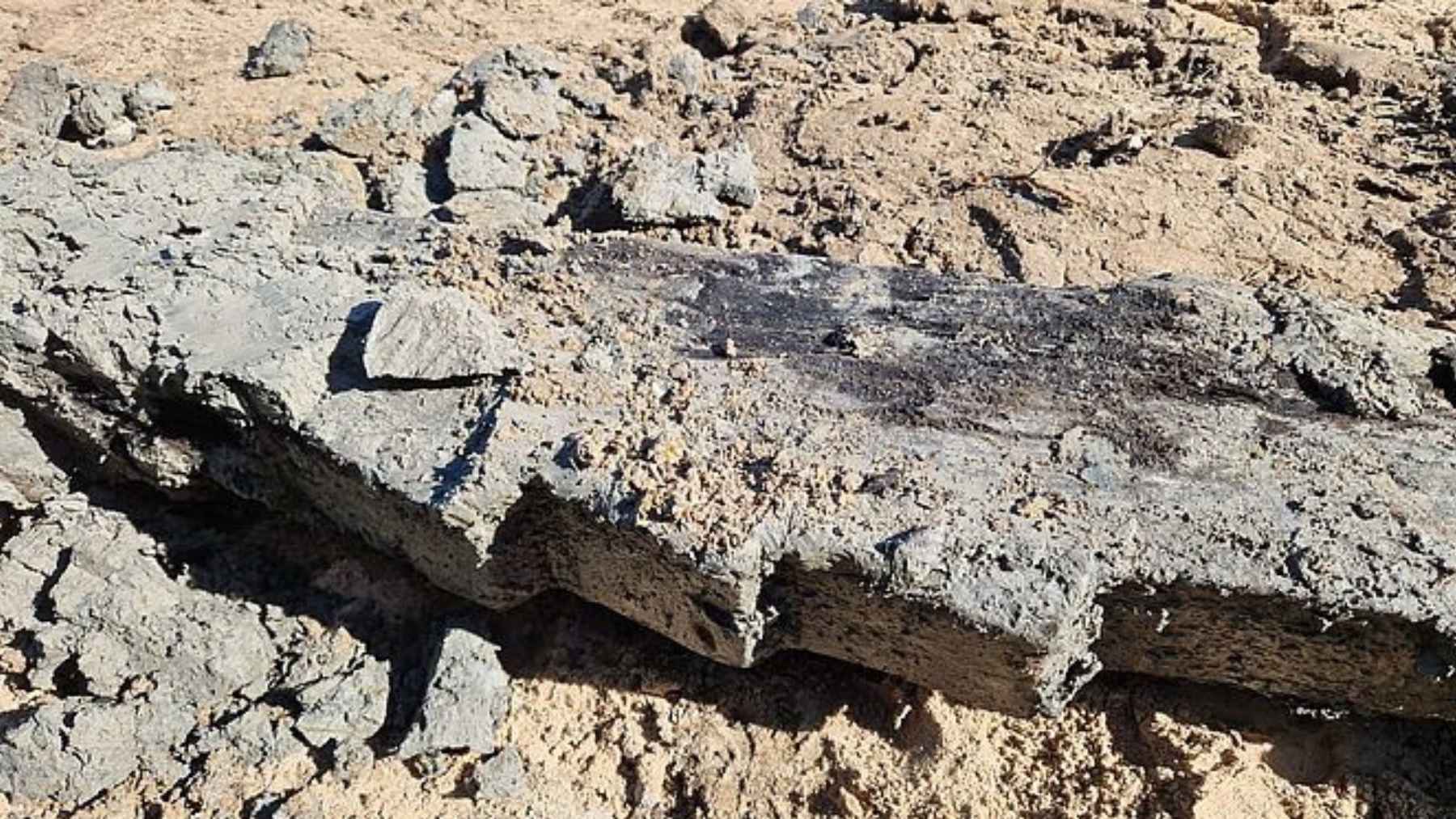
Specialists from Museum Dorestad and Stichting Beheer Vikingschip were then called in to examine it. Shipbuilder Kees Sterrenburg noted that the shape, cut marks, and notches suggest the object may be a ship frame, meaning one of the curved “ribs” that helps give a hull its form.
Not just a piece of wood
The timber is about 10.5 feet long and almost one foot thick. That is not the kind of thing anyone expects to find during a job that, on most days, is about pipes, mud, and street repairs.
A ship frame is important because it tells researchers about how a boat was built, not just where it was found. The curve, thickness, and tool marks can hint at the size of the vessel, the water it was meant to handle, and the weight it may have carried.
Why Dorestad matters
Dorestad was not a small village on the edge of history. From the 7th century to the mid-9th century, it was one of northwestern Europe’s most important international trading centers, according to Museum Dorestad and the Cultural Heritage Agency of the Netherlands.
Think of rivers as the highways of that age. Before trucks, railroads, and container ships, places like Dorestad linked inland Europe with the North Sea, moving goods, people, taxes, rumors, and power along the water.
The Viking question
The word “Viking” grabs attention, and understandably so. Dorestad was attacked in the 9th century, with reports noting Viking activity against the Dutch coast and Dorestad during that period.
But a Viking connection is not proven. In this context, “Viking” does not only mean raiders with weapons. It can also point to Scandinavian seafarers, traders, settlers, and shipbuilding traditions moving through the same busy river world.
Another possibility remains
The timber may date from the Carolingian period, roughly A.D. 700 to 800, when the Frankish world of Charlemagne and his successors shaped much of western Europe. Pottery fragments found nearby and the position of the object have made that possibility worth testing.
On the other hand, archaeologists are also checking whether it came from a cog, a broad medieval cargo ship used centuries later. If that turns out to be true, the find would still matter, but it would tell a story closer to the commercial boom of around 1300.
Tree rings may settle it
The next big step is dendrochronology, a method that studies tree rings. In simple terms, every year leaves a growth line in wood, and those lines can help researchers estimate when the tree was cut down.
Municipal archaeologist Anne de Hoop is coordinating the follow-up work, including careful cleaning and analysis of the rings. That caution is not just scientific neatness. Old wet wood can crack or warp quickly if it dries too fast, a little like a soaked sponge left out in the sun.
A rare clue to old trade
Even one piece of a hull can say a lot. It may reveal how builders shaped timber, how they strengthened boats, and what kinds of vessels were moving through Dorestad’s waterways.
That is why the find has a bigger reach than the street where it appeared. If it belongs to the early medieval period, it could help show how local river traffic connected with long-distance routes, including contacts between Frankish and Scandinavian worlds.
Experts are still cautious
Not every specialist is convinced yet. Ship archaeologist Wouter Waldus examined the object after it was moved for study and told RTV Utrecht, “I see no real traces of ship remains,” while also noting that more could become visible once clay is removed.
That may sound deflating, but it is how archaeology works. First comes the excitement, then the cleaning, testing, and disagreement. The answer usually arrives slowly.
What happens next
For residents, this discovery is a reminder that old trade routes can sit quietly under modern pavement. A place people pass on their way to work or school may still hold pieces of a river economy that helped shape Europe more than a thousand years ago.
If the timber is confirmed as part of an early medieval vessel, it would deepen the story of Dorestad as a working port, not just a name in old records. If it turns out to be later, it will still offer a rare look at the ships that kept northern Europe’s medieval trade moving.
The official announcement has been published on the Municipality of Wijk bij Duurstede.