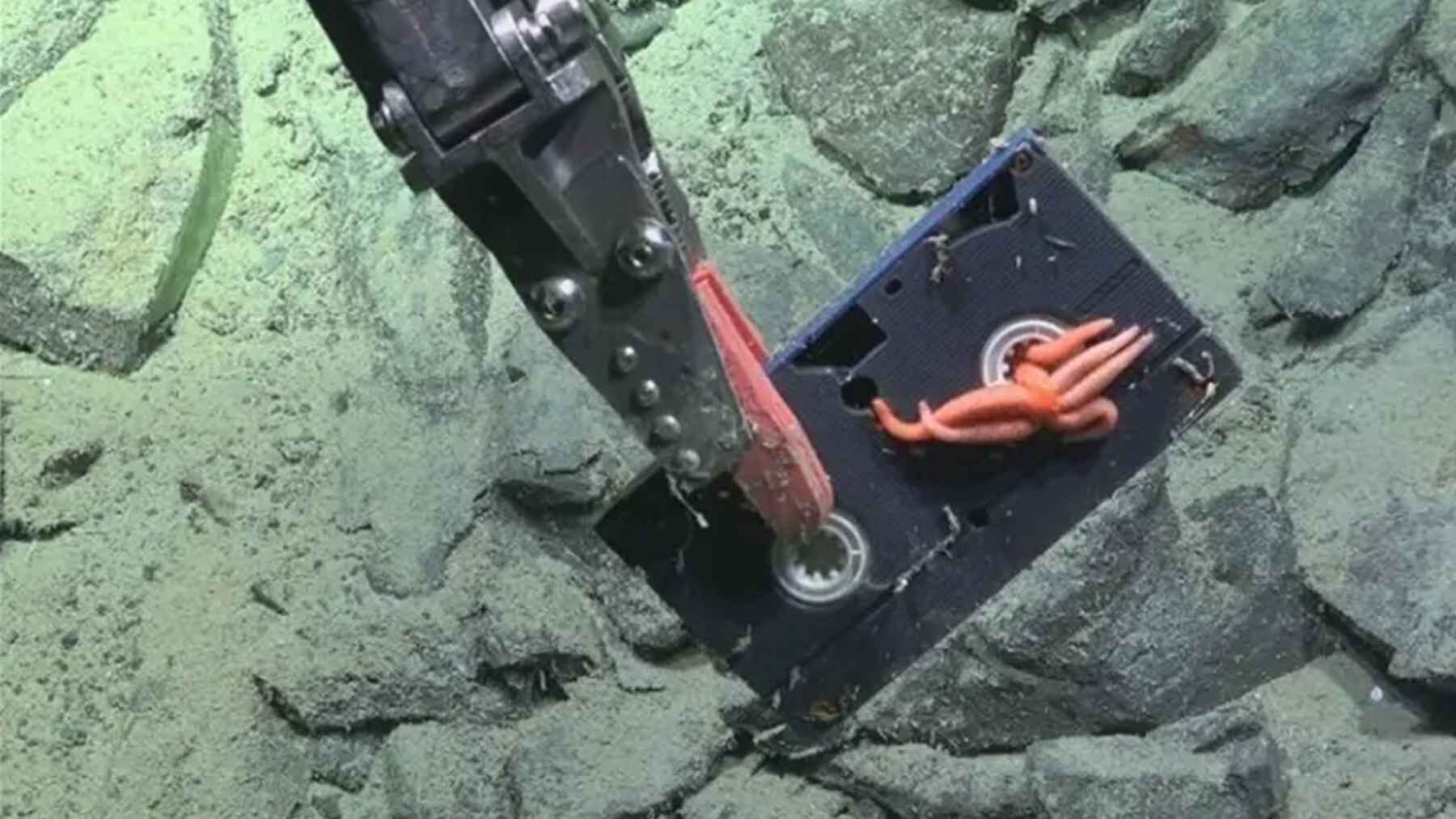
How does a VHS cassette end up 1.6 miles beneath the Argentine Sea? An underwater robot has now found one alongside plastic bags, fishing gear, clothing and metal debris in places where no systematic trash survey had been carried out before. The tape was resting about 8,700 ft. below the surface, a familiar object in a world where sunlight never reaches.
The stranger discovery is the smaller story. The expedition documented 29 human-made objects in 9 of 17 dives while filming about 34.5 miles of seafloor, creating the first scientific baseline for deep-sea litter along Argentina’s continental margin. Published on July 1, 2026, the work gives future surveys something they have never had before, a starting point for measuring whether the problem is growing.
A first look at the deep
The paper’s first two listed authors were Maialen G. Ardusso and Florencia B. Rial. Melisa D. Fernández Severini and corresponding author María Emilia Bravo helped lead a 26-person team tied to CONICET, the University of Buenos Aires, the National University of the South, Uruguay’s University of the Republic, Scripps Institution of Oceanography, Lehigh University and Temple University.
The “Life in Extremes” expedition ran from December 14, 2025, through January 10, 2026, aboard Falkor. Schmidt Ocean Institute’s SuBastian, a remotely operated vehicle piloted from the ship, recorded continuous 4K video during dives from roughly 1,500 ft. to more than 13,000 ft. deep. The dives covered the Salado-Colorado, Colorado-Rawson and Malvinas areas.
What the robot found
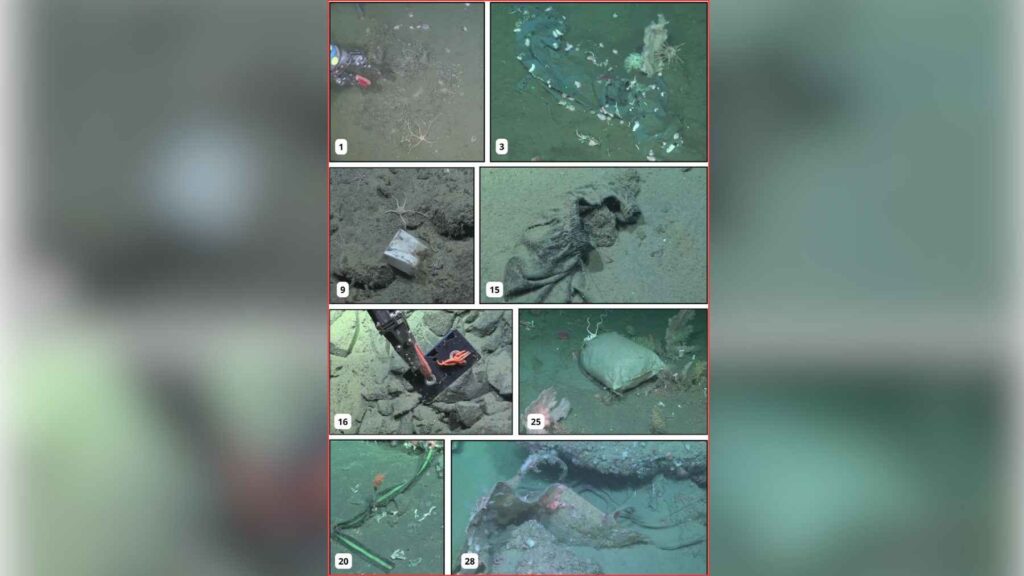
Researchers reviewed the video and logged every visible object, along with its position, depth and material. The list included bags, food packaging, fishing line, ropes, a weighted net, textiles, metal waste, a tarp and the VHS cassette.
The VHS was recorded at 8,673 feet in Colorado-Rawson. It is eye-catching because it belongs to an older, everyday technology, but the study does not say when it entered the ocean or where it came from. That uncertainty is confounding.
Twenty-nine objects may sound like a small count across 34.5 miles. But SuBastian saw only narrow strips of seabed within its cameras, and its height changed with the terrain, so the survey cannot be treated as a complete inventory of the wider region.
Why the deep holds trash
At the surface, sunlight and waves help weaken plastic. Far below, cold water, darkness and lower oxygen slow many breakdown processes, so bags and fishing gear can persist for decades or longer. In one two-decade deep-sea study, plastic recovered from about 13,600 ft. showed no clear breakdown in the bulk material.
That does not mean the material stays unchanged forever. Large pieces can fray, shed smaller fragments and release chemicals, while fishing lines and nets can snag animals or keep catching them after they are lost. Out of sight is not out of the ecosystem.
Canyons act like traps
The highest concentration appeared in the Colorado-Rawson submarine canyons, deep valleys cut into the continental slope. The team found 19 items there, at about 2.3 objects per mile of survey, compared with much lower rates in Salado-Colorado and the Malvinas Basin.
Why there? Canyons can move sediment and debris downslope, then hold it in quieter pockets where currents lose strength. That pattern matches a 2023 scientific review and a large 2014 European survey, both of which identified canyons as important pathways or accumulation zones for marine litter.
Trash becomes habitat
Some objects were already serving as hard surfaces for deep-sea life. Anemones, sponges, small clams, worms, sea urchins, sea squirts and crustaceans were seen on or around the debris.
That can look like nature adapting, but it is not proof that the trash is harmless. Artificial surfaces can change which species settle in an area, while entanglement and microplastic formation may create longer-term risks that this first survey was not designed to measure.
Where the waste came from
Many finds were clearly linked to life at sea, including lines, ropes and nets. The paper notes intense fishing activity near Argentina’s exclusive economic zone, but it does not prove that any particular fleet, vessel or industry produced the objects captured on camera.
Ocean currents can carry waste long distances, and land-based trash can also reach the deep through canyons. In practical terms, the VHS, bag or net can reveal what it is made of, not who dropped it.
What happens next
The authors call the work “the first baseline report about marine litter on the Argentinian deep seafloor.” It gives scientists a way to return to the same region and compare future counts, materials and hotspots. They also stress that their interpretations are preliminary because the dives were exploratory and the number of objects was limited.
Removing scattered trash from a seafloor more than two miles down would be technically difficult and costly. Prevention, tighter waste controls at sea and repeated monitoring are therefore more realistic than trying to clean the abyss after the damage is done. For the most part, the practical answer is to stop more debris from reaching the bottom.
The full study was published in Frontiers in Marine Science.