What happens when fishermen stop fishing in one of their most valuable coastal spots? Along Chile’s central coast, the answer has been fewer black sea urchins, thicker kelp and the return of fish, shellfish and other marine life. Monitoring through 2025 found black urchin counts down 96% in Ventanas since 2019 and 66% in Zapallar since 2021.
The fishermen did not poison, trap or harvest their way out of the problem. Working with Fundación Capital Azul, they closed small sections of their own fishing grounds and let native predators recover. They gave the ocean room to rebuild its food web.
Why the urchins surged
Black sea urchins belong on Chile’s rocky seafloor. They are native grazers, not an invasive enemy, and help shape coastal ecosystems when their numbers remain balanced. Trouble begins when too many predators disappear and urchins can feed with few biological limits.
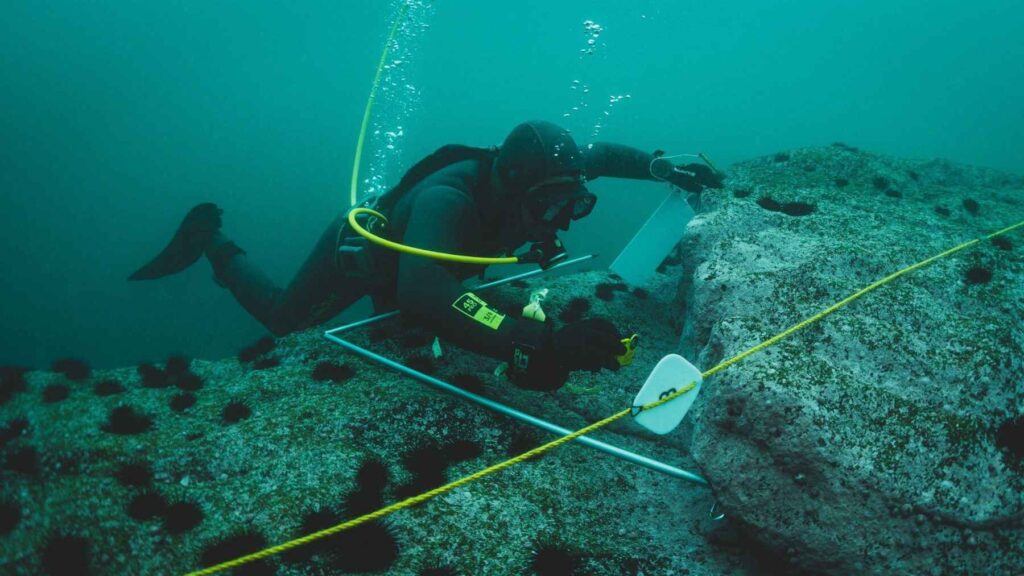
Researchers at the Centro de Investigación Marina Quintay at Universidad Andrés Bello have documented expanding “barren grounds,” where urchins strip away algae and leave pale, exposed rock. Kelp may look like ordinary seaweed, but large brown algae form underwater forests that provide food and shelter for fish, mollusks and small crustaceans.
A 2014 experiment found that heavy grazing by this black urchin could prevent new Chilean kelp from becoming established. Experts involved in the refuge work also point to historic overfishing of predators and changing ocean conditions as likely drivers. The urchin, as science and monitoring director Francisco Contreras-Drey put it, was left “without biological brakes.”
A refuge instead of a cull
Ventanas and Zapallar are managed under a Chilean system that grants artisanal fishing groups exclusive rights to bottom-dwelling resources under sustainability plans. The Ventanas refuge covers about 29 acres around Punta Los Lunes, while Zapallar protects about 31 acres around Isla Seca. Fishing is voluntarily excluded inside both zones.
That choice turned the fishermen into designers of their own restoration. Sea stars and other predators could return, urchin grazing eased and kelp began recolonizing bare rock. Unlike a mass cull, the strategy addresses the damaged food web behind the urchin boom.
Ventanas changed fast
The Ventanas refuge was established in 2016 and formalized the following year. Since 2019, monitoring counts have dropped from 2,172 black urchins to 77, a decline of 96%. Beginning in 2020, common sea stars tripled and sun stars doubled.
The underwater forest followed. Counts of huiro palo, a large brown kelp, rose from 55 to 180, while orange anemones increased eightfold, and the refuge recorded a crab species not found in the comparison area. Rockfish diversified, and the marine otter known locally as the chungungo began appearing.
The pace surprised the monitoring team because protected-area recovery can take a decade or more. The data are observational, so they cannot prove every change came from the closure alone; however, they show a strong ecological sequence in the same protected place.
Zapallar saw the pattern repeat
Zapallar’s refuge was officially inaugurated in 2021. By 2025, black urchin abundance had fallen by about two-thirds, while huiro palo increased sixfold – from 20 to 120 plants – in the sampling plots. Common sea stars were nearly three times as abundant inside the refuge as in nearby fishing areas.
The number of mobile macroinvertebrate species, including snails, limpets and small crustaceans, rose from 11 to 15. Several rockfish doubled in abundance, and monitors recorded 10 blanquillo fish there for the first time. Bare pavement was starting to resemble a crowded neighborhood again.
The gamble paid fishermen back
Closing Isla Seca was not an easy sell. Sergio Veas, president of the local fishing union, recalled that the site once produced about 10,000 locos, a valuable Chilean sea snail. “At first it was a crazy idea,” he said.
Then fishermen began seeing what ecologists call a spillover effect. Piure, a filter-feeding animal eaten by locos, returned inside the refuge, and large locos began moving into neighboring areas where harvesting remained legal. Veas says boats can now work near the boundary, cutting travel time and fuel use.
The refuge also helped create recreational diving, educational boat trips and more business for local food outlets. Those gains have not yet been presented as a formal economic impact study. Still, they suggest conservation and fishing income do not always pull in opposite directions.
One hour can undo years
Recovery remains fragile. “If someone comes in and removes the predators that control the black urchin, they can ruin years of work in one hour,” warned executive director Rodrigo Sánchez. Poaching and uncontrolled recreational diving remain serious concerns.
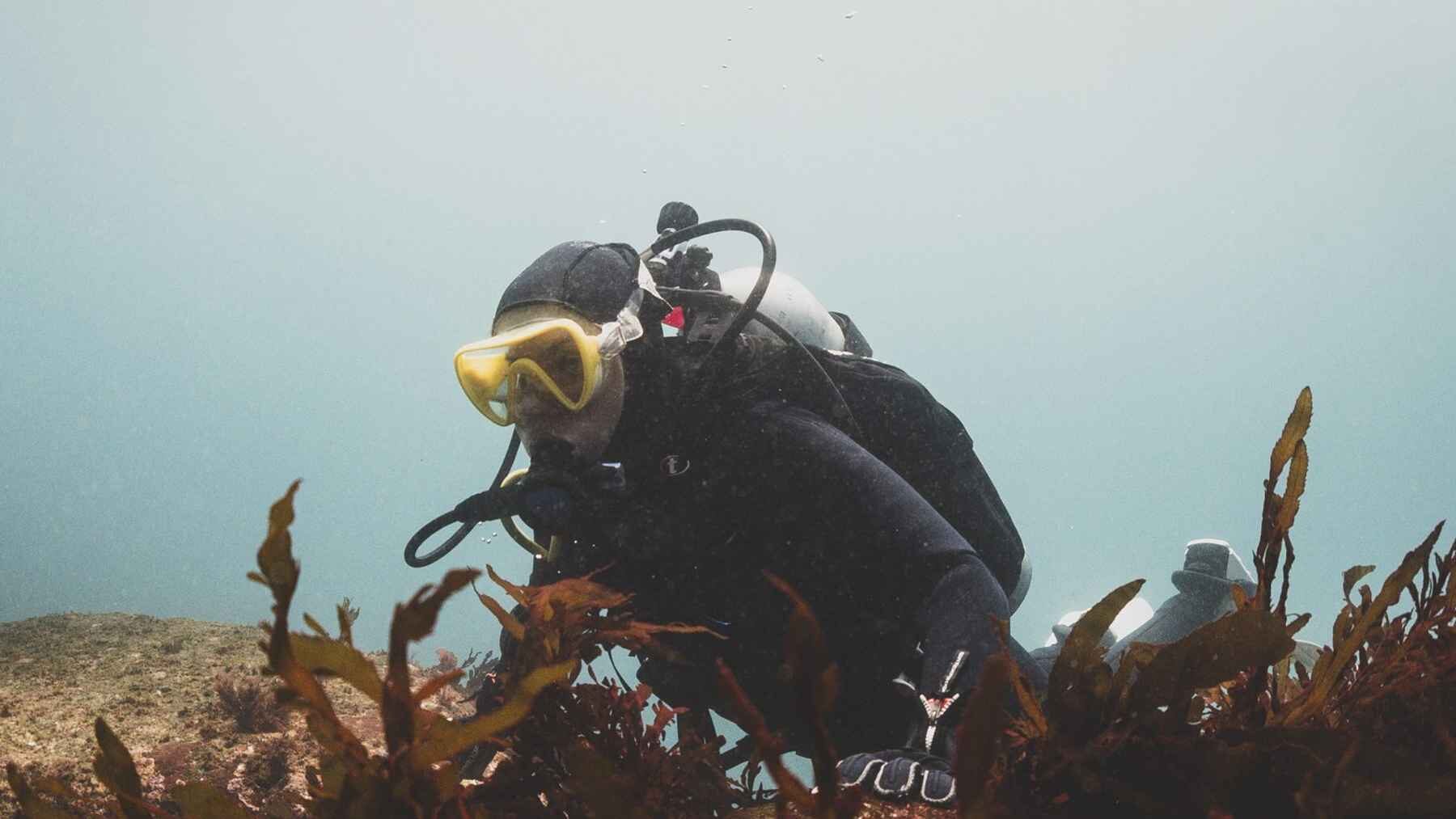
Zapallar now uses two cameras with night vision and infrared detection. Internet-connected underwater microphones can pick up suspicious boat engines as well as whale songs. Local residents also report unfamiliar boats.
A model Chile can expand
Chile’s 2024 Benthic Law formally recognized voluntary protection zones within artisanal management areas. That gives community-led refuges a clearer legal place for monitoring and conservation. The national fisheries authority describes these areas as a way to combine exclusive use rights with long-term resource protection.
The approach is already moving south. At Guadei in the Los Ríos Region, an Indigenous fishing association is developing a refuge of about 37 acres with support from The Nature Conservancy, while other groups are adapting the model around Chiloé. A training program is passing the methods to fishing unions and local governments.
Will every closed patch of coast recover this quickly? Probably not, because pollution, warming, illegal extraction and nearby predator populations will shape the outcome. Ventanas and Zapallar show, however, that giving ecosystems time can let nature do part of the work.
The main report has been published by Mongabay Latam.