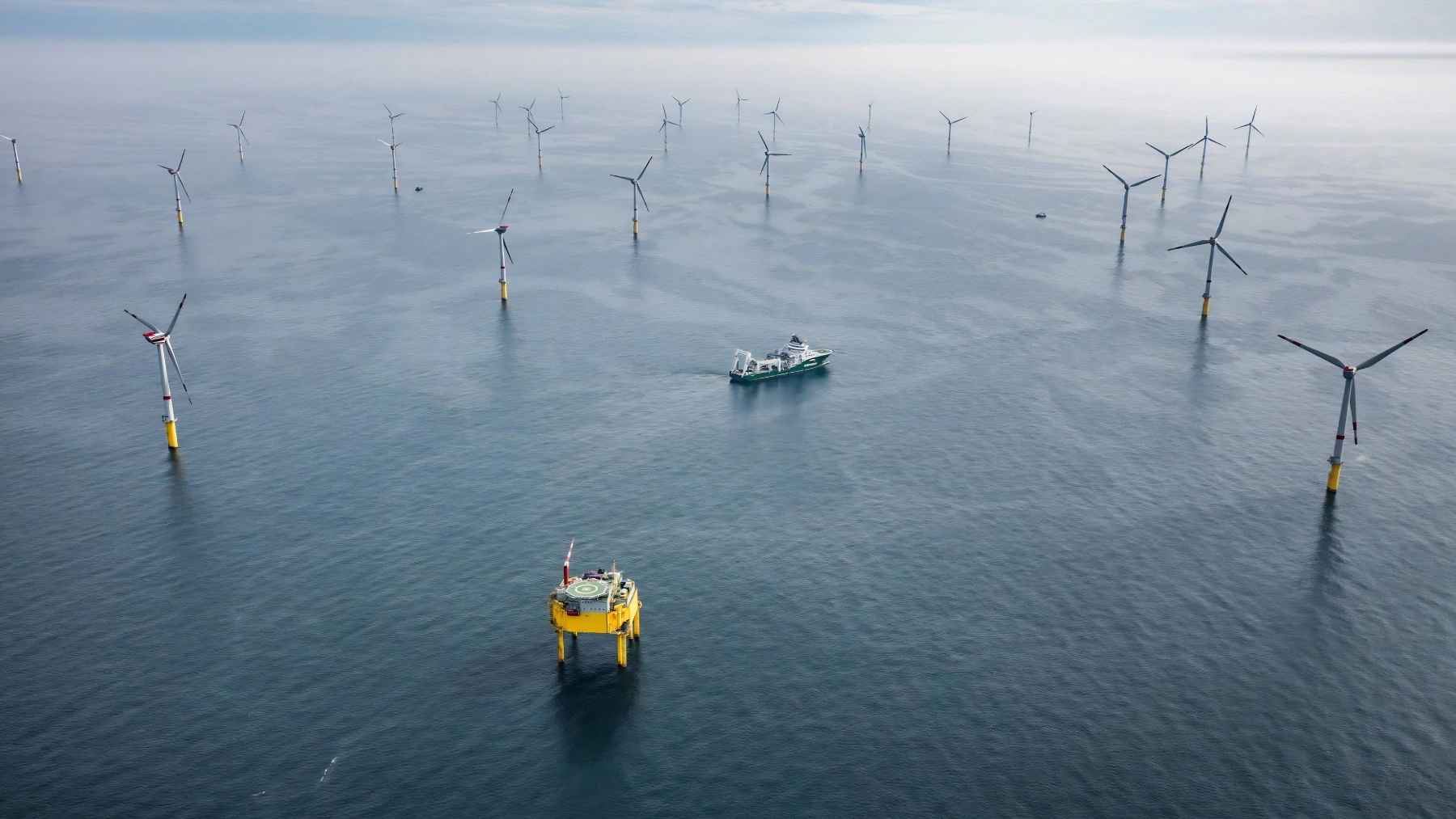
Thirty-five miles east of Montauk Point, South Fork Wind was built to send renewable electricity to Long Island. Its 12 turbines are also providing underwater habitat, with a 2025 monitoring summary reporting marine life using their foundations. The blades are only half the story.
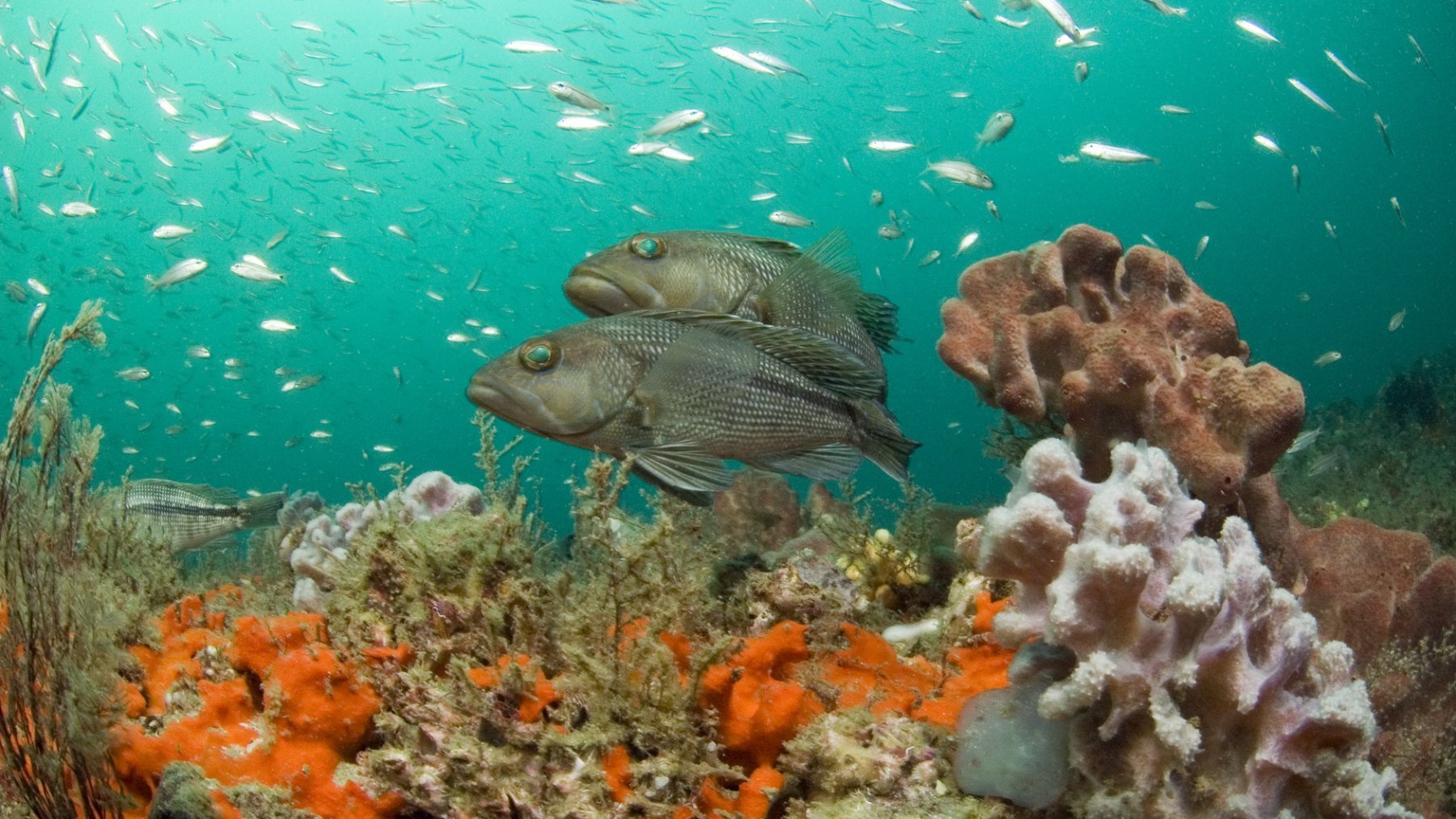
Scientists had reason to expect this. At Rhode Island’s older Block Island Wind Farm, researchers found increased catches of black sea bass near the turbines, offering a clue to South Fork’s future. But a busy foundation does not automatically mean a healthier ocean.
Twelve towers with an underwater role
South Fork has a generating capacity of 132 megawatts and was designed to meet the equivalent electricity needs of roughly 70,000 homes. Construction finished in March 2024, marking the completion of America’s first commercial-scale offshore wind farm.
By May 2025, the New York State Fisheries Technical Working Group was reporting that “marine life is using the wind turbine foundations as habitat.” Its summary also noted no detectable changes in the biological communities on the surrounding seafloor. Those observations document habitat use and survey findings, not a blanket finding of no environmental impact.
How steel becomes a living surface
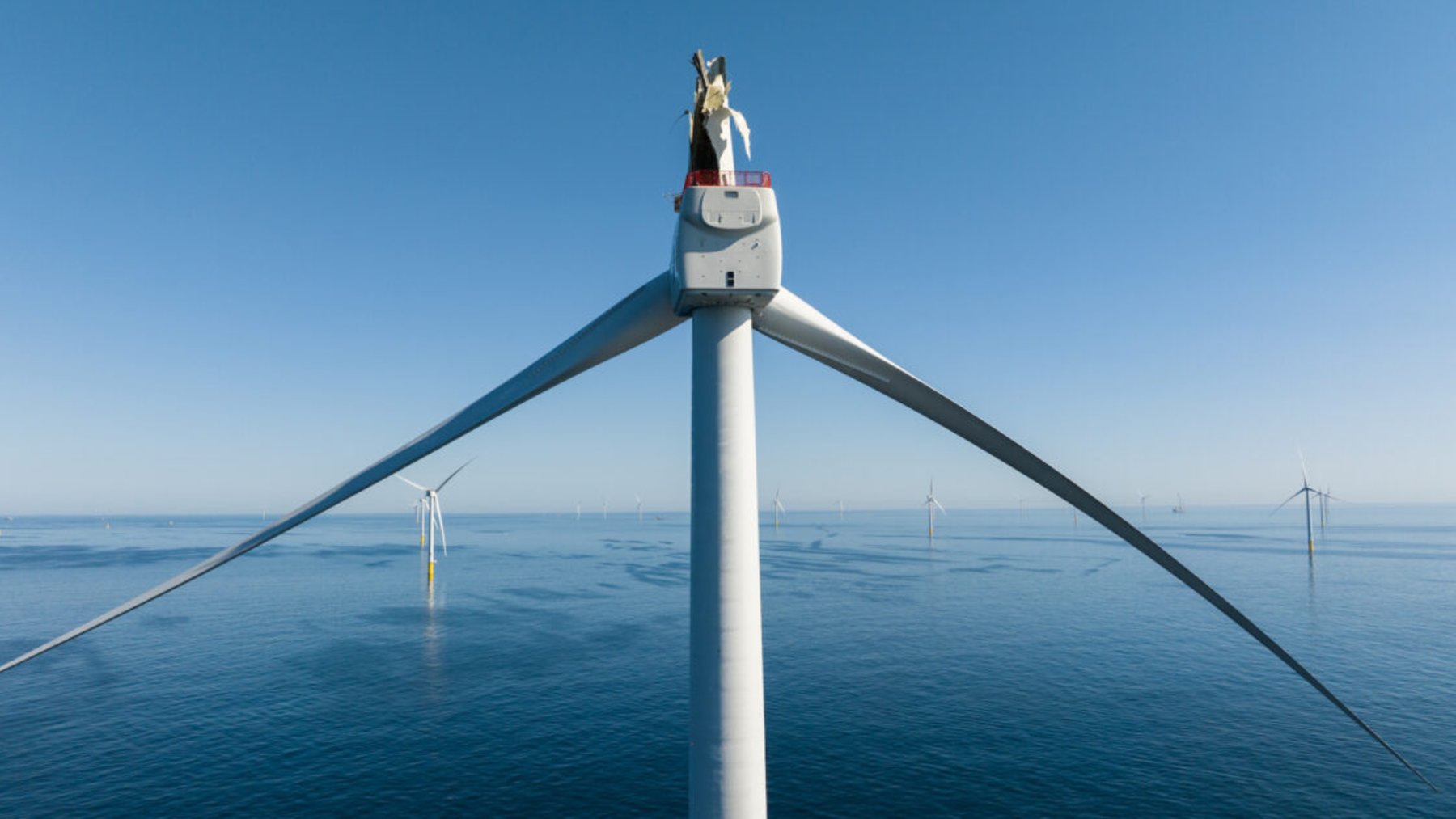
South Fork’s underwater supports are steel monopiles driven into the seabed. Such hard surfaces give mussels, barnacles, and other organisms somewhere to attach, gradually covering bare infrastructure with living communities.
Mussels filter food particles from the water, while the developing community provides resources for other animals. Crabs and fish can find food and shelter around the structures, creating what scientists call an “artificial reef effect.”
Black sea bass are particularly associated with structured habitat. A turbine foundation can therefore offer something familiar to a fish accustomed to gathering around rocky reefs, even though the structure was built to generate electricity.
What Block Island actually showed
Completed in 2016, Block Island was America’s first offshore wind farm, with five turbines rather than South Fork’s 12. It became a testing ground for studying how marine life responds to offshore energy infrastructure.
A seven-year study published in 2022 compared fish surveys before, during, and after construction with surveys in two reference areas. During the first two operating years, black sea bass catches per unit of fishing effort were approximately ten times higher near the wind farm than in those comparison areas. That does not mean the region’s sea bass population grew tenfold.
The study, funded by developer Deepwater Wind Block Island, did not identify a clear pattern of reduced catches during operation among the fish and invertebrates examined. Those results support a local reef effect, but they are not proof that every species or fishing business benefits.
More fish nearby does not answer everything
Are the turbines supporting more fish overall, or mostly drawing existing fish into one place? That distinction between “production” and “attraction” matters because a crowded patch of water is not, by itself, evidence of a larger population.
A broader study published August 27, 2026, examined the available evidence using literature searches completed by December 2024. Its authors found that local changes around wind farms could not yet be reliably translated into conclusions about fish populations across entire regions. The findings highlight a gap in understanding, not a verdict against offshore wind.
A habitat trade-off, not an empty ocean
The image of an “underwater desert” can be misleading. Research treats soft seabed as existing habitat that may be replaced, not lifeless space waiting for improvement. Species that use soft sediments do not necessarily gain from replacing their habitat with steel and rock.
Hard structures can also provide stepping stones for nonnative species, while offshore developments can change vessel routes and displace fishing activity. These are broader concerns to assess, not impacts established by South Fork’s early reef observations.
What researchers need to watch next
At South Fork, the Commercial Fisheries Research Foundation is using acoustic tracking to compare how fish and crustaceans use a turbine foundation and a natural rocky reef. Its tracking schedule extends through 2026, with black sea bass, Atlantic cod, lobsters, and crabs among the target species. Following where animals go and how long they stay can reveal more than a photograph of fish gathered around steel.
South Fork’s early findings show that an energy project can also provide habitat, but judging the lasting benefit requires looking beyond the fish gathered at its foundations.
The broader evidence-mapping study was published in the ICES Journal of Marine Science.