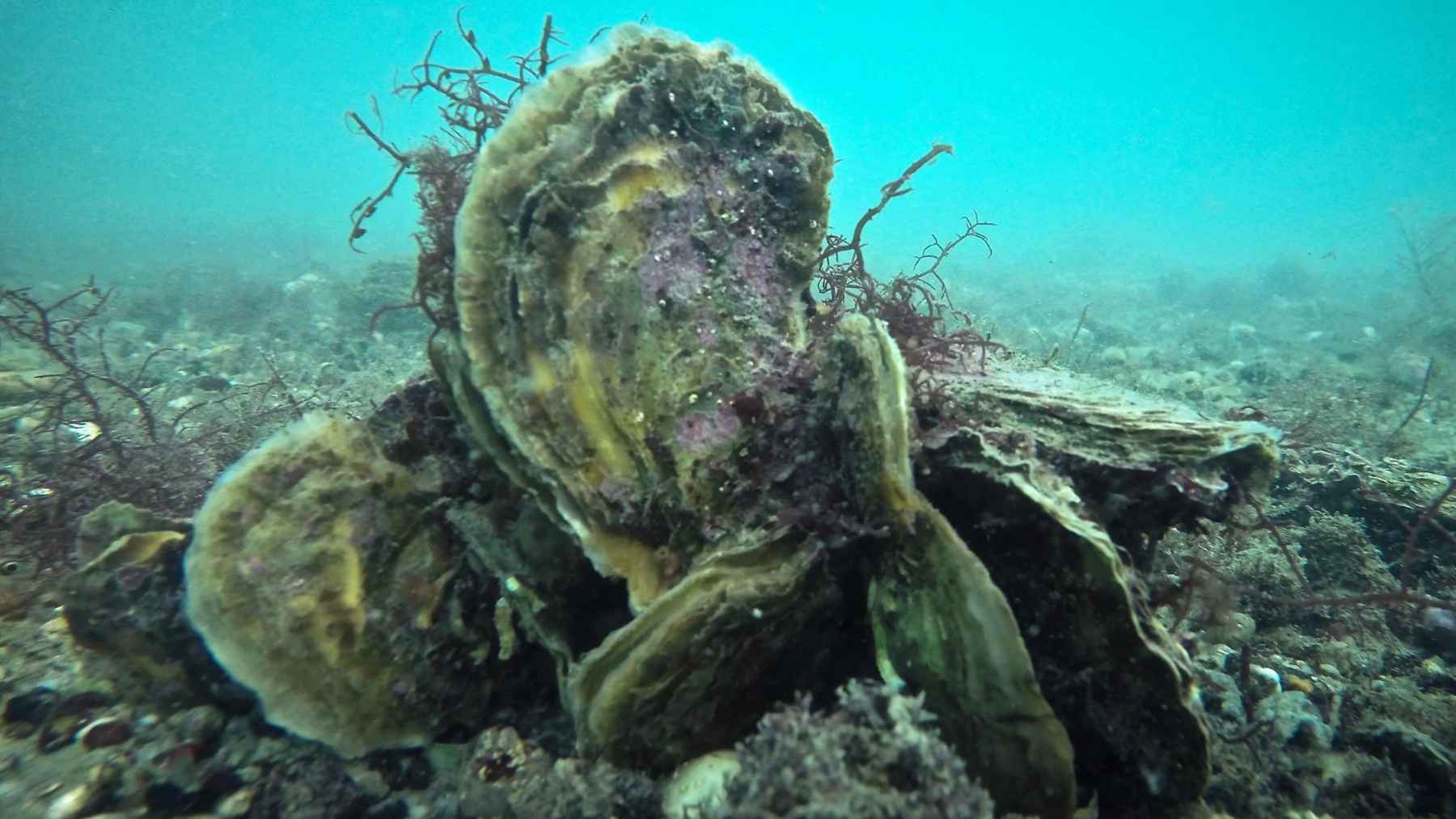
Imagine an animal of the size of a teacup being able to filter 200 liters of seawatera day. Or one single female, of only 8 centimeters, releasing millions of larvae.
Still, European native oyster populations are not doing so well. In the UK, their populations have fallen by about 95 percent since the mid-19th century, leaving the reef ecosystems completely collapsed. It is quite a paradox: how is it possible that an animal that is so fertile is disappearing?
It is important to say that the European native oyster (Ostrea edulis) is the only true oyster native to UK seas. Their biology is surprisingly flexible, because they tend to start their lives as males until they turn into females (this is around 2 or 3 years old, which is when they reach their sexual maturity). What also is really impressive is that they can change their sex many times during their lives, something known as “protandrous alternating hermaphroditism.”
When a female matures, she can release between 1 and 2 million larvae in a single reproductive event. But remember that these numbers refer to larvae and not of adult oysters!
Why two million larvae can still fail
The problem here is that oysters really need to settle on top of living or old shells from past generations, and having the reefs destroyed by fishing makes it very difficult for them to survive.
A remarkable life cycle built around change
That is why reproduction alone will not solve the oyster population problem. Nowadays, researchers compared records of densities from the past and the results are quite alarming, since the historical reefs used to cover more than 1.7 million hectares and now those numbers are drastically reduced.
A water filter beneath the waves
Oysters in order to eat, they pump water through their microscopic hairs on their gills and capture for example phytoplankton.
They also have a big responsibility because they are constantly removing excess nitrogen in the water around them, because having too much of it can cause harmful algal blooms. This definitely is a big danger to fish and marine species, since this causes toxic algae that strip oxygen from the water.
Oyster reefs work like coastal neighborhoods
With time, millions of living and dead shells tend to pile up to create three-dimensional structures. These rocky reefs work as shelter for sponges, spiny seahorses or European eels.These are not the only “properties” that reefs have. If they are healthy, they are able to stabilize sediment, reduce coastal erosion and protect salt marshes and seagrass. Also, in some more specific situations, they can even play a big role in carbon storage.
London once consumed them by the hundreds of millions
As you might know, humans have harvested oysters for many and many years. It is even said that this has happened since 8700 BC. In the Roman Empire they ate European native oysters, and for example, in the 19th century more than 200 million was the estimated number sold each year in London when the city’s population did not reach two million.
That level of consumption ended up destroying the ecosystem. Fisherman not only took the adult oysters, but they also destroyed the shell beds that the larvae needed to live on. And if you add pollution,habitat loss and the invasion of exotic species, what seemed to be an endless source of food, ended up collapsing Restoration is moving from cages to seabed reefs
Luckily things are starting to change and there is a real seabed restoration taking place. In May 2026, the Solent Seascape Project placed 20,000 native oysters on a new reef built in Chichester Harbour. It is one of the largest subtidal oyster reef restorations in the UK, something that was possible thanks to 260 volunteers who cleaned the shells one by one.
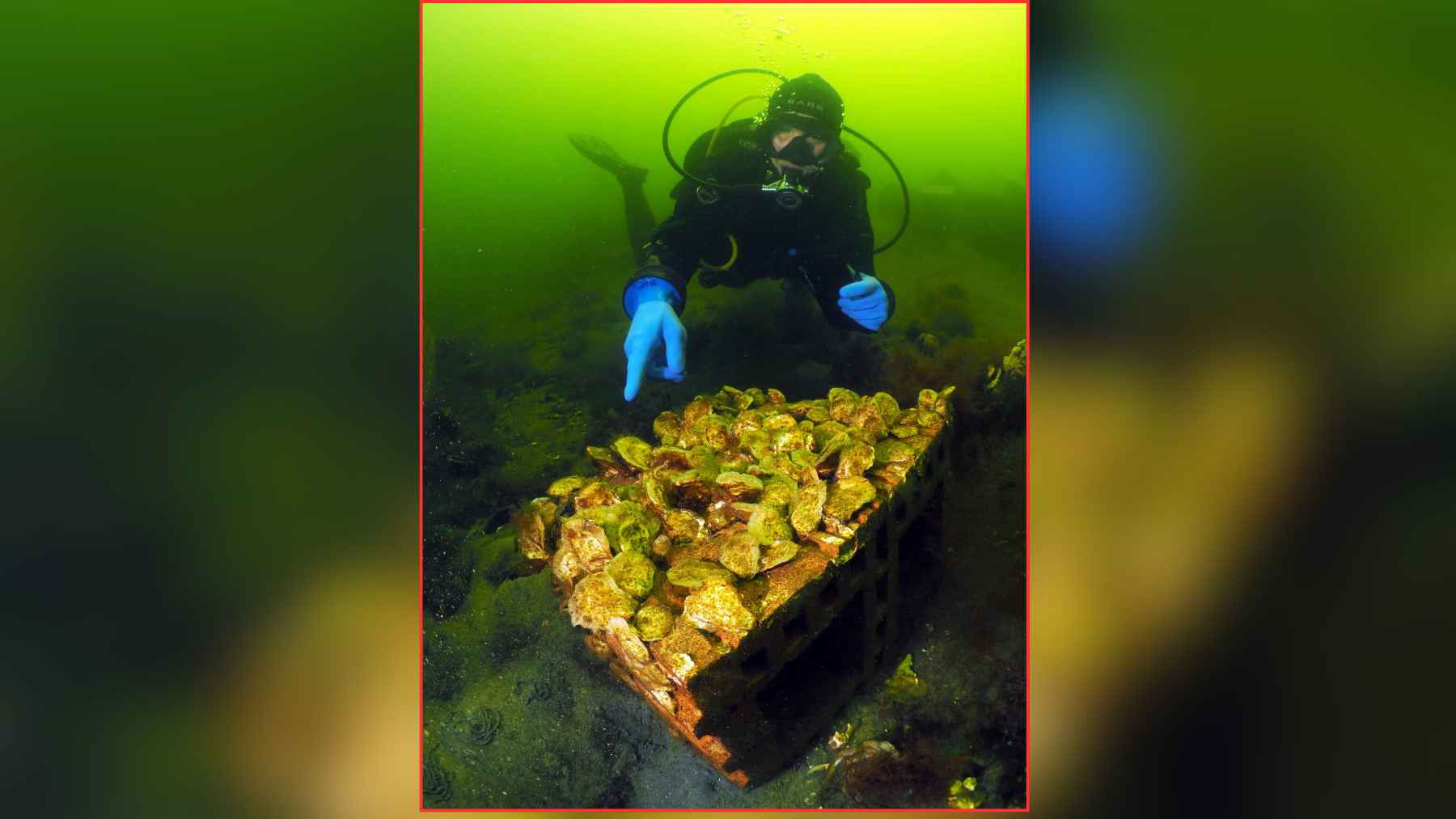
As Alison Debney, conservation lead of ZSL said “Given time and space, nature can recover,” But to have them all again, it is compulsory to have clean water, disease control and years of strict protection.
The official information was published by the Zoological Society of London.