New York is among the most energetically demanding places on the planet. The most cosmopolitan city ever designed by man needs gargantuan levels of energy to power the daily transactions that happen between people of all over the planet who came to live there.
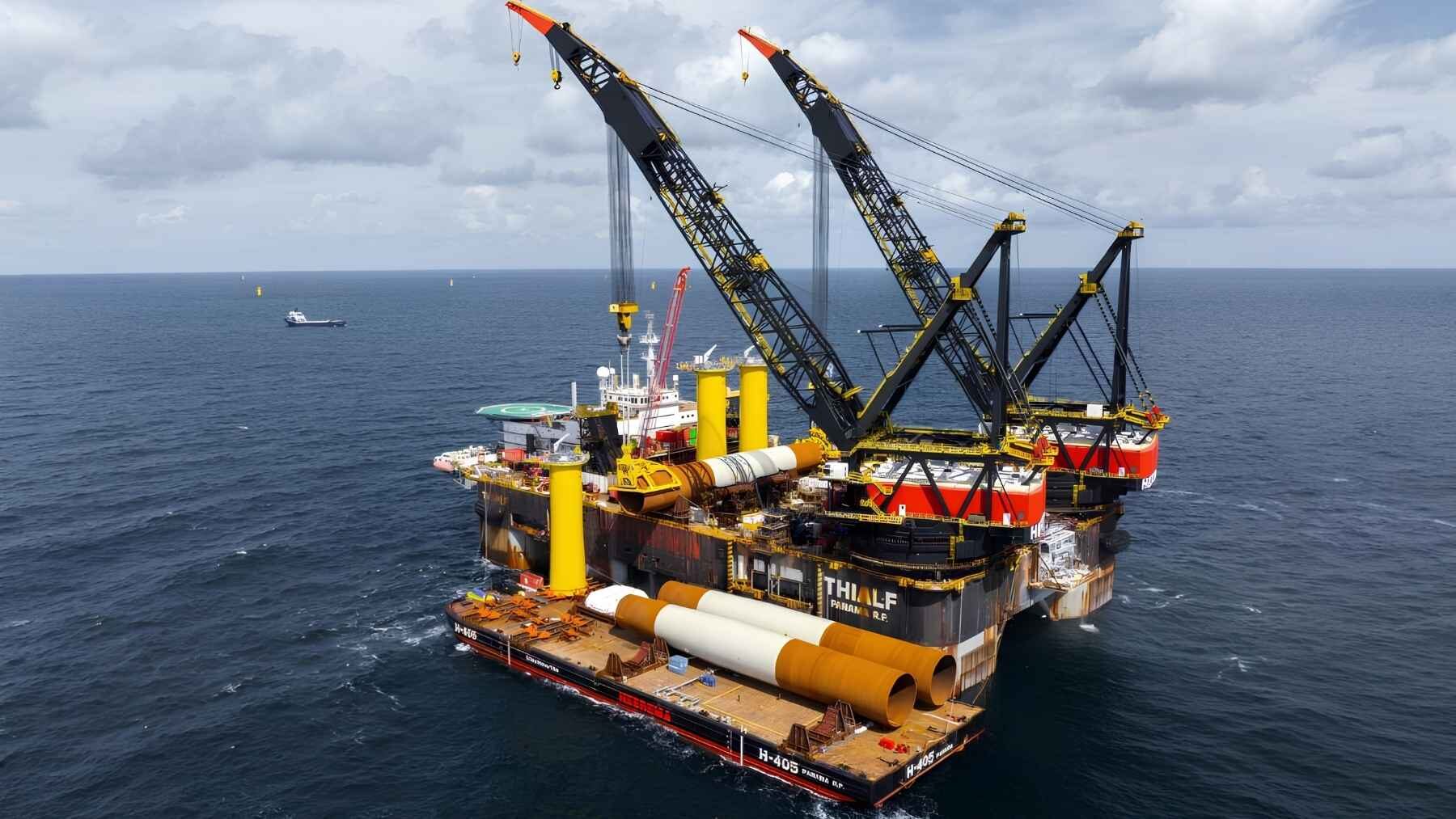
54 monopiles (steel cylinders) have been allocated on the seafloor southeast of the Long Island to support the Empire Wind 1 project. The monopiles were built specifically to sustain the ambitious 810-megawatt power project that aims to direct more energy to the city that is always starving. After its completion the new seabottom view is different: the monopiles that are held up by rocks are adding a stable hard surface to what used to be a flat, sandy environment where such structure was previously unseen.
Taiwan researchers conducted a new study that might offer strong clues of why those monopiles may be changing the whole environment around Long Island’s seabed. The research documented 86 reef-associated fish species that appear exclusively within 50 meters around the monopiles and its foundations while none appeared in what was previously just sandy flat areas.
Taiwan’s underwater count
Off of Miaoli County, at the Formosa Wind Farm, 69 turbines tower over about 35 square miles of sandy and muddy seabottom with no natural reefs. SCUBA diving surveys in the years of 2017, 2018 and 2025 recorded 11,552 fish from 97 species, while pole-and-line samples in 2024 and 2025 collected samples of another 510 individuals of 40 different species.
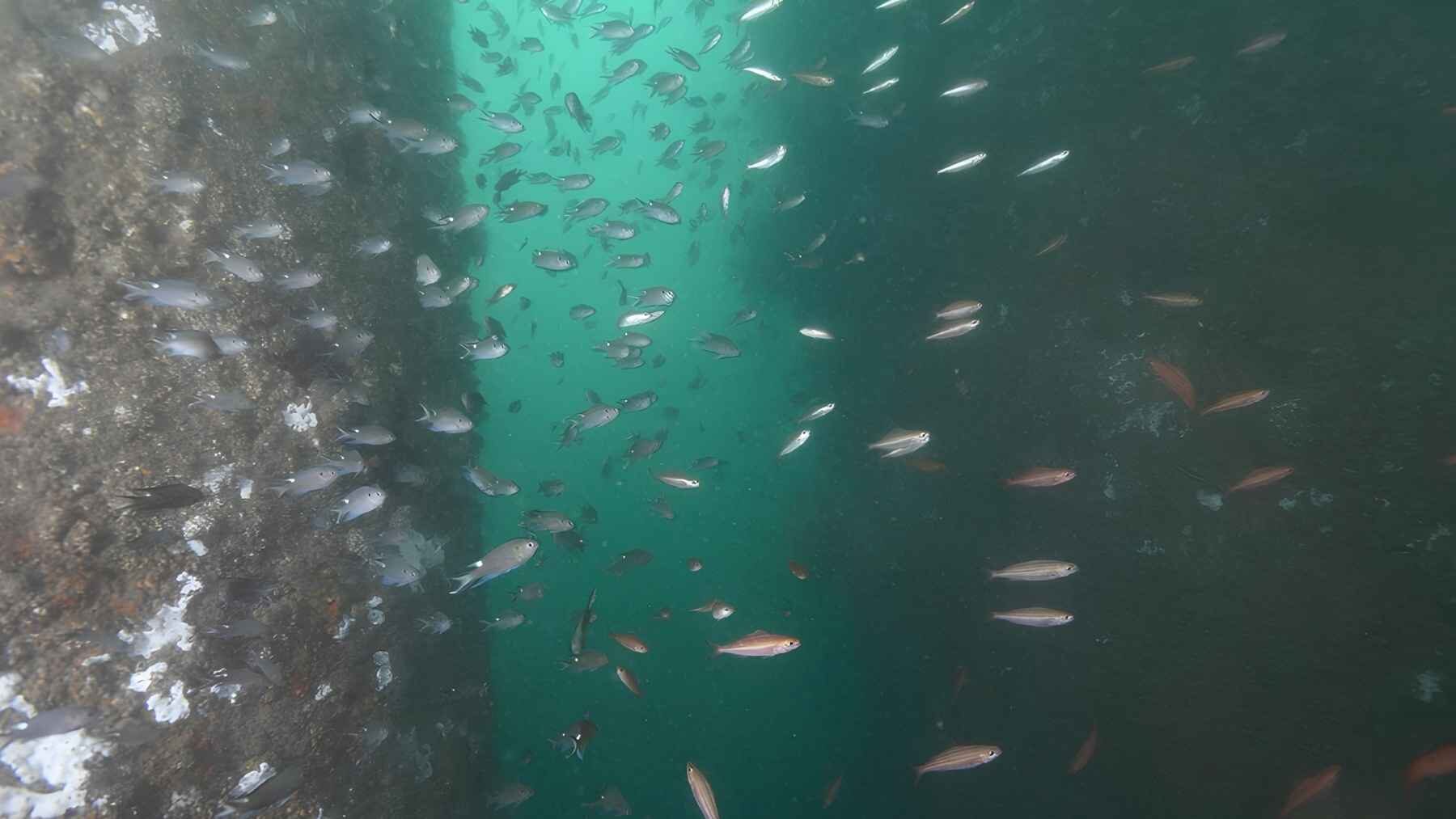
The local fauna didn’t simply show up overnight. Over the span of 8 whole years the place shifted from a soft-bottom dominated environment towards a functional and mature reef-association assemblage of different species. What’s even more curious is that the newly formed societal structures completely differ from those that occur in previous projects that had a similar premise.
Hard surface changes everything
What’s the secret then? Different species of mussels, barnacles, sponge and anemones need stable places to latch and build their communities, which the moving sand cannot provide. Because of the Empire Wind 1 monopiles and its sustaining rocks now the exact place for those species has become a reality.
This is the beginning of the chain: once the living crust forms begin to settle they can supply food and shelter for crabs and other small fish, which in turn attract even larger predators. The University of Rhode Island researcher Emmanuel Oyewole humbly described the turbine bases as a kind of “mini ecosystem”, but along with their ongoing Jonah’s crab work they are testing whether those places are really creating new marine ecosystems or are merely gathering animals that already come from nearby ones.
The rock around each pile
Before each monopile was driven and placed the working crew placed a much needed filter layer of rock and then added a smaller armor layer to stabilize the base. Big structures need solid foundations, and the sandy flat surfaces were not enough.
15 to 30 miles southeast of Long Island lies the Empire Wind 1, roughly 75 to 135 feet deep with its multiple structures. The installation of its 54 foundations began in June 2025 and finished that fall, while the offshore substation was only installed in January 2026 and its resulting first powers are only expected in late 2026.
The project also needed about 94 miles of export cables and more than 100 miles of inter-array cables! Curiously the protective material that was added around that infrastructure adds even further hard surfaces to the layout.
American evidence is building
Dense blue mussel aggregations have been found by researchers around the founding turbines of the Block Island Wind Farm, four years after their construction. Another separate acoustic work found an abundance of fish within roughly 400 to 500 feet off of the structures, a pattern that mirrors what the Taiwan research also concluded: the effect can be strong but spatially limited.
Rhode Island’s newest study that follows Jonah crabs near the South Fork and Revolution Wind sites from commercial lobster boats is gathering traps samples twice a month in order to come up with more data. They still don’t have data enough to show results so those are still clues rather than proof that Long Island’s foundations are already supporting similar communities.
A reef is not automatically a win
Not everything is perfect, especially when we are talking about man-made structures. Those artificial structures that were built can look promising from a perspective but can be harmful in the long run. They can concentrate and increase local biodiversity but could also alter fishing patterns and favor reef species adapted to open sediment. The Taiwan researchers found out that the monopiles influence was localized and that the species composition differed from previously existing mature artificial reefs even when richness and richness were similar.
And that distinction matters to New York commercial and recreational fishing. A busy patch of fish around the steel structures may reflect attraction, additional production or both. Further studies and observations have to be made in order to understand if this is positive or negative to the already existing established order of the area.
The first years will tell the story
It’s now a question of time. The most obvious next step is to simply measure instead of assuming. With diver surveys, underwater imagery, benthic sampling and commercial trap studies similar to the ones done by Rhode Island’s university the scientists are going to build through several years enough data to compare the results of the foundations with sandy reference areas. Similarly to what happened in Taiwan the local community might keep changing long after the arrival of the first organism.
Even though studies of offshore wind foundations placed on soft sediments are being done all over the world, the benefits and tradeoffs of each place remain local, site specific, dependent on the design, age and management of the areas.
The study was published in the journal Frontiers in Marine Science.