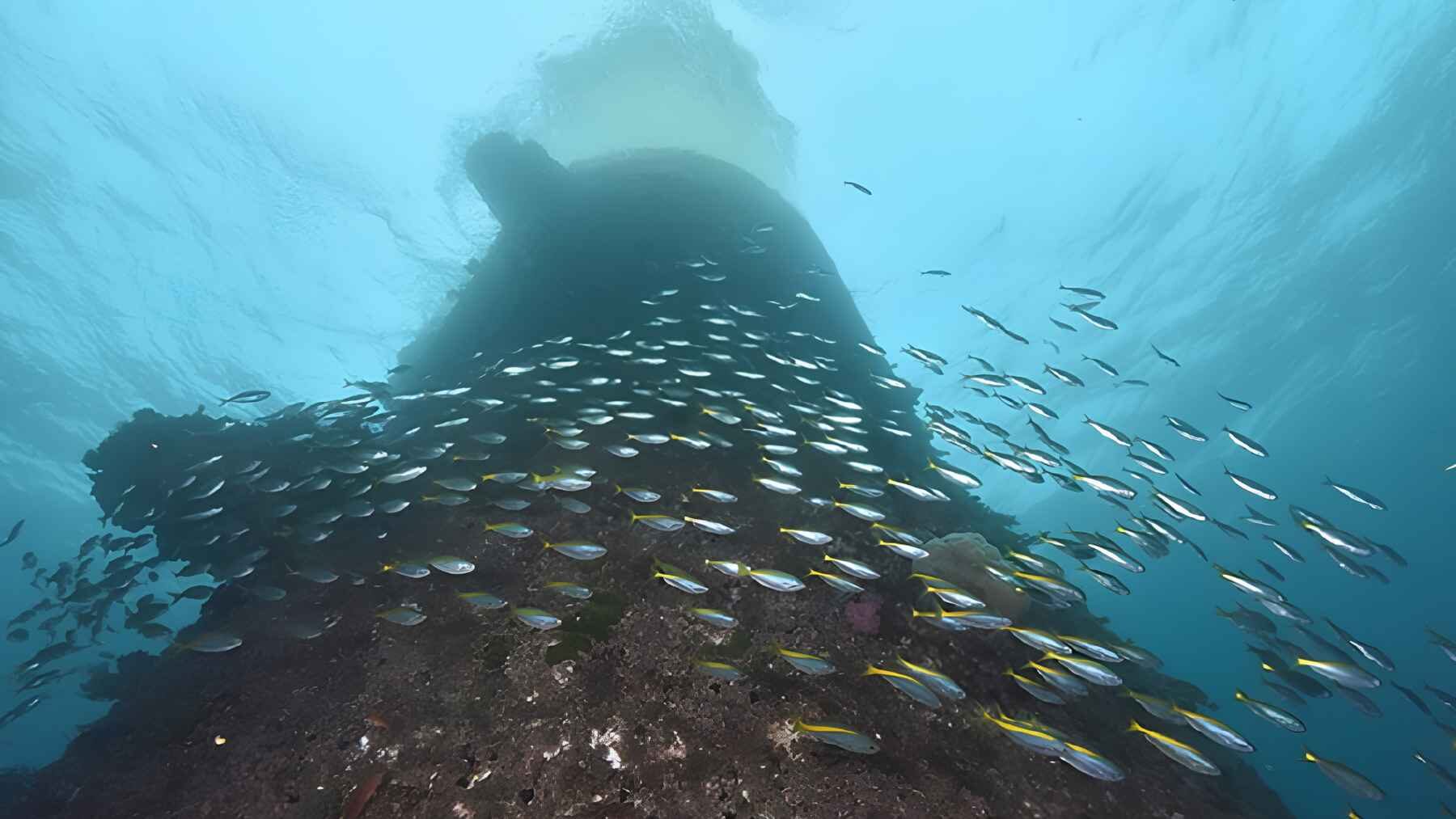
A stretch of seabed off northwestern Taiwan once offered reef fish little more than sand and mud. Then steel turbine foundations rose through the water, and a new study found 86 reef-associated fish species clustered around them, none of which had appeared in earlier fishery records for that location.
The finding comes from the 69-turbine Formosa Wind Farm off Miaoli County. Researchers say the structures are functioning like localized artificial reefs, but the effect is concentrated close to the steel rather than transforming the entire seafloor.
Steel foundations become reefs
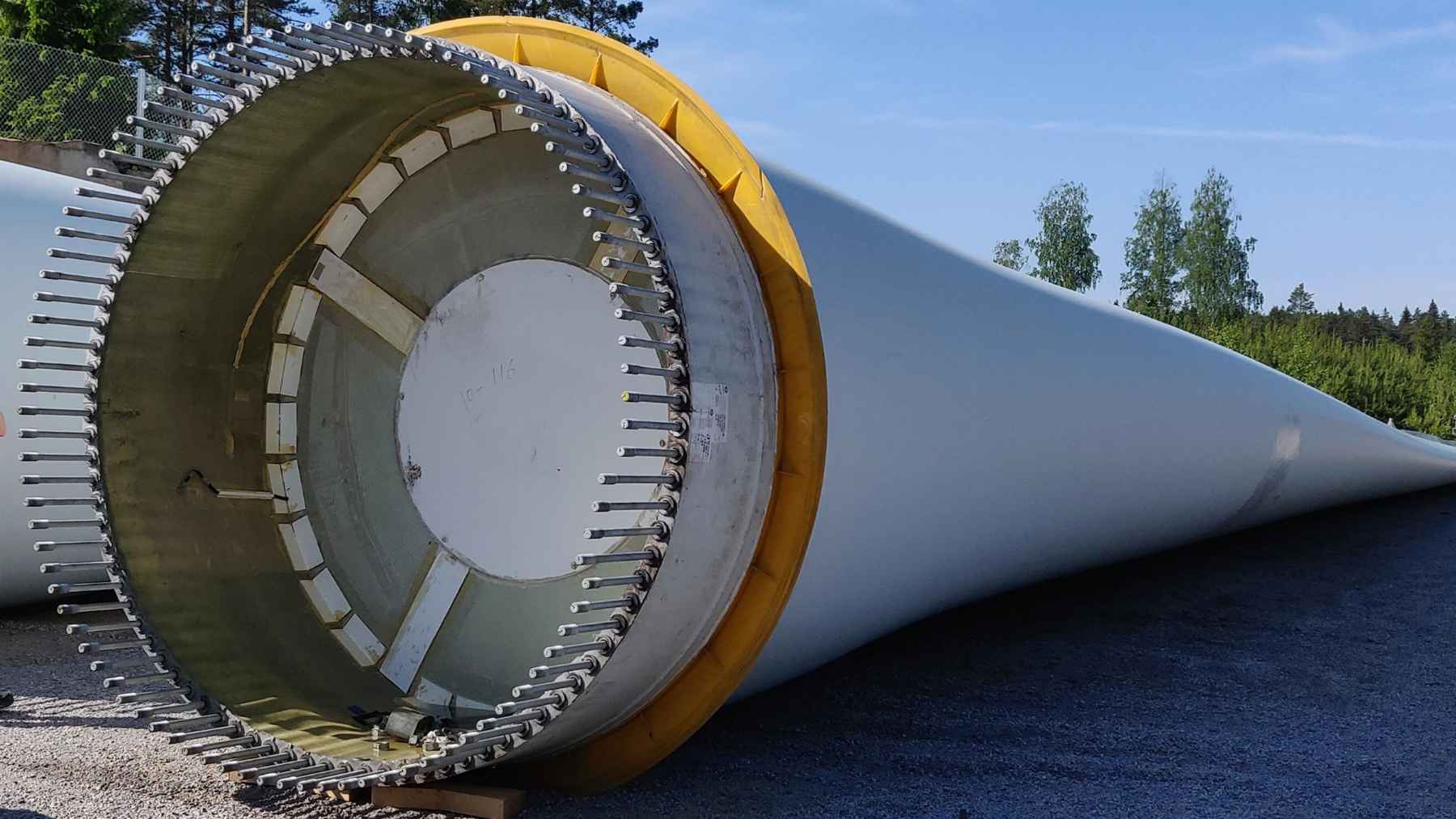
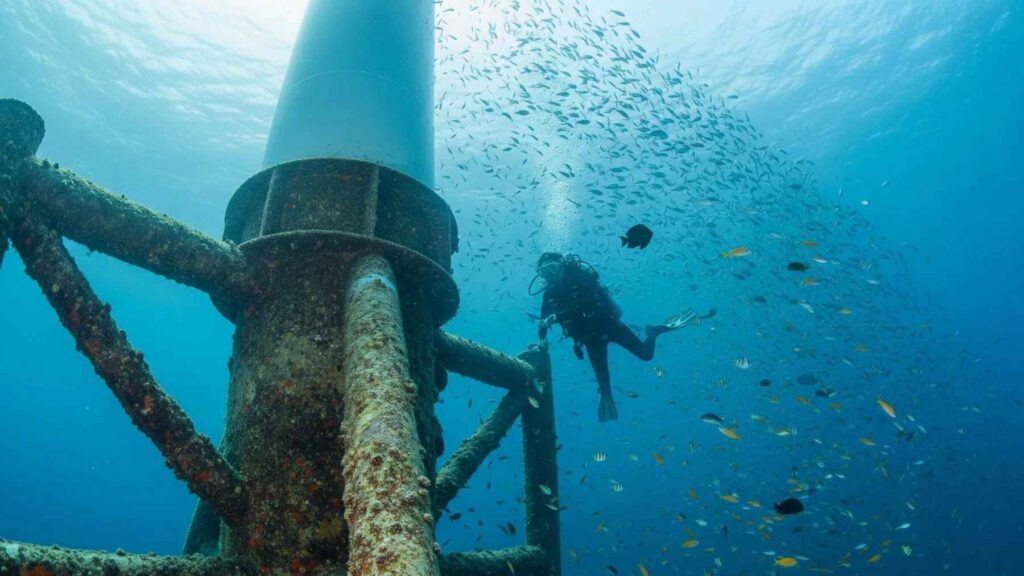
For a fish adapted to rocky surfaces, a turbine base is more than power infrastructure. It is a vertical wall that runs from the seabed toward the surface, offering shade, shelter, attachment points and layers of water that ordinary low-profile artificial reefs cannot provide.
The foundations stand in water roughly 49 to 180 ft. deep, on a seabed where the researchers found no natural reef habitat. Some are surrounded by rock-filled scour protection, an engineering layer that helps prevent erosion and extends about 66 ft. from the pile. Those rocks add crevices where smaller animals can settle and hide.
Within months after construction, barnacles, sponges, corals and other attached invertebrates can coat the hard surfaces. Those organisms then create food and shelter for shrimp, crabs, worms, snails and other small animals, drawing in larger fish.
Eight years of underwater surveys
The team, led by Kwang Tsao Shao and Yi Ta Shao of National Taiwan Ocean University, did not inspect every one of the farm’s 69 turbines. Divers counted fish at two of the earliest Formosa 1 foundations in 2017 and 2018, then expanded the 2025 survey to six foundations, including monopiles with protective rocks and jacket structures without them.
Four divers worked at each site for about 45 to 50 minutes, moving from the seafloor upward and recording fish, invertebrates and images. Researchers also completed 37 pole-and-line surveys in 2024 and 2025 at different distances from the turbines, including within about 33 ft., between 82 and 164 ft., and more than 820 ft. away.
That long view matters. At the two foundations followed across the full period, fish abundance and species richness rose as the habitat aged, showing a clear ecological succession rather than a one-day gathering of passing fish.
The 86-species surprise
Across the investigation, the team documented 86 reef-associated fish species within 164 ft. of turbine foundations. None were caught in the surrounding sandy areas or listed in earlier fishery records for the site, which suggests the steel introduced habitat that had not existed there before.
Near the structures, reef-associated fish dominated, accounting for 83% of the species observed by divers near the piles. The fish included groupers, snappers, grunts, damselfish, butterflyfish, wrasses and parrotfish, while schools of young snappers, grunts and jacks raised the possibility that some foundations are serving as nursery areas.
By 2025, the turbine sites had species richness, diversity and feeding structure that were statistically similar to nearby purpose-built reefs installed roughly 15 years earlier. The exact species mix still differed, however, showing that a wind turbine foundation is not simply a copy of a conventional reef. It creates its own hybrid community.
A reef with clear limits
How far does the effect travel? Not very far, according to the surveys. Reef fish were concentrated within about 164 ft. of the foundations, while communities more than 820 ft. away remained largely characteristic of the original sandy and muddy bottom.
That detail tempers the most dramatic interpretations. The study does not show that the entire 35 sq. mile wind farm has become one continuous reef. Instead, the turbines appear to act as separated biodiversity “oases,” generally spaced about half a mile to one mile apart.
The study also found an important wrinkle. One common diversity score was lower in 2025 because yellowtail barracuda made up more than 65% of the fish counted that year. More fish does not always mean a perfectly balanced ecosystem.
New fish or fish moved from elsewhere
One question remains unsettled. Are the turbine foundations producing more fish by improving feeding, survival and reproduction, or are they mainly attracting animals from other places?
The researchers could not fully resolve that debate, yet they found clues pointing beyond simple redistribution. Dense groups of juvenile fish were seen near the piles, and the growing layer of attached organisms created a food web that was largely absent from the original soft-bottom habitat.
Fishing activity inside the farm was also lower in 2024 than it had been before construction, possibly giving some species a partial refuge from mobile gear. However, that benefit is not automatic. Concentrated fish can become easier to catch, so management rules may be needed to prevent a new habitat from becoming a new fishing hotspot.
What this means for offshore wind
The result does not erase the wider ecological questions around offshore wind, including seabed disturbance and changes to fishing activity. What it does show is that foundation design matters, especially the height, surface material and rock protection around the base.
In practical terms, engineers may be able to design future foundations so they generate electricity while also creating more useful marine habitat. That is not a free environmental pass, though it is a chance to make infrastructure work harder, rather like turning a support column into a vertical neighborhood for life.
A steel foundation was placed in the Taiwan Strait to capture wind. Eight years later, the water around selected piles supported a reef-like fish community that had never been recorded there before.
The full study was published in Frontiers in Marine Science.