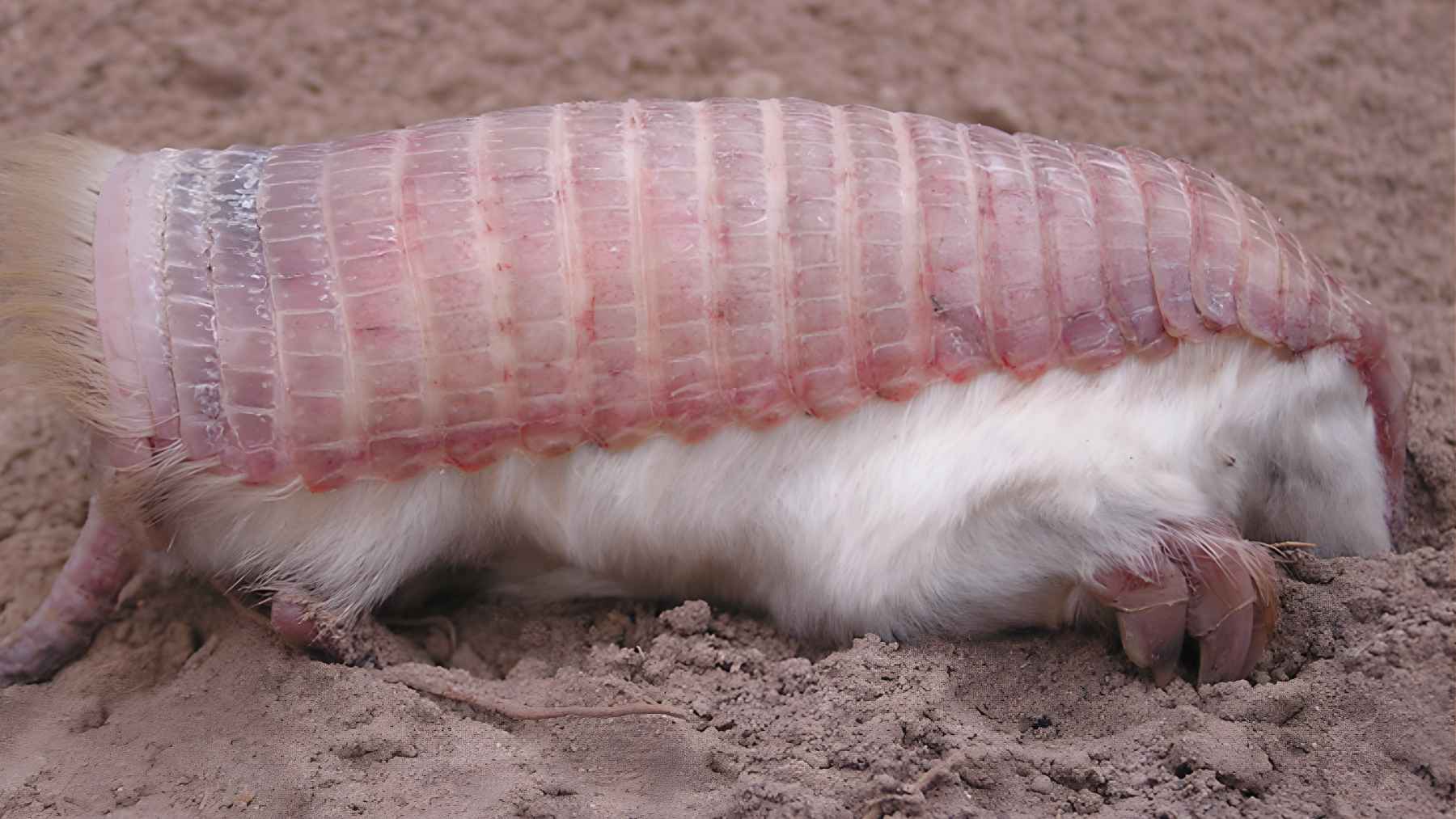
A tiny burrowing mammal nicknamed the “pink fairy armadillo” has been recorded again inside the Ñacuñán Biosphere Reserve in Argentina’s Mendoza province. Park rangers and local residents confirmed the animal’s presence, a rare win for a species that can disappear underground fast.
When an animal this sensitive shows up, it usually means the habitat around it is still doing the basics right, from stable soil to native plant cover. So what can one small sighting tell us about conservation? More than you might think.
A record that made conservation officials sit up
In a statement, biodiversity director Ignacio Haudet said each confirmed record is “a concrete sign that the ecosystem works,” because the species depends on a chain of conditions that can break easily. The new observation also points to the value of protecting entire habitats, not just the most scenic spots.
Protected areas director Iván Funes Pinter said Ñacuñán does not only conserve landscapes – it conserves “complete ecological dynamics” that allow unique species to survive. That matters because many threats are slow and ordinary, like land disturbance that seems small until it repeats year after year.
Fauna department chief Adrián Gorrindo said the animal needs stable soils without heavy ground disturbance or pollution, and that is why each record has high scientific value. Officials also urged anyone who finds one to keep their distance, avoid handling it, and contact authorities, including by dialing 911 in Mendoza.
Meet the “pink fairy armadillo”
The pichiciego menor is the smallest living armadillo, and adults can be just 3 to 4 inches long, close to the length of a credit card. An IUCN Red List profile says it lives only in the arid regions of central Argentina and spends most of its time underground, mostly active at night.
That same profile lists the species as “Data Deficient,” which means experts do not have enough solid information to rate its extinction risk with confidence. It also warns the animal appears highly susceptible to stress and may be affected when ranching and agriculture break its habitat into smaller pieces. Domestic dogs and cats can also kill it.
Ñacuñán’s protection story runs deep
Ñacuñán is not a new project, and that long timeline is part of why the latest record matters. The reserve was created in 1961 as Mendoza’s first protected area and later joined UNESCO’s Man and the Biosphere program in 1986, a framework meant to combine conservation, research, and sustainable use in the same landscape.
On the ground, the reserve protects about 31,000 acres of native woodland and scrub and sits roughly 112 miles southeast of Mendoza city. Official information also highlights a native algarrobo forest, a type of dryland tree community that helps stabilize the landscape.
Why soil protection is the real headline
For a burrowing animal, soil is not background scenery – it is home. The pink fairy armadillo needs ground that is firm enough not to collapse but soft enough to dig, which is why plowing, off-road driving, and heavy machinery can quietly cause trouble.
Protected areas reduce some of those risks by limiting the most damaging activities and keeping large blocks of habitat connected. It is not a perfect shield, but it can be the difference between a place that still functions and one that only looks wild from a distance.
A small animal with an outsized job
So what does this armadillo do when it is not hiding under the sand? A species assessment by the Argentine Mammal Society describes it as an insect eater that can help control problem insects, and says its burrowing lets air into the soil and helps recycle nutrients.
Those are not abstract benefits in a dry region. When a desert storm finally drops rain, soil structure helps decide whether water soaks in or runs off, and tunnels can help water sink in. It is the kind of slow work you never see, until you need it.
Legal protection and a clear rule for the public
In Mendoza, the species has legal backing beyond general wildlife rules. A provincial law dated May 12, 1998 declared the pichiciego a Natural Monument, which sets a permanent ban on hunting and restricts keeping the animal in captivity without explicit authorization.
In practical terms, that means the safest help most people can offer is hands-off. If the animal is left alone and its habitat stays intact, it has a better chance of surviving the stress that often follows close contact.
What comes next for research and monitoring
Because the animal is hard to study, scientists still lack basic information, from population size to how far individuals move underground. That is part of why scattered records matter, because each one adds a dot to a map that is still incomplete.
A 2015 study in the journal Mammalian Biology argued that climate swings in dry regions may also help explain why fairy armadillos are so rarely detected, adding another layer of uncertainty for conservation planning.
For now, the rare return of the “pink fairy armadillo” is a reminder that conservation is not always measured in dramatic rescues. Sometimes it is measured in a small set of tracks, a brief sighting, and a habitat that is still holding together.
The main official press release has been published on the Government of Mendoza.