Asteroids and comets
Comets are waking up far from the Sun, interstellar objects are passing by, and we had a loud meteor event over Massachusetts and New Hampshire. Find out about objects in our vicinity, and how concerned we should be (usually not very).
44 stories · since 2025 · latest, November 17, 2026
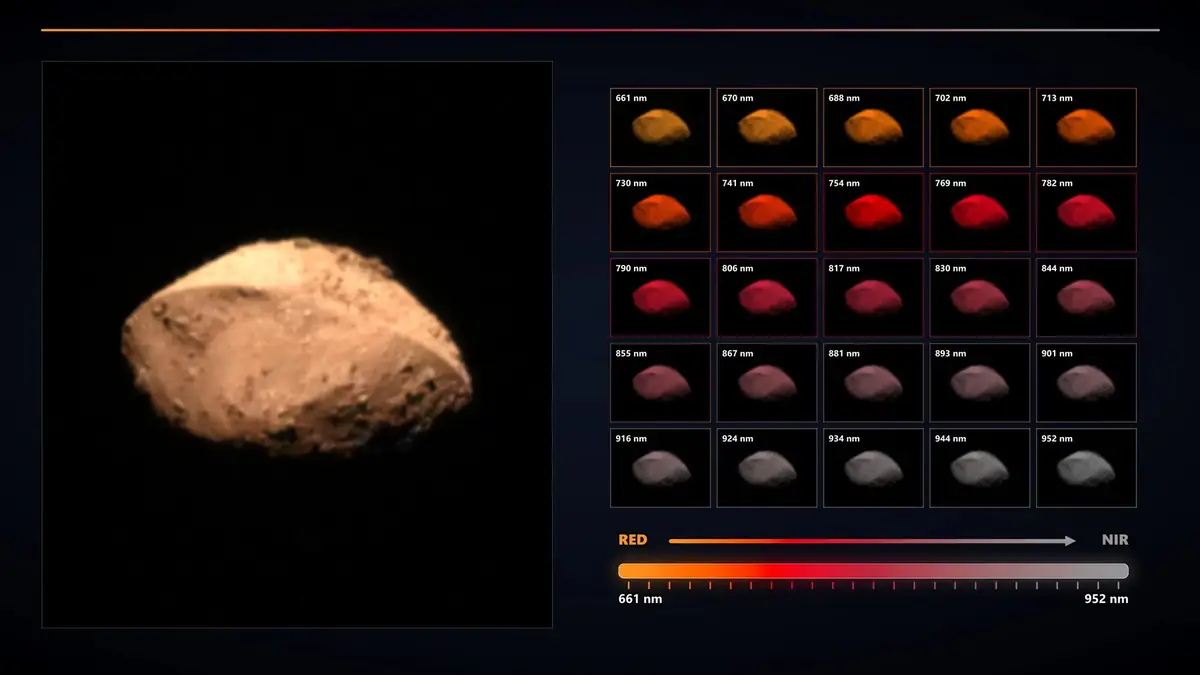
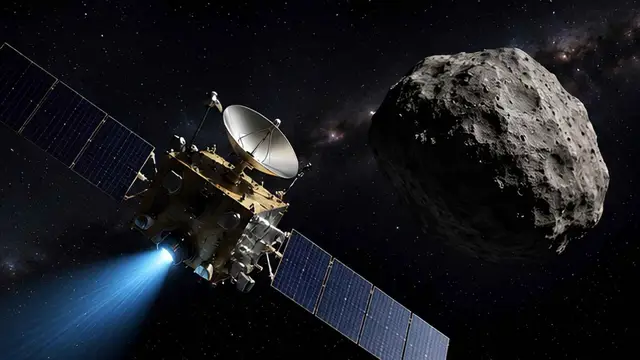
ESA’s Hera spacecraft scanned asteroid Didymos from about 18 miles away with heat vision beyond the human eye, and detailed images of both asteroids, including the moonlet NASA’s DART hit, are due November 25
The European Space Agency’s Hera spacecraft is now studying its target asteroids with instruments that see beyond the human eye. New images released on…
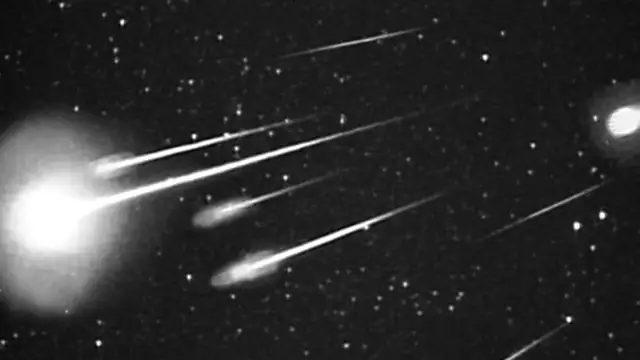
The Leonid meteor shower peaks over Britain tonight with up to 15 shooting stars an hour, and the Moon sets just before midnight to leave the rest of the night dark

A Michigan farm used a 22.5-pound rock as a doorstop for decades, and it turned out to be an iron meteorite that cooled for millions of years inside a lost asteroid
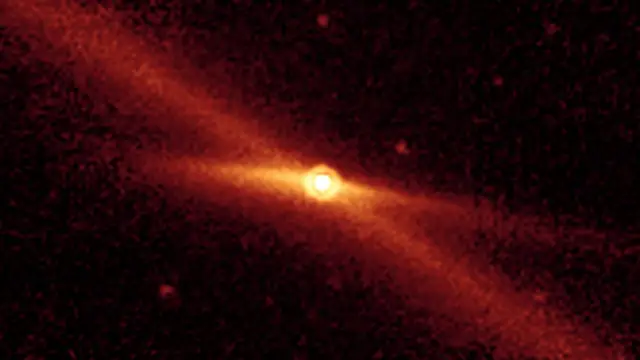
A comet nearly 3 miles wide feeds the Taurid meteor shower every fall, and a high school student’s telescope search has put a size limit on the comet that may have spawned it
Comet 2P/Encke, a body about 2.98 miles (4.8 kilometers) across, feeds the Taurid meteor shower now crossing the night sky. Its two branches peak this…
ECOnews Newsroom · November 3, 2026
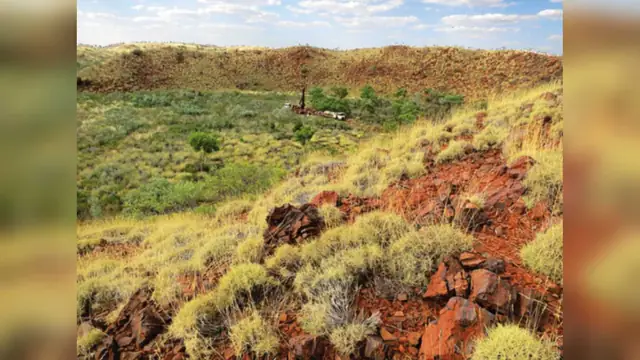
Geologist Arthur Hickman spotted an 850-foot circle on Google Earth in 2007, and drilling 212 feet into what is now Hickman Crater turned up melted rock laced with nickel from an iron meteorite
Hickman Crater is a ring of rock about 850 feet (260 meters) wide in Western Australia’s Pilbara region. Arthur Hickman, a geologist with the Geological…
ECOnews Newsroom · October 25, 2026
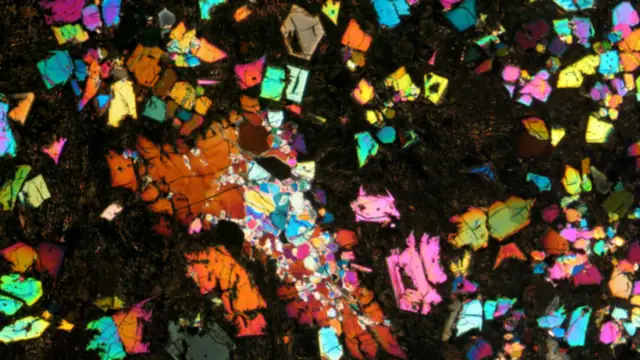
Out of the Sahara Desert, a 1-pound angrite meteorite called NWA 12774 carries crystals that grew under more than 17 kilobars of pressure, and they point to a lost world at least 1,240 miles across
A 1-pound angrite meteorite from the Sahara Desert, Northwest Africa 12774, holds crystals that grew at about 17.56 kilobars, roughly 255,000 pounds per…
ECOnews Newsroom · October 21, 2026
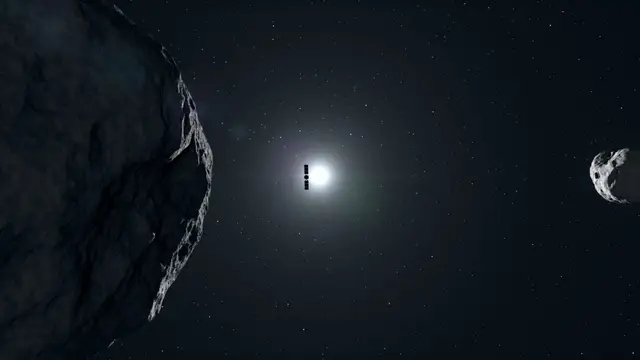
ESA’s Hera spacecraft, flying at more than 26,800 mph, was scheduled to fire three thrusters for 93 minutes to brake toward the asteroids NASA’s DART hit in 2022, and a second burn follows October 22
The European Space Agency’s Hera spacecraft is flying at more than 26,800 mph (12 kilometers per second) relative to Earth, and before it can stop beside…
ECOnews Newsroom · October 16, 2026
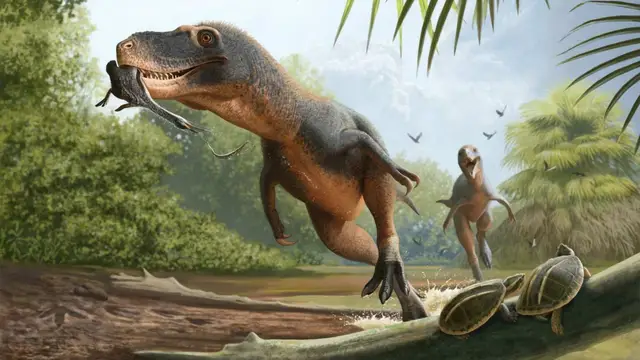
A 66-million-year-old feather found inside fossilized dinosaur poop in Montana belonged to a diving bird eaten by a predator, and its modern design may explain why some birds survived the asteroid
Fossil hunters usually go looking for bones, teeth or footprints. Few would think to crack open a lump of fossilized dinosaur poop hoping to find a…
Adrian Villellas · September 30, 2026
A rare metal has traced the dinosaur-killing asteroid beyond Jupiter, and the discovery narrows a 66-million-year-old mystery
For years, scientists were convinced that they knew what killed the dinosaurs. The explanation was: About 66 million years ago, an enormous asteroid hit…
Adrian Villellas · September 14, 2026
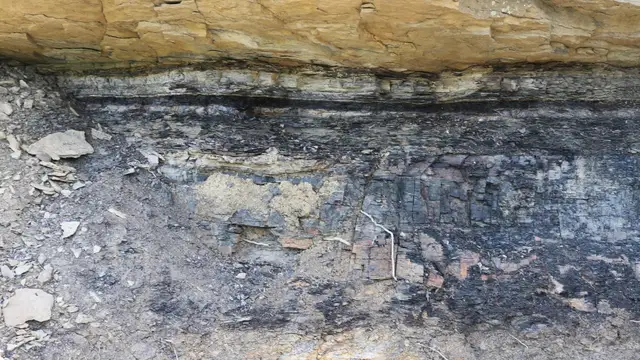
A carbonaceous asteroid 10-15 kilometers wide struck Mexico’s Yucatán 66 million years ago at 64,000 km/h, and isotope analysis now pinpoints its origin beyond Jupiter as a rare CO-type meteorite
Sixty-six million years ago, a 6- to 9-mile asteroid slammed into what is now Mexico’s Yucatán Peninsula at 40,000 mph—and scientists now know it carried…
ECOnews Newsroom · August 20, 2026
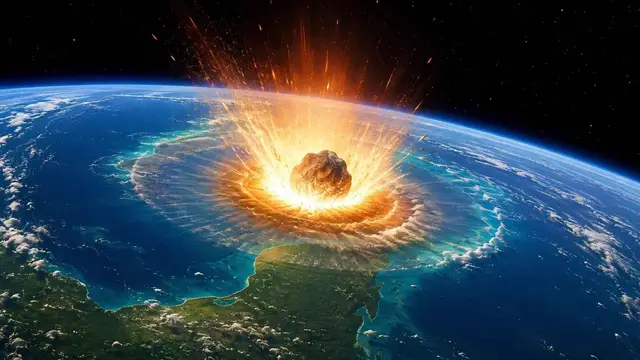
NASA ruled out the asteroid that once had a 3.1% chance of hitting Earth in 2032, and the reason those odds moved so sharply is not what it seems
For the first time in history, a space rock crossing a critical impact threshold triggered international planetary defense procedures. Now, fresh…
Adrian Villellas · August 18, 2026
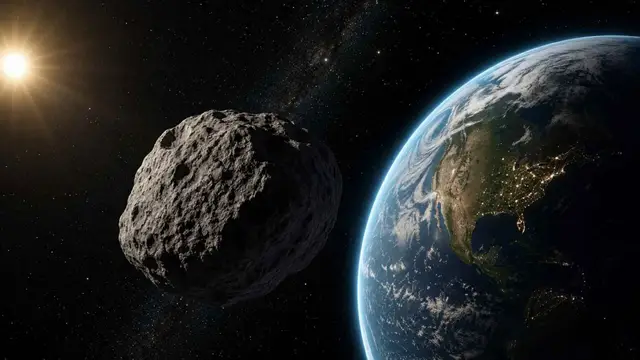
NASA’s Psyche spacecraft borrowed Mars’ gravity in May 2026, gaining a thousand miles per hour and testing instruments built to study a metal-rich asteroid
NASA’s Psyche spacecraft did more than borrow a push from Mars on May 15, 2026. It passed within 2,864 miles of the surface, gained about 1,000 miles per…
ECOnews Newsroom · August 8, 2026
China’s Tianwen 2 probe is on its way to asteroid 2016 HO3, a small space rock that could become a key piece in the new race to bring back secrets from deep space
China’s Tianwen-2 spacecraft has begun close-range science operations at asteroid Kamo’oalewa, also known as 2016 HO3, after traveling for about 400 days…
Adrian Villellas · July 23, 2026
Scientists opened a tiny Martian meteorite and found a surprise inside, as if a rock from Mars were still carrying microscopic clues about the Red Planet’s history
What could a rock fragment smaller than a poppy seed possibly reveal about Mars? Quite a lot, it turns out. Scientists studying a Martian meteorite known…
ECOnews Newsroom · July 18, 2026

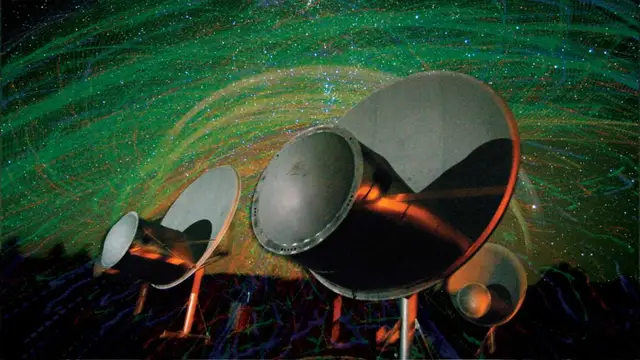
SETI tracked the interstellar comet 3I/ATLAS for more than 7 hours and analyzed nearly 74 million radio signals; the results point to something less spectacular, but just as fascinating: a natural comet
SETI has finished one of the strangest and most revealing checks yet on 3I/ATLAS, the rare comet that crossed our solar system after coming from another…
Adrian Villellas · July 4, 2026