What could a rock fragment smaller than a poppy seed possibly reveal about Mars? Quite a lot, it turns out. Scientists studying a Martian meteorite known as NWA 8171 have identified tiny grains of garnet, a mineral never before confirmed in a sample from the Red Planet.
The discovery may sound like a jewelry story, but it is really a geology story. These microscopic grains could help researchers understand the heat, pressure, impacts, magma, and chemical changes that shaped Mars over its roughly 4.5-billion-year history. The catch is just as fascinating as the find itself. Proving where the garnet formed may require destroying part of a sample that could be one of a kind.
A tiny Martian clue
The garnet was found inside a fragment of NWA 8171 held in the Royal Ontario Museum’s collections. The piece examined by researchers measured only about 0.03 by 0.02 inches, yet it carried enough chemical information to surprise an international team led by Tanya Kizovski, assistant professor of Earth sciences at Brock University.
At first, the team thought the mineral was pyroxene, a common mineral in Martian rocks. Kizovski said the chemistry looked “a bit odd,” so the researchers gave it another look. That second look changed the story.
Using specialized laser equipment and electron microscopy, the team identified garnet in the Martian meteorite. It was not just a pretty speck. It was a new clue sitting quietly inside a rock that had traveled from Mars to Earth.
Not the red gem
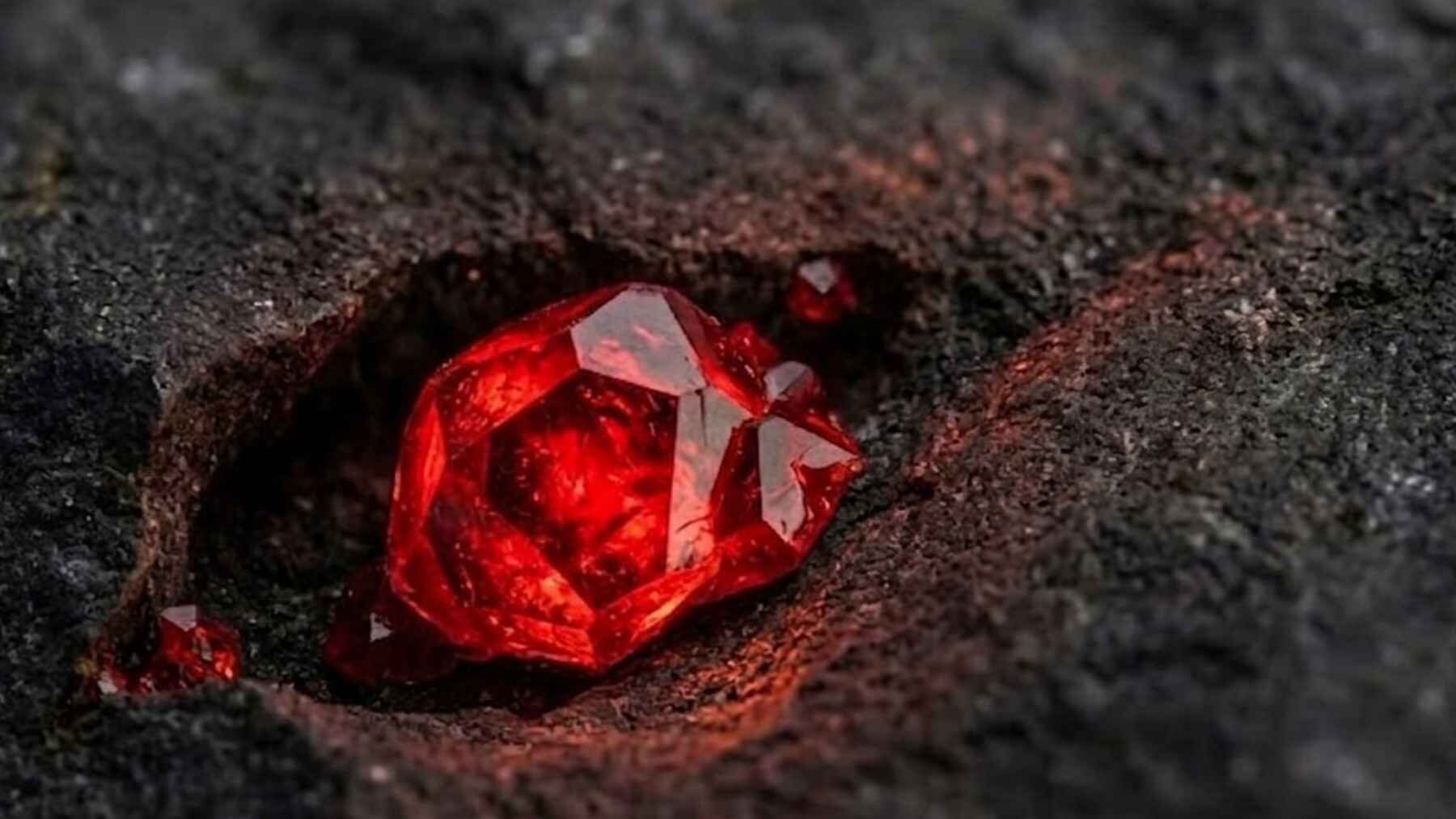
When most people hear the word garnet, they picture a deep red gemstone in a ring or necklace. Fair enough. On Earth, garnet has been prized for centuries, from ancient jewelry to January birthstone displays.
The Martian version, though, is not the familiar blood-red kind. Researchers identified it as andradite, an iron-rich variety of garnet that can appear yellow or green. That ordinary-looking color may be one reason the mineral was almost overlooked.
So, no, scientists did not crack open a meteorite and find a sparkling jewel box from Mars. What they found was better for science. In practical terms, andradite may act like a tiny recorder of the conditions that once affected Martian rock.
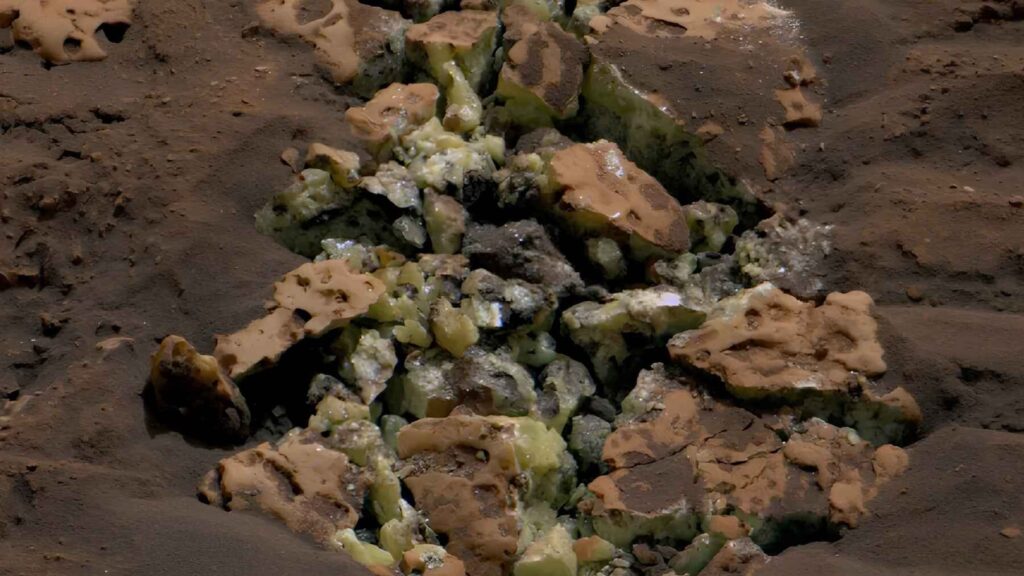
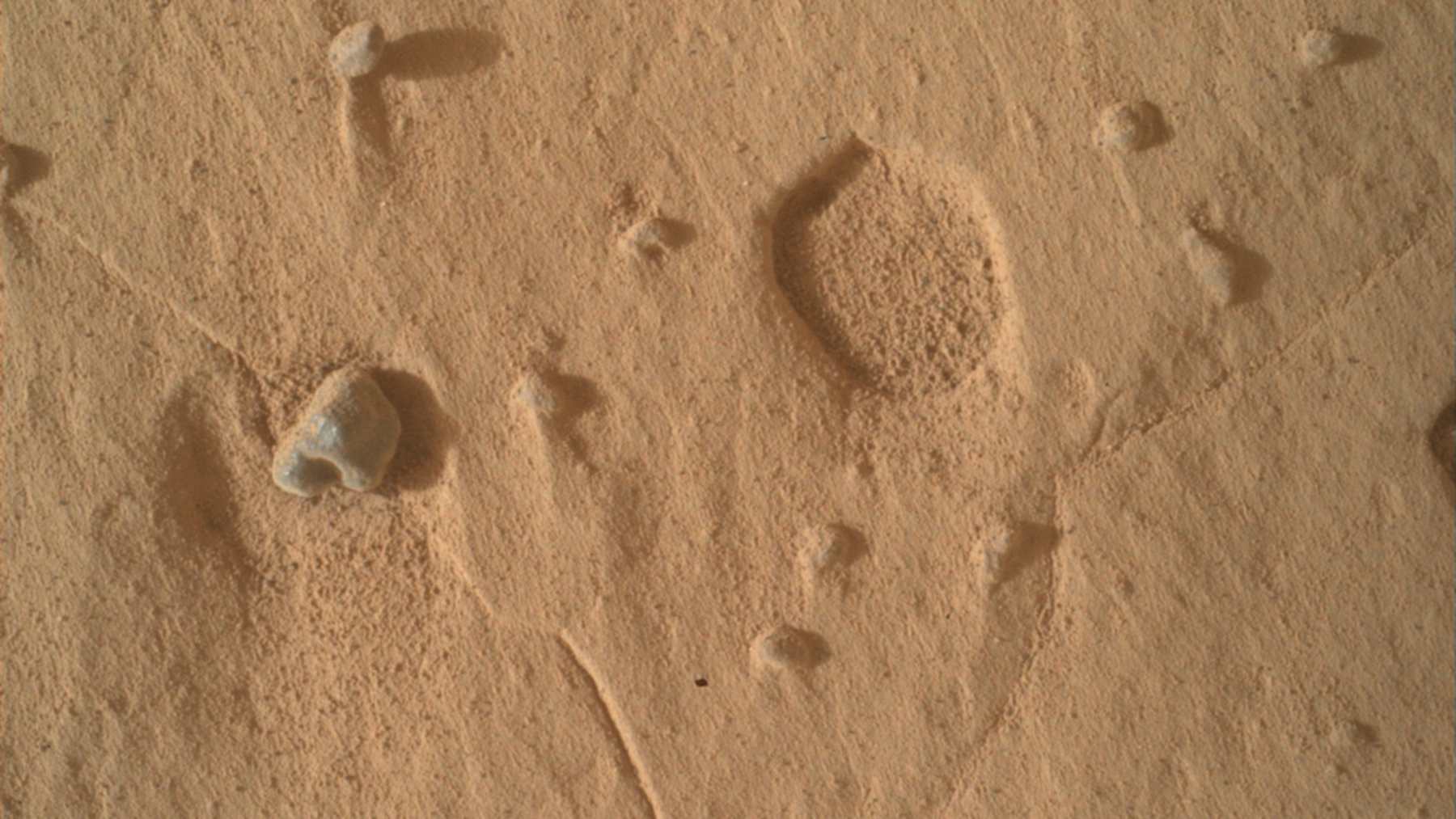
Sulfur crystals revealed after a rock cracked open on Mars, a discovery made by NASA’s Curiosity rover that offered new clues about the planet’s geological history.
Why garnet matters
Garnet is important because it often forms when rocks are changed by intense heat, pressure, or hot fluids. On Earth, those settings can include metamorphic environments where older rocks are transformed into new forms.
That matters because Mars does not work exactly like Earth. Our planet has active plate tectonics, mountain-building collisions, and subduction zones that can bury and bake rocks. Mars, for the most part, lacks that same kind of active plate system, which makes any evidence of metamorphism especially interesting.
Could the garnet point to an ancient Martian heat event? Maybe. It could also reflect magma rising through the crust, a meteorite impact slamming into the surface, or a combination of both. Mars keeps its secrets well.
Formed on Mars or delivered there
Here is where the mystery gets tricky. NWA 8171 is confirmed as Martian, but researchers still need to determine whether the garnet-bearing fragment formed on Mars itself or arrived there inside another meteorite before being mixed into Martian surface material.
That may sound like splitting hairs, but it changes the meaning of the discovery. If the garnet formed on Mars, it could point to a previously unknown Martian rock type, magma source, alteration process, or metamorphic event. If it came from elsewhere, it could reveal something about ancient impacts and how foreign material was delivered to the Martian surface.
Either way, the finding widens the map. James Darling, professor of Earth and planetary science at the University of Portsmouth, said the discovery opens “an exciting new window” into the evolution of Mars. That is a big statement for a fragment you could lose on a fingertip.
The sample problem
To settle the origin question, scientists would like to study oxygen isotopes in the garnet-bearing rock. Isotopes can act like chemical fingerprints, helping researchers tell whether a material matches Mars or another planetary body.
However, doing so presents a major obstacle. Measuring those isotopes would require destroying part of the sample, and the team has avoided doing that because the material is so rare. Kizovski noted that it may be the only garnet-bearing Martian rock currently available for study.
That is the tension at the heart of planetary science. Sometimes the best way to answer a question is to consume the evidence. However, when the evidence may be unique, patience can be just as valuable as a powerful instrument.
A meteorite with a history
NWA 8171 was found in the Sahara Desert in Northwest Africa in 2013. It belongs to a group of Martian regolith breccia meteorites, meaning the rock is made from pieces that were broken apart and later reassembled near the Martian surface, likely through ancient impact events.
That messy history is part of what makes the meteorite so useful. Instead of representing one simple rock, it may preserve a mixture of materials from different Martian environments. Think of it like a natural scrapbook, except the pages are minerals and the glue was cosmic violence.
Several related Martian meteorite pieces are known from the same broader fall, including the famous NWA 7034, often called “Black Beauty.” Together, these rocks offer scientists rare physical samples from Mars without needing a spacecraft to bring them home.
What comes next
Researchers are continuing to compare the sample with rover and orbital data. This step matters because a meteorite in a museum drawer tells only part of the story. Scientists need to connect the mineral chemistry back to real places, processes, and ancient environments on Mars.
For now, the safest conclusion is also the most honest one. Garnet has been found in a Martian meteorite, and it may represent a rock type never before recognized from Mars, but the exact origin of that garnet remains unresolved. Tiny grain, big question. This is often how science moves forward.
The study was published on Geochemical Perspectives Letters.