A fossil plant found in southern Argentina is giving scientists a rare look at life in Patagonia when dinosaurs still moved through Jurassic forests. The newly named species, Austrohamia vitrea, was uncovered in rocks from Santa Cruz Province and dates back about 150 million years.
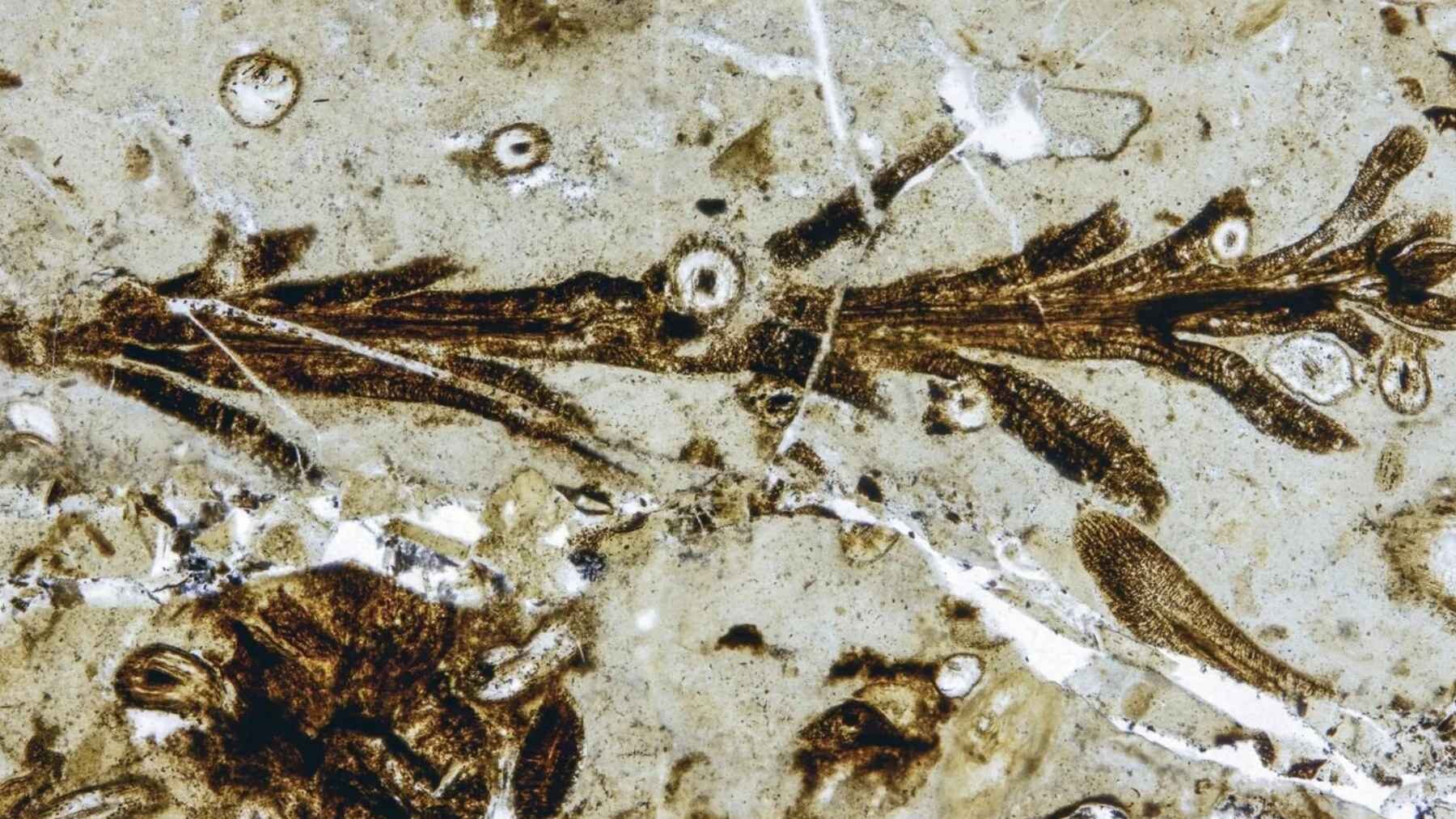
What makes it stand out is not only its age. The fossil preserves tissues and individual cells in three dimensions, a level of detail most plant fossils lose long before they reach a museum drawer. This means, researchers can study how the plant moved water, breathed, and protected itself, not just what its leaves looked like.
A fossil with its cells intact
Most plant fossils are more like shadows. A leaf shape, a branch imprint, or a flattened outline can tell scientists a lot, but many internal structures disappear during fossilization.
This specimen is different. Thin slices of the rock show individual cells, resin canals, tiny pores known as stomata, and the plant’s vascular system, which worked like plumbing for water and nutrients. “We can see cells and tissues with great clarity,” said Ignacio Escapa, one of the researchers involved in the work.
What does that mean for someone who is not a paleobotanist? It means researchers are looking at something closer to a stone copy of the original plant than a simple print on rock.
Glasslike minerals made a copy
The fossil came from La Claudia in the Deseado Massif, a region of northern Santa Cruz known for Jurassic fossil deposits. Back then, this part of Patagonia did not look like the dry steppe seen there today.
Roughly 150 million years ago, the area had volcanic and geothermal activity. Hot springs rich in silica, a mineral ingredient found in quartz and glass, quickly soaked fallen leaves and twigs. As the organic material broke down, minerals replaced it cell by cell.
That fast mineral copying is the reason the fossil looks so clear under a microscope. It is also the source of the species name vitrea, which comes from Latin and means “glasslike.”
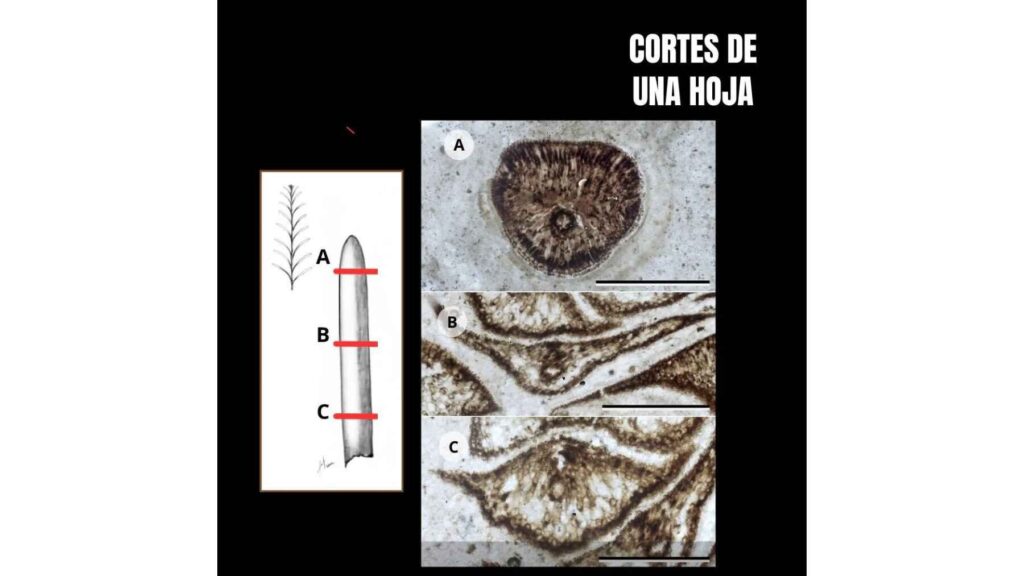
Scientific illustration showing microscopic cross-sections of Austrohamia vitrea leaves, highlighting the remarkable cellular preservation that allowed researchers to study the anatomy of a 150-million-year-old Jurassic conifer.
A new relative of cypresses
Austrohamia vitrea belongs to Cupressaceae, the family that includes modern cypresses and Patagonia’s ancient alerce trees. The paper notes that members of this plant family were widespread during the Mesozoic, the long era best known for dinosaurs.
Alejandro Molano of the Museo Paleontológico Egidio Feruglio led the research and Argentina ‘s Agencia I+D+I, with Giovanni Nunes, Ignacio Escapa, Josefina Bodnar, Juan L. García Massini, and Diego Guido from CONICET-linked teams at Universidad Nacional de Mar del Plata, CRILAR, and INREMI-UNLP.
By comparing the fossil’s anatomy with living and extinct conifers, the team concluded that the plant fits within Austrohamia, but its preserved internal structure sets it apart from species known before now.
How scientists studied it
The team did not have to rely only on the outside shape of the leaves. They cut and polished small pieces of silica-rich rock, then examined them with light microscopy and image-stacking methods, a technique that combines images to create a clearer view.
That approach helped them see the tiny architecture inside the plant. They could identify leaf tissues, gas-exchange pores, resin channels, and the bundle that once carried water and nutrients.
It sounds almost impossible. Yet under the right conditions, minerals can preserve a fragile plant with the kind of detail usually associated with much younger remains.
A clearer Jurassic Patagonia
Why should anyone care about a fossil leaf? Because leaves are small records of climate, water, chemistry, and evolution. When their inner parts survive, those records become much sharper.
The fossil shows features related to gas exchange, water transport, and resin production. Resin canals are natural defense channels, a bit like built-in leak points that can help a plant seal damage or deter pests. In a Jurassic forest, those traits mattered every day.
The find also helps scientists place ancient conifers on the family tree. The study suggests these Patagonian fossils may sit near the root of the broader cypress family, giving researchers a better starting point for understanding how this plant group evolved.
More than a single plant
The discovery is part of more than two decades of work in the La Matilde Formation. Scientists have found evidence of ferns, fungi, bacteria, microorganisms, conifer forests, and the larger dinosaur world that surrounded them.
“These deposits work as a true window into the past,” Escapa said. This is the big picture. A leaf is not just a leaf when the whole setting around it comes into view.
The field campaigns continue every one or two years, and new material keeps turning up. That steady rhythm matters because one fossil can raise a question, while a whole site can begin to answer it.
Why this fossil matters
Austrohamia vitrea gives researchers a rare chance to study a Jurassic conifer from the outside in. Instead of stopping at the shape of a leaf, they can examine the hidden machinery that helped the plant live.
That makes the discovery useful for understanding both ancient Patagonia and the longer history of conifers around the world. It also shows why fossil sites in Santa Cruz are more than local treasures. They are archives, and sometimes the pages are still surprisingly readable.
For now, the biggest lesson is simple. Under the right conditions, even a fragile plant can leave behind a remarkably detailed record after 150 million years. Not a shadow. A glasslike memory.
The official study has been published in the American Journal of Botany.