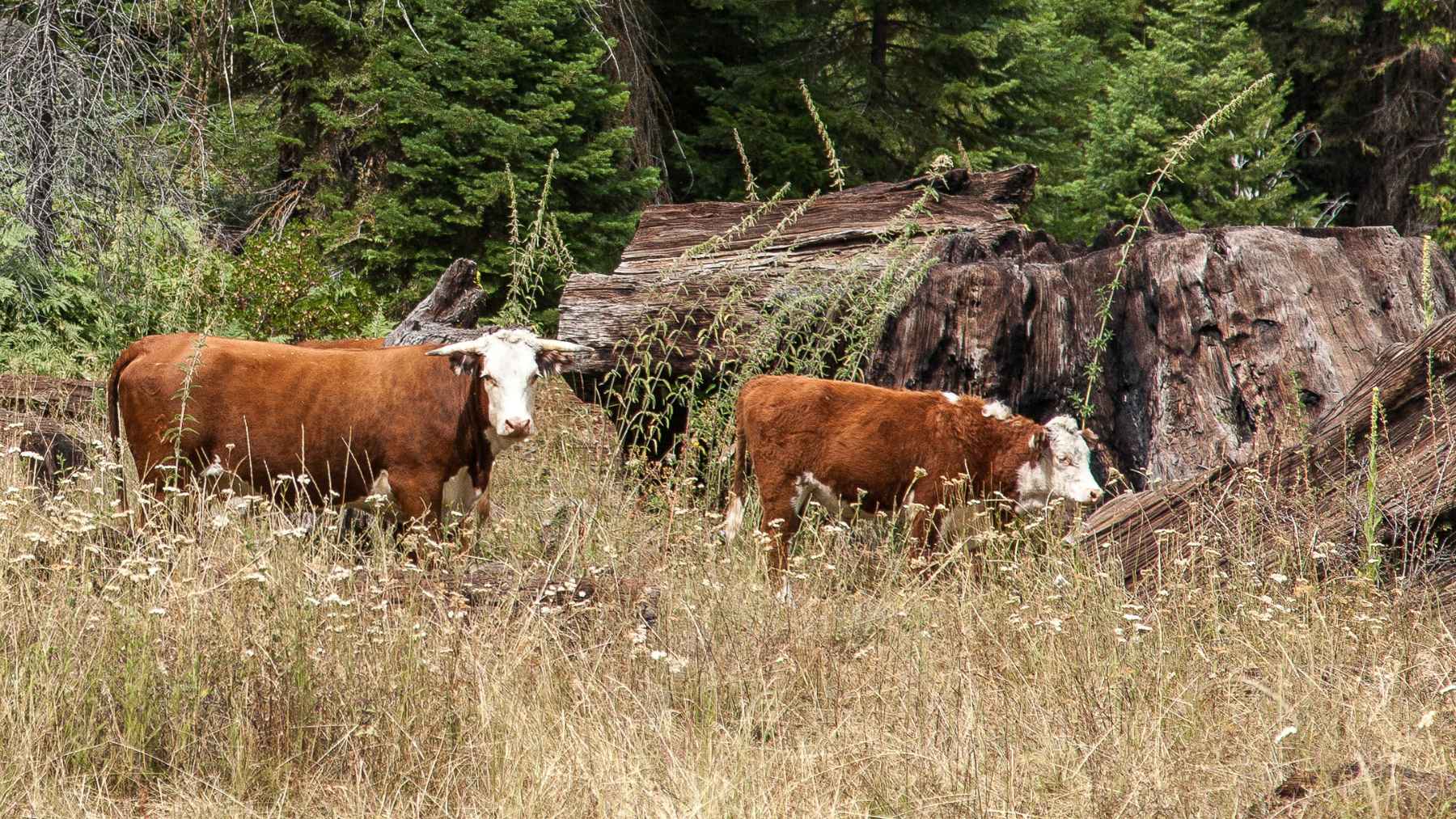
When you think of cattle, you probably picture fences and a steady water supply. On Amsterdam Island, a tiny French territory in the Southern Ocean, five cows left behind in 1871 built a wild herd that lasted for generations.
Now a 2024 genetic study has reconstructed their story using preserved DNA from animals sampled decades ago. The results point to mixed ancestry and a fast rebound after an extreme bottleneck, and they challenge the idea that island life quickly forced the cattle to shrink.
Cows on a subantarctic island
Amsterdam Island sits about 2,760 miles southeast of Madagascar and covers roughly 21 square miles. The new study describes an environment “frequently buffeted by strong winds, sometimes reaching hurricane force,” with cold weather and limited fresh water. It is an unlikely place for farm animals to succeed.
According to historical records discussed in the paper, a farmer named Heurtin brought five cattle from Réunion in 1871 while attempting to settle the island. The plan collapsed within months, but the animals were left behind. They became feral, meaning domesticated animals that start living like wildlife.
Over time, the herd expanded into one of the few well-documented feral cattle populations on Earth, reaching peaks of around 2,000 animals in 1952 and again in 1988. Even after disease and culling, it kept going, which is part of what made it so interesting to scientists.
DNA from a herd that no longer exists
The cattle did not survive modern conservation priorities. In 2010, the last animals were killed as part of restoration work aimed at protecting native species, and the genetics paper notes the eradication was carried out without a coordinated effort to save biological samples. That might have been the end of the story.
Instead, researchers had a rare backup. DNA from 18 cattle collected in 1992 and 2006 was stored well enough for modern genotyping, and eight of those animals were also analyzed with whole genome sequencing, which reads most of an animal’s genetic code. Those data let the team compare the island cattle with many other cattle populations worldwide.
The work was led by geneticist Mathieu Gautier with collaborators linked to INRAE and the University of Liège. It combines older field sampling with today’s genetic tools to tackle a basic question. How did five cattle avoid dying out?
A family tree with two roots
The DNA points to two main sources of ancestry. About three quarters of the herd’s genetic background was closest to European taurine cattle, the main type of cattle in Europe, related to today’s Jersey breed. About one quarter was closest to Indian Ocean zebu, cattle common in warm climates, related to animals from Madagascar and Mayotte.
That mix matters because it can raise genetic diversity right at the start, even if the founder group is tiny. The study suggests the founders themselves may already have had blended ancestry on Réunion, which would mean the herd carried more variation than “five cows” sounds like on paper.
The team also estimated that the founders’ main European ancestry likely came from places with cooler, wet, windy climates. In other words, the cattle may have arrived preadapted, already equipped for conditions that look harsh to us but were not completely foreign to their biology.
Inbreeding and the dwarfism question
Starting from five animals still means heavy inbreeding over time and a genetic bottleneck, a population squeeze that begins with very few founders, and the study estimates individual inbreeding around 30%.
Inbreeding can increase the odds of genetic disease, because relatives are more likely to share the same harmful mutations. But the researchers did not find clear evidence that the worst mutations were cleaned out through “purging,” and they did not see the kind of genetic crash many people would predict.
The study argues the bottleneck was extreme but short because the herd expanded quickly, limiting how much diversity was lost. Earlier observers described animals in “excellent health and condition,” though hidden genetic risks could still have existed.
The paper also revisits a long-running debate over body size. A 2017 Scientific Reports study by Roberto Rozzi and Mark V. Lomolino argued the cattle shrank to about three quarters of their original size in a bit more than a century, a classic “island dwarfism” story.
The new genetics work pushes back, saying the founders likely came from already small cattle types and showing DNA patterns that may reflect selection on genes linked to the nervous system, a possible sign of rapid behavioral change.
Why the herd was removed
By the late 1980s, managers faced a tradeoff between keeping a rare feral herd and protecting an island ecosystem found nowhere else. A 1992 Journal of Zoology paper by Daniel Berteaux and Thierry Micol described a fence built in 1987 and the removal of 1,059 cattle from the southern part of the island in 1988 and 1989.
It also showed reproduction was seasonal, with about eight out of ten births falling within a four-month window.
A 1995 paper in Biological Conservation by Pierre Jouventin described the cattle as a major threat to endangered indigenous species and explained why a “compromise” approach was tried first, splitting the island and clearing cattle from the larger area.
Over time, concerns centered on damage to habitats used by the endemic Amsterdam albatross and pressure on the rare Phylica arborea tree.
The Agreement on the Conservation of Albatrosses and Petrels later reported that the final cattle were killed in 2010, and restoration efforts continued with actions like planting Phylica arborea. UNESCO added the wider French Austral Lands and Seas, including Amsterdam Island, to its World Heritage List in 2019, putting more weight behind keeping introduced mammals from reshaping fragile islands.
The main study has been published in Molecular Biology and Evolution.