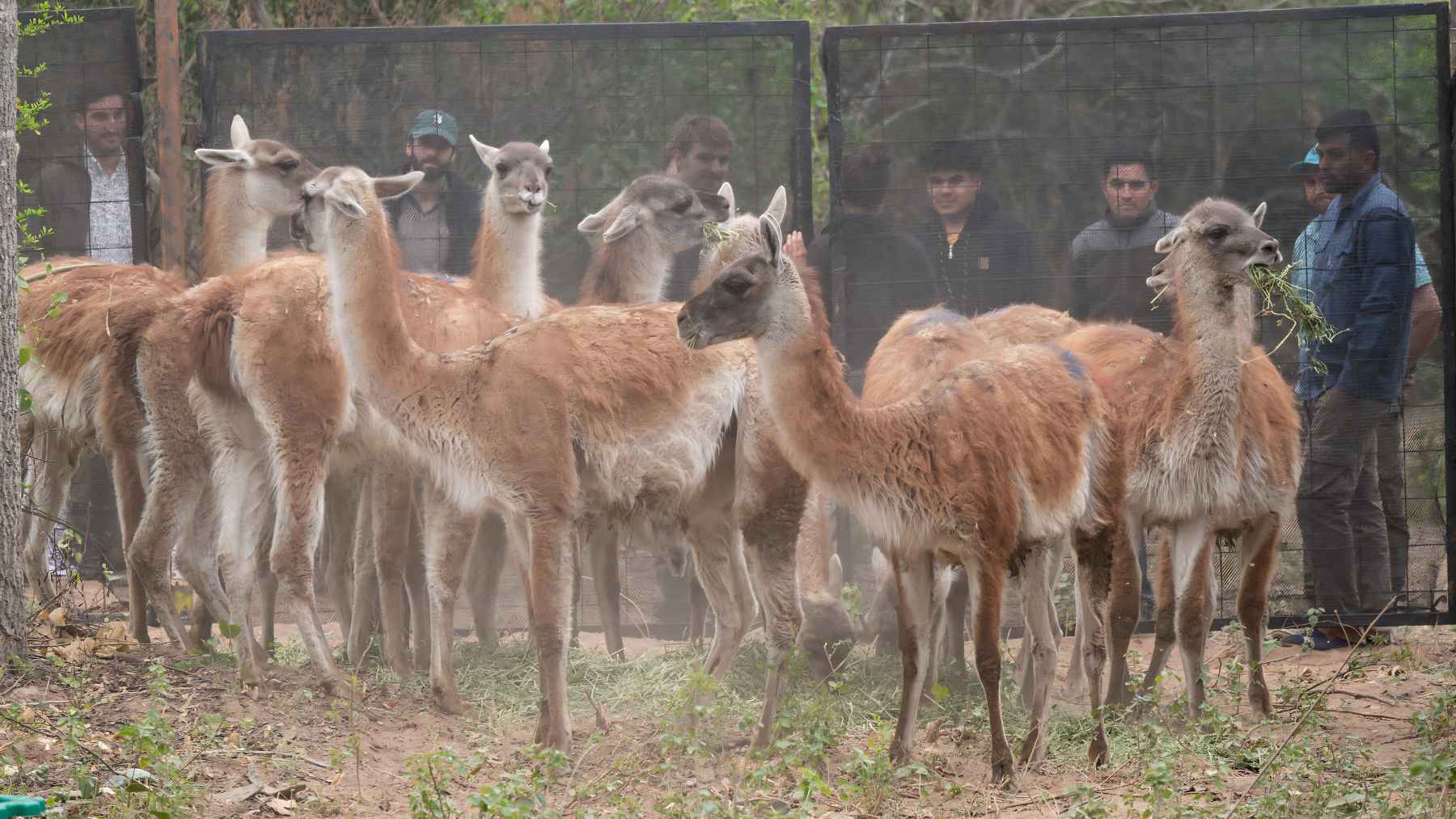
For the first time in more than a century, guanacos are once again walking the grasslands of El Impenetrable National Park in Argentina’s Chaco province. The release, announced in December 2025 in an official government post and a field report from Rewilding Argentina, marks the end of a regional absence that lasted about 110 years.
The animals did not just “show up.” They were moved from Patagonia in southern Argentina on a journey of about 2,000 miles, or about 3,200 kilometers, in a project meant to restore the Dry Chaco ecosystem and make the landscape less vulnerable to runaway fires.
Why guanacos vanished
The guanaco is a large wild camelid, meaning it is related to llamas and alpacas. In the Dry Chaco, it used to live in open grasslands dotted with small patches of forest and savanna-like areas, long before fences and highways carved up the region.
A Qom community informant, Montiel Romero, remembered that “había nawananga por todo el Chaco,” using a traditional name for the animal.
So why did it disappear? Officials and conservation teams point to a mix of pressures that built up over decades, including intensive hunting, the spread of cattle ranching, shrinking grasslands, and the unsafe use of fire as a land tool.
The numbers show how complete that collapse was. The Dry Chaco spans about 386,000 square miles, yet officials say only around 100 guanacos survive near the Paraguay and Bolivia border, while Argentina’s side had lost them entirely.
The nearly 2,000-mile transfer
Moving wild mammals for conservation is called a “translocation,” which is basically a carefully planned relocation with a purpose. In this case, the guanacos were taken from Parque Patagonia in Santa Cruz and brought north to El Impenetrable, crossing very different climates along the way.
Project leaders described the roughly 2,000-mile trip as the longest overland wildlife translocation ever carried out for conservation.
Getting them onto the road was not as simple as cornering them with trucks. In a behind-the-scenes account from the project team, handlers used four motorcycles in a V-shaped formation to guide the animals into a narrowing “funnel” that led into a trailer, a method designed to keep the herd moving without chaos.
International guidance matters in moves like this, because a rushed relocation can fail fast. The widely used IUCN Guidelines for Reintroductions and Other Conservation Translocations lays out why teams need to plan for animal health, stress, and long-term monitoring, not just the transport itself.
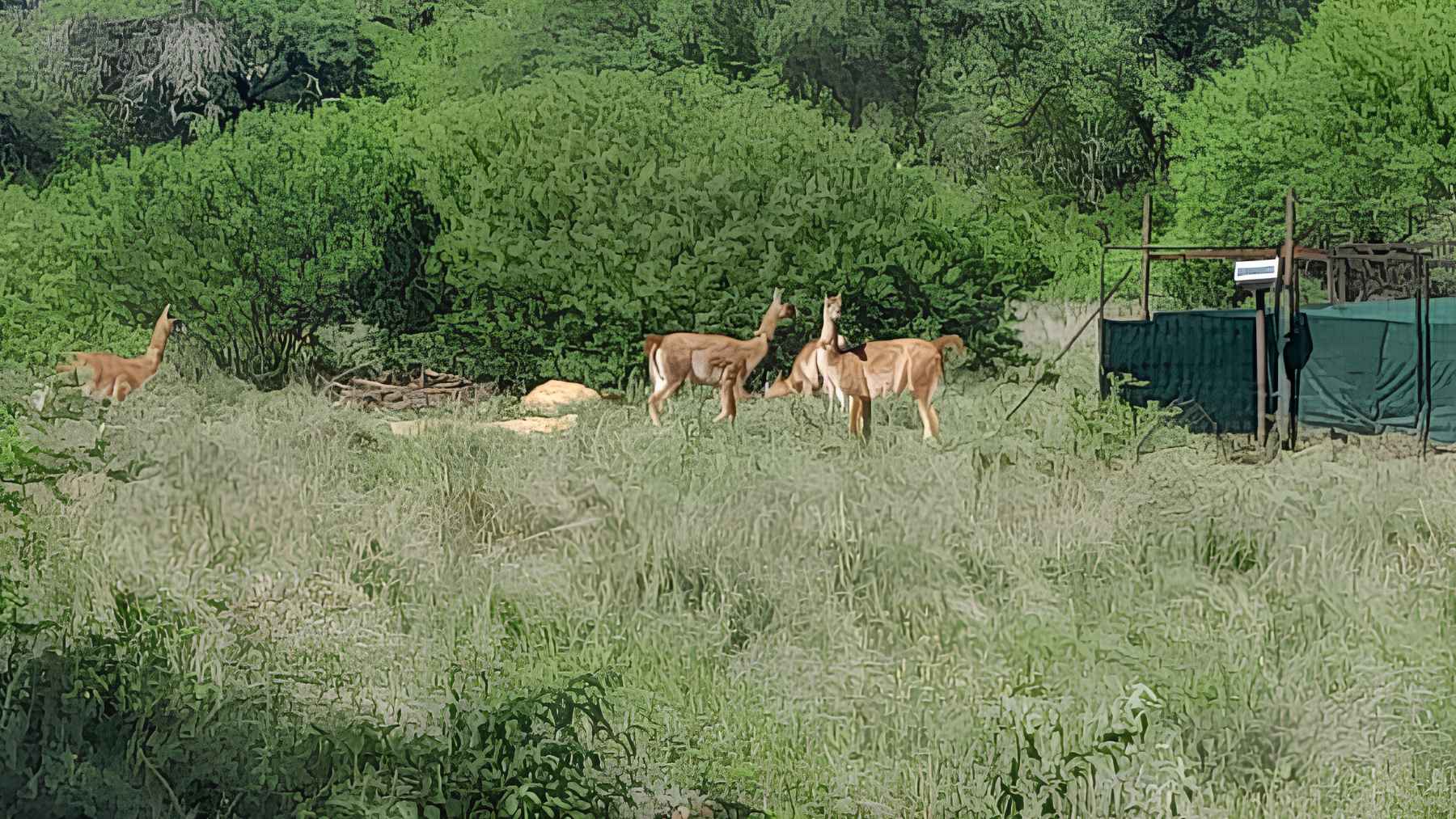
Conservation teams released guanacos into El Impenetrable National Park as part of a long-term ecosystem recovery plan in Argentina.
Choosing and caring for the animals
The guanacos were not chosen at random from the south. Project documents say technical teams picked individuals from a healthy population after health checks and genetic work, with support from Fundación Freyja.
On the road, animal welfare was treated as a practical problem, not an afterthought. The team said it avoided splitting up social groups and did not transport groups with very small young, because breaking family bonds can raise stress and increase injuries.
Once in Chaco, the animals spent time in “pre-release” pens, which are secure enclosures that let wildlife adjust before being fully set free. Officials say the first chulengos, or baby guanacos, were born during this stage, and the animals started eating local plants.
A separate January 2026 update published by Rewilding.org says this acclimation period lasted more than a year, and the guanacos fed on up to 30 native plant species, including cacti and local fruits.
What a big grazer changes
At first glance, a guanaco looks like it just eats and walks, but that daily routine can reshape a whole landscape. By grazing, large herbivores can reduce the buildup of dry vegetation that fuels fires, a risk that feels more real when hot seasons drag on and smoke becomes a regular part of life.
A 2023 open-access review in Forest Ecology and Management notes that wildfire patterns in the Gran Chaco are being altered by both land use change and climate change.
Guanacos also move nutrients and seeds around as they travel, which can help soils recover over time. It is not magic, and it does not happen overnight, but ecologists see this kind of animal as an “ecosystem engineer” because its feeding and movement affect many other species.
Then there is the food web – the chain of who eats whom in nature. Park officials say guanacos can become prey for predators and a food source for scavengers, helping rebuild links in an ecosystem where the jaguar is considered the top predator.
Bigger picture and what comes next
The guanaco release is being presented as one piece of a wider restoration push in El Impenetrable that also involves species like the jaguar, the giant river otter, and the yabotí tortoise. The plan, supported by the provincial governments of Chaco and Santa Cruz, includes releasing more guanacos over time to rebuild a healthier population.
Sebastián Di Martino, the project’s conservation director, argues the return is overdue. “In the absence of guanacos, the ecosystems of El Impenetrable have been severely degraded,” he said, linking the animal’s comeback to plant diversity and growing fire pressure in a warming climate.
For nearby communities, the project is also tied to nature tourism, since a larger and more visible animal can attract wildlife watching. Still, reintroductions are a long game, and success will depend on continued protection, careful monitoring, and a landscape that can still support the species decades from now.
The main official press release has been published by Argentina’s National Parks Administration.