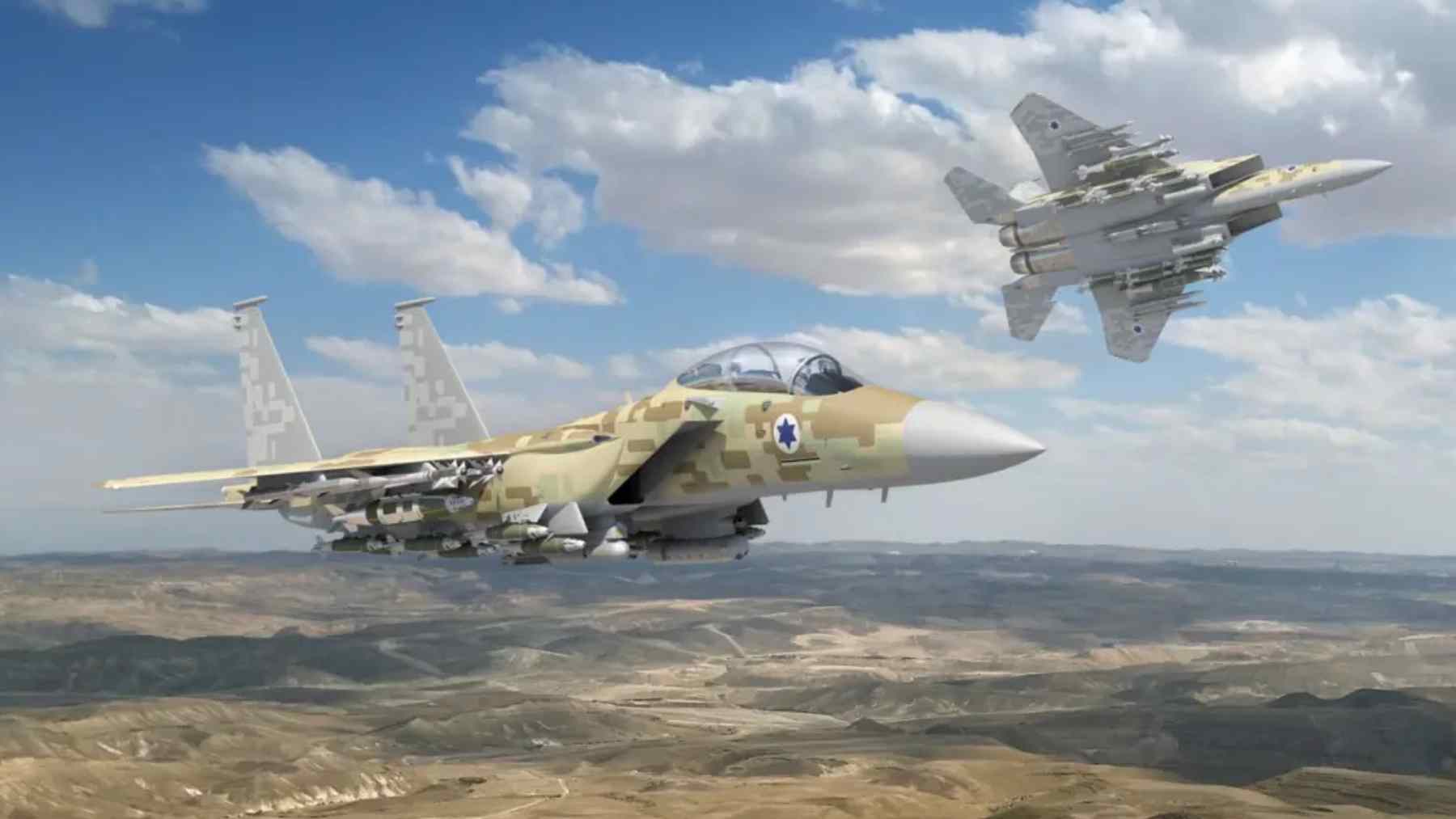
Israel has approved the purchase of two new U.S.-made fighter jet squadrons, one F-35I squadron from Lockheed Martin and one F-15IA squadron from Boeing, in a deal described as worth tens of billions of dollars. The decision, announced by Israel’s Ministry of Defense on May 3, is part of a wider plan to strengthen the country’s air force over the next decade.
The military headline is clear. But there is another story sitting just below the runway. Fighter jets burn large amounts of aviation fuel, and while governments increasingly track cars, power plants, and even the electric bill at public buildings, military emissions often remain much harder for the public to see.
A bigger air force
The approval covers two full squadrons, not simply two individual aircraft. According to Reuters, Israel plans to buy a fourth F-35 squadron and a second F-15IA squadron, with final agreements still to be completed with the U.S. government.
Prime Minister Benjamin Netanyahu framed the decision as part of a broader defense doctrine. “Israel is stronger than ever, and Israel must always be much stronger than our enemies,” he said, adding that the aircraft would strengthen Israel’s air superiority.
The Ministry of Defense said the purchase is the first step in a roughly $119 billion defense buildup over the coming decade. In practical terms, that means Israel is planning not only for today’s conflicts, but for the shape of its military for many years to come.
The fuel question
Here is where the environmental angle begins. The U.S. Energy Information Administration says every gallon of jet fuel burned releases about 21.5 pounds of carbon dioxide. That is before counting manufacturing, maintenance, bases, spare parts, or weapons production.
The F-35A, the conventional variant of the fighter, has an internal fuel capacity of 18,498 pounds, according to the U.S. Air Force. The F-15 Eagle family can carry 36,200 pounds of fuel when using conformal and external tanks, also according to Air Force data.
That does not tell us the exact carbon footprint of Israel’s future fleet. Mission profiles, training hours, refueling patterns, and maintenance cycles are not fully public. Still, the basic point is hard to miss. More jets usually mean more flight hours, and more flight hours mean more fuel burned.
Military emissions are murky
For the most part, military climate data is still a blind spot. The Military Emissions Gap project notes that while some countries must report greenhouse gas inventories, reporting military emissions separately is often voluntary, incomplete, or absent.
That makes it difficult to compare a fighter jet buildup with other climate decisions. A new highway, a coal plant, or a gas pipeline is usually discussed in carbon terms. A new squadron often is not.
Why does that matter? Because the exhaust does not disappear just because the aircraft is military. Like traffic jams, noise, and fumes on a crowded city street, the environmental impact is real even when it is not easy to measure from the outside.
Spending is also climate policy
This deal comes during a global rise in defense spending. SIPRI reported that worldwide military expenditure reached $2.887 trillion in 2025, marking the 11th consecutive year of growth and the highest level it has recorded.
Israel is part of that wider pattern, though its case is shaped by direct regional conflict. Reuters reported that Israel’s 2026 budget added another 32 billion shekels for defense, equal to about $10.9 billion using the exchange rate cited in the May 3 report.
At the end of the day, budgets are not just accounting documents. They are maps of priorities. When billions go toward long-life aircraft, they also lock in fuel demand, infrastructure, and supply chains that may last well beyond the current crisis.
Counting without pretending
None of this means national security questions are simple. They are not. Governments argue that advanced aircraft are needed for deterrence, defense, and survival, especially in regions where tensions can flare quickly.
But climate accounting should not stop at the base gate. Experts warn that the world is already far from the emissions cuts needed to meet Paris Agreement goals, with UNEP saying annual emissions must fall sharply by 2035 to stay aligned with safer warming pathways.
That is why transparency matters. If a country buys new combat aircraft, the public should be able to understand the fuel, emissions, industrial footprint, and long-term environmental cost as clearly as it understands the military price tag.
What comes next
The next step is for Israel to finalize the agreements with U.S. counterparts. The aircraft themselves will not solve or worsen the climate crisis on their own, but they are part of a much larger question about how modern militaries fit into a warming world.
Cleaner buses, quieter cities, and lower household energy use are all important. But so is the carbon footprint of the machines governments buy in our name, especially when those machines are built to fly fast, fly far, and keep flying for decades.
The official statement was published on the Israeli Ministry of Defense.