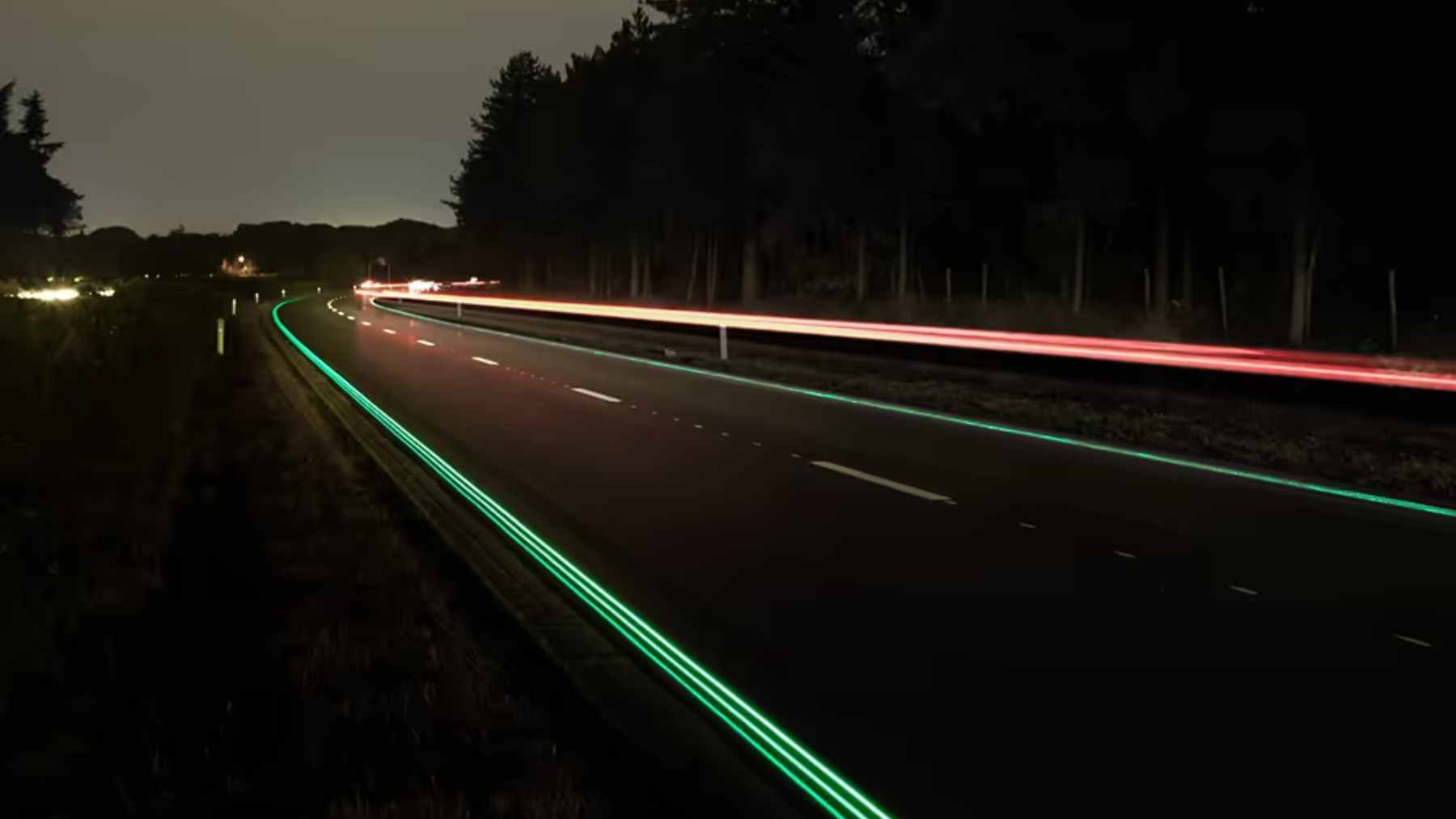
Malaysia’s glow-in-the-dark road markings grabbed attention in Selangor, but Parliament now says the experiment is likely ending. Deputy Works Minister Ahmad Maslan told lawmakers the trial did not satisfy ministry experts and that “the cost is too high,” so the approach probably will not continue.
A self-lit lane line sounds almost perfect when cities are trying to cut electricity use and CO2. Yet the Malaysia case is a reminder that a technology can be visible and popular and still lose when maintenance and public budgets enter the picture.
A pilot on a dark two-lane road
The test began on an unlit road in Hulu Langat, where drivers rely on headlights and whatever the paint can reflect back. Officials described a pilot covering about 804 feet (245 meters) of roadway, with roughly 1,608 feet (490 meters) of photoluminescent markings applied as an alternative to raised reflectors known as “cats’ eyes.”
In daylight, it looked ordinary – then it glowed at night.
Malaysia’s public broadcaster RTM reported the project as a Public Works Department pilot meant to make dark roads easier to navigate.
Works Minister Alexander Nanta Linggi said the markings were more visible in the dark and could help road users feel “safer and more comfortable” on roads without streetlights. But even then, officials stressed they were still evaluating the pilot because it involved high costs.
Sticker shock
The cost gap was not subtle. The minister said the photoluminescent paint cost RM749 per square meter, while conventional road marking paint was RM40 per square meter.
Using the 2024 average exchange rate (about $0.22 per Malaysian ringgit), that is roughly $15.20 per square foot for the glow paint, compared with about $0.81 per square foot for standard markings.
That makes the “glow” option about 19 times more expensive before you even get to how often it would need cleaning and repainting. If you have ever watched a road crew repaint faded lines after a rainy season, you already know why that matters. A pilot can look great and still be hard to scale.
Expansion plans came quickly
In February 2024, Selangor officials said they wanted to expand glow-in-the-dark markings to 15 additional sites across all nine districts. The plan was to cover about 9.3 miles (15 kilometers) of roads without streetlights at an estimated cost of RM900,000, or about $197,000.
At the same time, Selangor’s “Selangor Bercahaya” effort was also rolling out conventional LED streetlights, including 600 lamps already installed in its first phase. The state also said it had set aside RM150 million, roughly $33 million, for more LED street lighting.
That split strategy hints at a key point: glow paint was never the only path to safer nights.
Parliament hits the brakes
By November 2024, the national tone shifted. Maslan told Malaysia’s Dewan Rakyat that the “glow-in-the-dark” trial did not satisfy the ministry’s expert group and the cost was too high, so they likely would not continue. He also pointed to a simpler fix: repainting and maintaining standard white road lines so they stay visible at night.
This is not the same as saying the markings never worked. It is more like saying they failed the full cost and performance test. For public infrastructure, that is often the final exam.
Why this is an energy story too
The dream behind glowing markings is simple. If the road can guide you without powered lights, maybe towns can trim their electric bill and reduce emissions at the same time. Public street and area lighting can account for up to 40% of the electricity consumed by municipalities worldwide, so it is easy to see why a “no electricity” idea gets attention.
But most places cannot treat road lighting as optional, especially around intersections, crossings, and busy pedestrian areas.
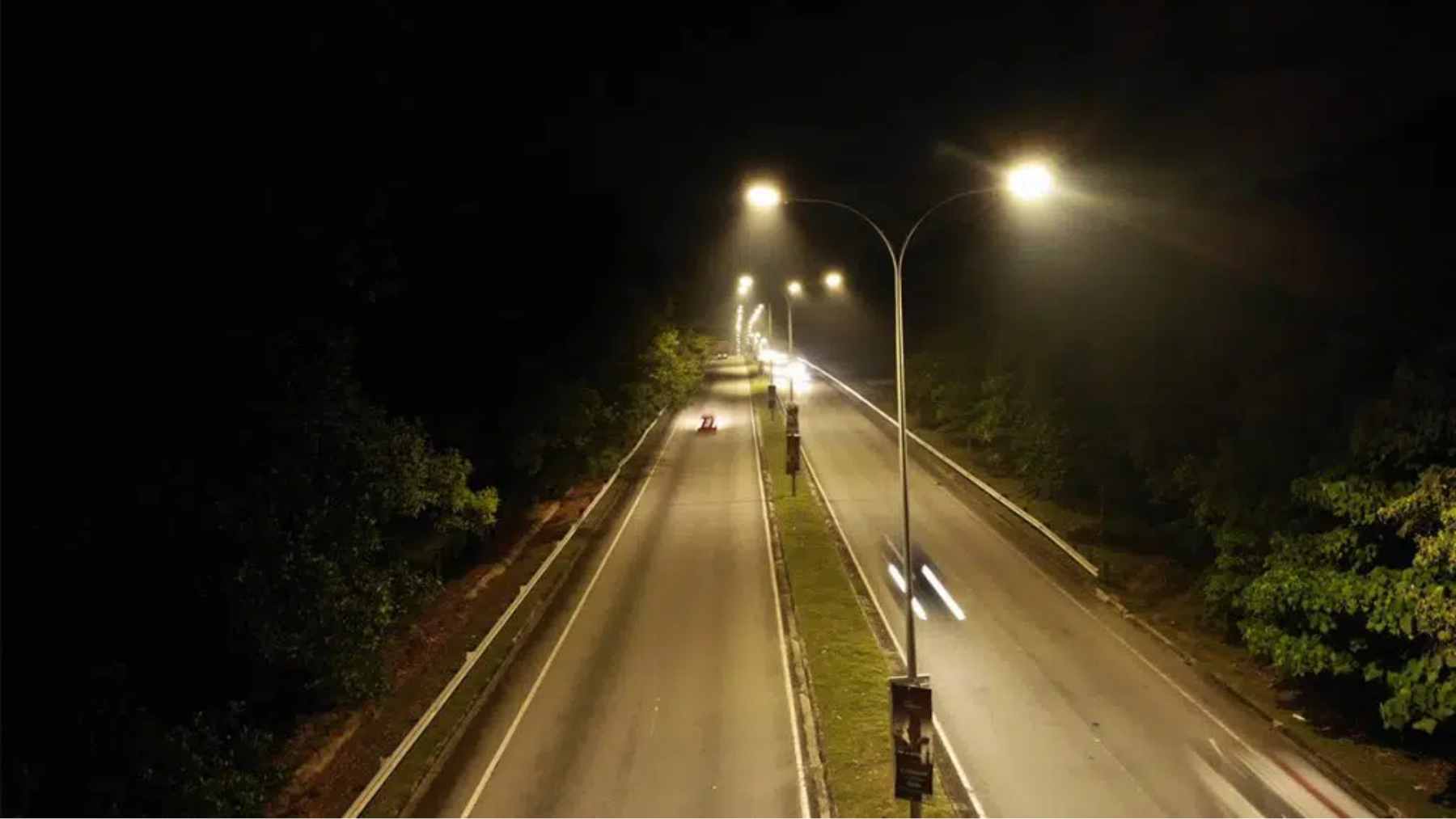
The U.S. Department of Energy notes that LED roadway lighting can achieve required light levels with less than half of the total generated light compared to older technologies, because LEDs can aim light more precisely. In practical terms, a lot of climate impact may come from straightforward LED retrofits and smarter controls, not only from experimental coatings.
Road safety still comes down to visibility
There is another lesson here that applies far beyond Malaysia. The U.S. Federal Highway Administration says adequately maintained retroreflective pavement markings improve nighttime visibility and reduce crash risk by reflecting headlight beams back toward drivers.
It also warns that retroreflectivity deteriorates relatively quickly, so agencies need active maintenance.
That sounds obvious, but it matches what many drivers experience. When it is dark and raining, a faded lane line is not just annoying – it is genuinely dangerous. If budgets are tight, spending on better materials, frequent repainting, and clearer signage can deliver benefits that are easier to measure.
What the glow experiment still taught
Malaysia is not the first place to test roads that light themselves. Studio Roosegaarde’s “Smart Highway” concept in the Netherlands used “glowing lines” that charge during the day and glow at night, and the studio says the first lines were implemented after a three-month trial that produced markings visible for up to eight hours each night.
Still, pilots are valuable even when they do not scale. They show what drivers trust and where the weak points are, especially in messy real-world conditions like tropical downpours and heavy vehicle wear. Sometimes the best outcome is learning what needs to improve before a technology becomes everyday infrastructure.
You can read the exchange in the public record.
The official statement was published on the Parlimen Malaysia website.